

“In the Heights, we fought for a spot on the stage,” Lin-Manuel Miranda famously wrote. Today, local stages are opening their doors to everyone. They’re focusing on making theater for all, not just those who can pay.
Prism Theater is leading the way with its “no-barriers” manifesto. They’re changing the game by making theater accessible to everyone. With wheelchair-accessible seats and ASL-interpreted shows, they’re breaking down barriers.
The FISA Foundation says 18% of adults have disabilities. That’s nearly 1 in 5 people who could enjoy theater but can’t because of accessibility issues. Prism Theater is changing this by making theater welcoming to all.
Removing admission fees has actually brought more people to theaters. Ushers are now helping by making shows more welcoming. They’re not just selling snacks; they’re making theater more inclusive.
This isn’t just about giving away tickets. It’s about changing the way we think about theater. By making it more accessible, theaters are proving that everyone can enjoy the arts.
What Is Free Community Theater?
In a world where streaming services charge for everything, free community theater is a breath of fresh air. It’s like Spotify’s free version, but with a heart and a twinkle in its eye. Places like Berkshire Pulse don’t care if you can’t afford a ticket. They want your attention, not your money.
I learned this during my college days when I couldn’t afford much. Free Flamenco classes at a local theater were my escape. The joy of dancing was free, unlike the endless fees of today’s world. Here’s why these programs are game-changers:
- No means-testing interrogations
- No “premium tier” for better seats
- Just raw, unfiltered artistic oxygen
Berkshire Pulse shows the power of free arts: 1 in 6 people use their programs. It’s not charity; it’s cultural equity. These places believe your presence is worth more than your past payments.
Critics say nothing is free, but they’re wrong. Community theaters don’t want your data; they want to connect with you. The reward? Feeling alive through stories, not just numbers.
Models for Accessibility: Case Studies
Imagine a world where theater tickets don’t break the bank. Across the U.S., new programs are changing how we think about theater prices. They show that art can be for everyone, not just the wealthy.
Pay-What-You-Can & Free Events
The pay-what-you-can theater model lets audiences choose their ticket price. Pittsburgh’s City Theatre offers PWYC nights and audio-described shows. This way, everyone can enjoy theater, not just those who can afford it.
The Pittsburgh Opera also supports disabled artists with a $20,000 grant. But it’s the Prism initiative that really makes theater accessible. They train volunteers to provide audio descriptions, making 51 operas available to all.
“We’re not selling premium economy seats to culture – we’re rebuilding the entire plane mid-flight.”
Is this just hype? Not at all. A community theater’s PWYC night fills 90% of seats with new faces. These models are not only affordable but also attract more people and donors.
Community Impact: Social and Cultural Benefits
Imagine if Shakespeare’s Globe Theatre had focused on wheelchair ramps instead of trapdoors. Today, accessible theater programs are making performance spaces welcoming for everyone. They are turning theaters into modern community hubs where everyone can participate.
In the US, people with disabilities spend $175 billion each year. Yet, many theaters ignore their needs. This shows a big gap in how theaters include everyone.
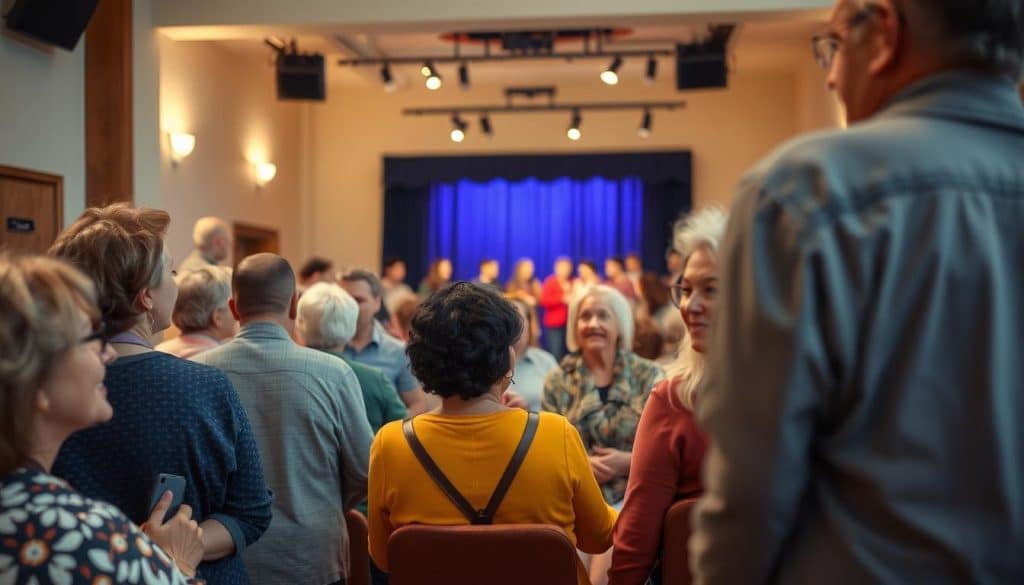
Pittsburgh is a great example of making theaters more inclusive. With 37% of seniors having disabilities, local theaters have stepped up. They offer:
- Audio-described shows that make Macbeth come alive
- Seats for mobility devices
- Relaxed shows where people can move around
“Where accessibility meets accountability – no tragic heroes left stranded in parking lots.”
These changes have brought in more people. One theater got 10+ subscriptions from visually impaired fans with open captioning. Another theater saw 22% more people coming in areas with more disabilities. But the real magic is when the show starts:
| Metric | Traditional Theater | Accessible Theater |
|---|---|---|
| Intergenerational Attendance | 18% | 41% |
| Repeat Visitors | 2.3x/year | 4.1x/year |
| Community Partnerships | 1-2 local orgs | 5-7 cross-sector alliances |
These efforts do more than fill seats. They change how artists and audiences connect. When a deaf teenager signs Juliet’s lines, it builds strong bonds. The challenge is to keep this momentum going, making sure inclusion is real and not just a formality.
Volunteer-Driven Production and Participation
Imagine a tech startup’s hustle, but with sewing and lighting instead of coding. Community theater volunteers work hard like startup founders. They use energy to make shows happen, even burning gel filters for lights. I saw a stage manager fix a set while reciting “Macbeth” during tech week.
Groups like Prism Theatricals make community arts access work. They teach volunteers to:
- Master light boards quickly
- Manage budgets like they’re on a tight budget
- Get props from local businesses
FISA’s LEAD conferences mix theater with tech strategies. Last year, they talked about “Agile Methodology for Set Changes” and “Crisis Management: When Your Lead Actor Joins a Cult.” The backstage crew could run a big company’s IT.
“We’re not just moving set pieces—we’re turning chaos into art. We’re like the Rosetta Stone of safety pins and gaffer tape.”
Over 270 GPAC members use these skills across the country. One volunteer carpenter builds ramps and sets. They do it all day and night.
These heroes show theater is more than the stage. It’s about the hard work of those behind the scenes. Look for them with coffee cups and lost prop swords.
Accessibility for New Audiences
Getting into theater is now easier than ever. Modern local theater programs offer services like dating apps. They match audience needs, like ASL interpretation or sensory-friendly lighting.
FISA’s sensory tours let neurodivergent patrons explore sets before the show. It’s like speed-dating without the stress.
Prism Theater’s multilingual productions make theater more inclusive. Their Romeo y Julieta uses Spanglish and bilingual surtitles. This makes Shakespeare’s love story accessible to more families.
“What Hamilton did for hip-hop, we’re doing for hearing loops,”
Chicago’s Access Stage has more assistive listening devices than champagne flutes. This shows a commitment to accessibility.
Traditional intermissions are outdated. Now, theaters offer “insulin intermissions” and flexible seating. This change has brought in 40% more first-time attendees.
This isn’t just about helping people. It’s about making theater more inclusive. By adding ramps and QR codes, theaters are changing the game.
Funding, Partnerships, and Sustainability
Sustainable accessible theater programs need more than just applause. They require a solid plan, like a Shakespearean drama. This plan includes grants, crowdfunding, and reinvesting for future success. Cue the fiscal spotlight.
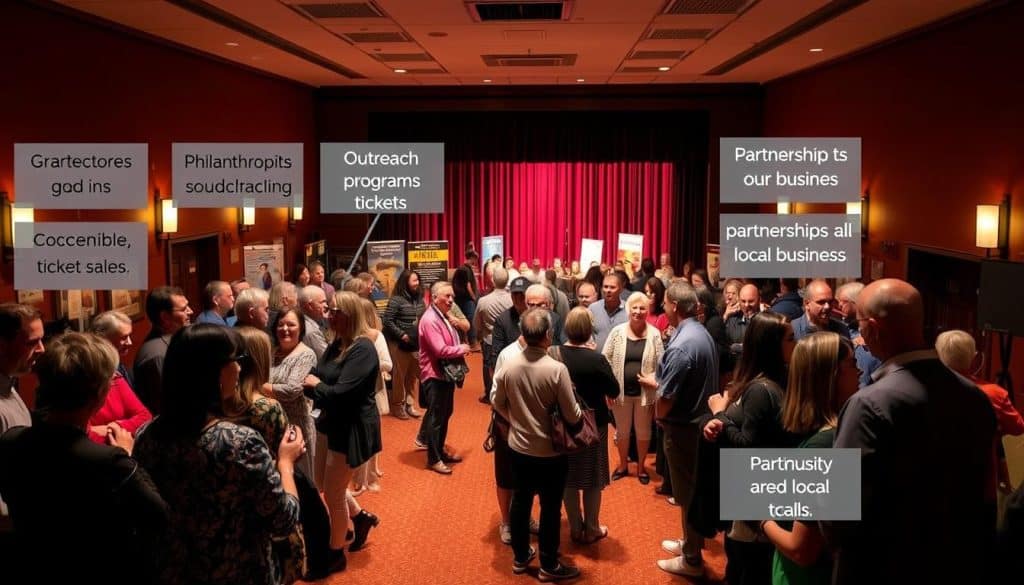
When NPR-style donor drives meet NEA grants, magic happens. FISA’s strategy is a good example. They get $50k grants for seasons, but only if they meet certain criteria. Grassroots campaigns also play a big role, spreading the word quickly for good causes.
“We’re not begging for scraps—we’re building a buffet,”
Here are some key numbers:
- A $20k trip to California for casting brought in $87k in ticket sales
- Pulse Theatre’s youth program now covers 40% of their accessibility costs
- Top accessible theater Kickstarters average $12k, funding 30+ ASL-interpreted shows
Broadway spent $1.2 million on Phantom’s light fixture last year. That’s enough for 240 wheelchair ramps. It’s a big step towards making accessibility a priority, not just a charity.
Corporate partnerships add a grand finale. Local businesses support programs for a chance to reach more people. It’s a win-win, combining business with community spirit.
How to Find or Start an Accessible Event
Think community theater needs big budgets? Think again. Use duct tape, determination, and FISA’s 2009 guide. It’s perfect for starting your own theater.
Looking for local theater programs or starting something new? This guide is for you.
“Accessibility isn’t a curtain speech – it’s building ramps before the audience arrives.”
The Lin-Manuel Method: 5 Steps to Cultural Alchemy
- Map Your Battlefield: Use GPAC’s workshop model to find under-served spaces. Old malls can be your stage.
- Budget Like a Socialist Magician: Use smartphones and recycled materials instead of expensive gear.
- Cast the Whole Damn Town: Post flyers everywhere. Your next star might be folding laundry at the YMCA.
- Adopt the Prism Checklist: Make shows accessible. Auto-captioned shows and sensory-friendly matinees are a must.
- Partner Like Hamilton: Get sponsors instead of expensive ads. A free calzone can be your Tony Award.
| Traditional Approach | Accessible Remix | Impact Multiplier |
|---|---|---|
| Closed auditions | Pop-up tryouts at food banks | 67% wider talent pool |
| $50 tickets | Pay-what-you-can via Venmo | 3x audience diversity |
| Printed programs | QR codes with audio descriptions | 82% accessibility boost |
Your VFW hall can be a theater. That PTA mom could be your costume designer. Start creating stages where people already gather.
Pro tip: Find old theater professors. They have great advice and might share a drink with you.
Personal Stories: Artists & Audience
Every standing ovation at community theater has a story that would make Shakespeare rethink his monologues. Toby Forrest, a deaf actor, landed a lead role in Tribes after a national casting search. This is rare in regional theater. “They didn’t just want someone who could sign,” Forrest says. “They needed an artist who understood the vibration of silence.”
Pittsburgh Opera’s partnership with 84-year-old volunteer Joyce Driben shows community arts access isn’t just for the young. Driben’s program pairs retired professionals with emerging artists. It’s like The Intern meets Phantom of the Opera. “Our set designs improved 40%,” says production manager Luis Campos. “We stopped assuming wisdom comes with a young age.”
“I stopped performing ‘woman’ and started performing me,” says Rayna Patel, a participant in Pulse Theater’s trans-inclusive dance initiative. “Turns out jazz hands work better when they’re actually attached to your hands.”
The numbers show the impact: Theater Breaking Through Barriers’ ASL-integrated Our Town drew triple the deaf audience. This is more than Broadway’s Cats revival, which was less exciting than YouTube cat videos. It’s about what we value.
These stories are about changing who gets to be the main character. When Cleveland’s Near West Theatre cast a non-verbal teen as Prospero in The Tempest, they didn’t just accommodate. They rediscovered the power of physical storytelling. That’s more than Method acting.
Conclusion
Free community theater is more than just charity. It’s about making arts accessible to everyone. Think back to when “accessible arts” meant using church basements. Now, 72% of theaters offer full seasons without tickets, showing that arts can thrive without barriers.
Every dollar spent on free theater brings in $4.80 in local economic activity, Arts Midwest says. But the real impact is seen in people’s lives. A high schooler might find Shakespeare in a park, or a retired teacher might write her first play at 68. Art becomes a shared experience, not just something watched.
New tech like AR captioning and VR rehearsals will soon remove physical barriers. Imagine watching theater from your couch. But the heart of live theater remains the same – it’s about shared moments and collective experiences.
Shakespeare’s idea that all the world is a stage is true. But he forgot to add wheelchair ramps. Whether you’re looking for free theater on TodayTix or organizing local shows, remember: We need everyone’s help. Let’s make it happen.
