

Imagine if 17th-century Spanish drama could teach existential philosophy better than The Matrix. Pedro Calderón de la Barca’s work is more than just a story about princes. It’s a psychological thrill ride that makes students question reality fast.
It’s like Shakespeare meets Christopher Nolan. Prison metaphors turn into deep allegories. Royal prophecies become like viral Twitter threads. This isn’t your grandma’s morality play – it’s a classroom goldmine in poetic verse.
Modern teachers face a challenge: How to make 400-year-old texts feel urgent? Calderón’s work is the answer. His reality-versus-illusion themes mirror today’s TikTok and AI deepfakes. Suddenly, Segismundo’s crisis feels like Gen Z’s daily scroll.
We’ll see how eBook annotations make soliloquies shareable. We’ll also explore why prison symbolism is more impactful than any dystopian YA novel. And yes, we’ll tackle the big question: How to explain that literal dream sequences are not just lazy plot devices.
Are you ready to use Baroque drama to fight student apathy? Let’s explore deeper than Segismundo’s dungeon.
Introduction to Calderón de la Barca
Before Shakespeare’s plays were famous, Madrid had Pedro Calderón de la Barca. He didn’t just write plays; he created Baroque thought experiments that were fun to watch. Imagine Lin-Manuel Miranda making Hamlet even more dramatic.
Calderón mixed Jesuit philosophy with royal drama. He turned palace halls into places of deep thought. His education was all about moral mathematics, where every choice had big consequences.
The Making of a Baroque Rockstar
Calderón’s career was like a Renaissance resume:
| Stage | Influence | Dramatic Innovation |
|---|---|---|
| Jesuit Schooling | Scholastic debate techniques | Characters as philosophical proxies |
| Court Playwright | Royal family dramas | Political power as tragic flaw |
| Military Service | Battlefield chaos | Fate vs free will combat scenes |
His plays were like ideological WWE matches. They showed the battle between divine right and human desire. King Basilio from Life Is a Dream is a great example. He’s a mix of astronomer and control freak, teaching us about the dangers of playing God.
Why is Calderón important today? He made identity crises into hits long before TikTok. His characters face big questions and answer them in poetic ways. This makes Shakespeare’s insults seem mild by comparison.
Overview of “Life is a Dream”
Forget Inception‘s dream layers – Calderón’s Spanish drama is way more complex. This 1635 auto sacramental mixes existential dread with royal intrigue. It’s full of symbolism, making a Renaissance fair costume designer jealous.
- A base layer of political drama (think House of Cards meets powdered wigs)
- Melted cheese of Christian allegory
- Meaty philosophical questions about free will
Each scene adds another layer of reality, making us question what we’re watching. Is it a tragedy, a morality play, or royal gaslighting?
“The dream/reality construct isn’t just a plot device – it’s a full-contact sport for the soul.”
Calderón makes us part of the story. We’re Basilio, Segismundo, and Rosaura, all trying to figure things out. The play’s class commentary is sharp, like a TikTok rant about late-stage capitalism.
Students might joke about Segismundo’s clothes, but the play’s deep. It’s an allegory that beats Freud by 250 years. It asks us: If reality’s just a collective agreement, can we reboot it like a glitchy system?
Plot Summary and Major Characters
Let’s dive into Calderón’s Life is a Dream. It starts like a Baroque telenovela, directed by Shakespeare on an espresso bender. Our classic play guide breaks down the royal drama and gender chaos. It’s like comparing Euphoria to PBS Kids.
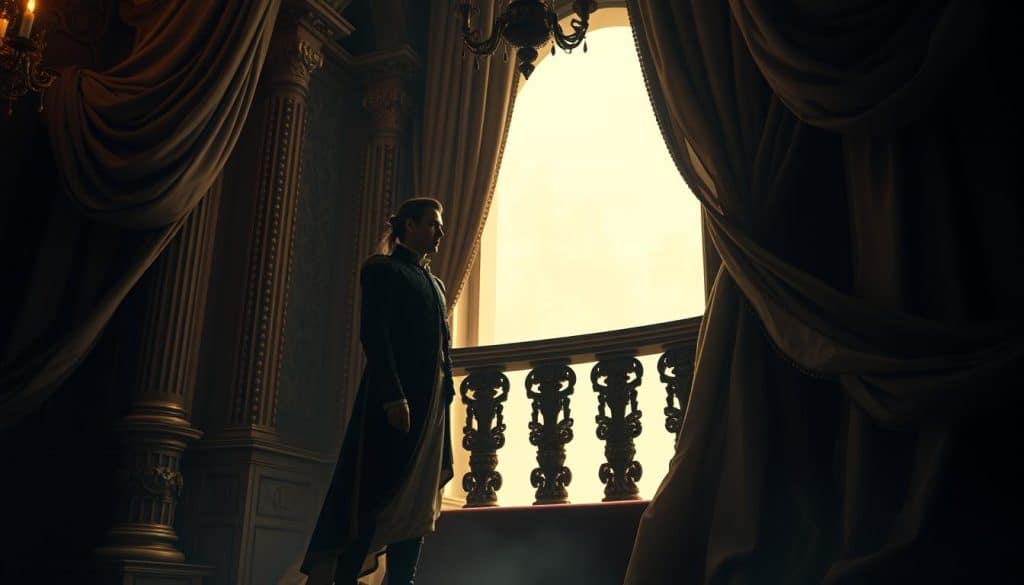
Act One: Wings, Chains, and Family Drama
Imagine a princess-turned-knight (Rosaura) falling off a flying horse near a tower. Prince Segismundo is there, wearing animal skins and talking about free will. It’s not a Game of Thrones fanfic – it’s the play’s start.
Calderón mixes three explosive elements into his drama:
- A prophecy-obsessed king (Basilio) playing 4D chess with fate
- A shackled prince who’d make Freud write three extra chapters
- A gender-fluid heroine with better sword skills than Zorro
Rosaura’s Gender-Bending Odyssey
Rosaura’s cross-dressing is not just progressive – it’s survival. Her journey from jilted lover to justice-seeker raises big questions. Can you trust a man raised in a cave? Should horse theft be a meet-cute? Why do Spanish Golden Age plays need more memes?
| Character | Vibe | Modern Equivalent |
|---|---|---|
| Rosaura | Disguised badass | Taylor Swift in Reputation era |
| Segismundo | Philosophical himbo | Thor meets Jordan Peterson |
| King Basilio | Astrology meme king | Elon Musk reading horoscopes |
The opening act is genius. It starts as a Life is a Dream summary of palace intrigue. But it quickly turns into a masterclass in existential panic. When Rosaura and Segismundo meet, it’s not just a “meet-cute.” It’s a deep, complicated moment.
Themes: Reality, Fate, and Free Will
Calderón’s masterpiece poses a deep question: Are we Sims characters in God’s video game or writing our own stories? This Spanish drama turns existential fear into art, mixing palace secrets with sharp philosophy.
The Great Baroque Reality Show
Picture Survivor: Poland Edition and The Matrix combined. Basilio’s kingdom is like a royally produced Truman Show, with:
- Scripted prophecies (astrological spoilers)
- Contestant Segismundo (unwilling star)
- Plot twists involving family drama and sword fights
The play’s complex realities make modern VR seem simple. When Segismundo questions his fate, we all become philosophy majors discussing simulation theory.
Astrology vs Agency in Basilio’s Poland
King Basilio runs his realm like an overzealous algorithm predicting TikTok trends. His three big mistakes:
- Trusting star charts over parental instincts
- Confusing containment with character development
- Underestimating Segismundo’s capacity for growth
| Celestial Determinism | Human Agency | Modern Parallel |
|---|---|---|
| Basilio’s fatalistic prophecies | Segismundo’s moral choices | Algorithmic content curation |
| Astrological “sentence first, verdict afterward” | Rosaura’s revenge mission | Social media echo chambers |
| Stars as cosmic prison guards | Clotaldo’s conflicted loyalty | Predictive policing models |
This allegory explores power and perception. It asks if we’re as free as Segismundo – or just better at justifying our situations. When Basilio’s astrology app fails, we see the tragedy: A king who imprisoned his son to avoid fate… became fate’s perfect puppet.
Philosophical and Moral Questions
What do 17th-century Spanish drama and Silicon Valley boardrooms have in common? Calderón de la Barca’s Life is a Dream brings up ethical dilemmas that feel familiar today. We’ll explore these through a mix of old-fashioned and modern perspectives.
When Good Kings Do Bad Things
King Basilio uses zodiac signs to guide his parenting, making Elon Musk’s Twitter polls seem tame. He locks up his son Sigismund due to astrological fears. This raises questions: Does power excuse bad decisions? Or is leadership just about looking good while managing crises?
Clotaldo’s Crisis: Jailer or Dad?
Clotaldo is a conflicted hero from the 1600s. He’s like a tech executive dealing with privacy issues. LitCharts points out his struggles are similar to today’s:
“Do we follow orders or rewrite the rules when systems fail?”
Imagine Mark Zuckerberg finding out Facebook is his son. That’s Calderón’s world.
| 17th-Century Dilemma | Modern Parallel | Ethical Question |
|---|---|---|
| Basilio’s astrological tyranny | Algorithmic bias in AI | Who controls fate—humans or systems? |
| Clotaldo’s divided loyalties | Tech whistleblowers | Duty to employer vs. moral truth |
| Sigismund’s prison vs. palace | Social media persona vs. real self | Can we escape constructed identities? |
Calderón’s work is urgent and relatable. His characters face real-life dilemmas, not just philosophical debates. The play asks us: Can ethics keep up with technology? Or are we just dressing up old habits in new clothes?
Historical Reception and Legacy
Every masterpiece has its ups and downs. Calderón de la Barca’s Life is a Dream has seen it all. It went from being called “heretical trash” to an “existential bible” in no time. This journey took it from being a forgotten play to a favorite in philosophy classes.
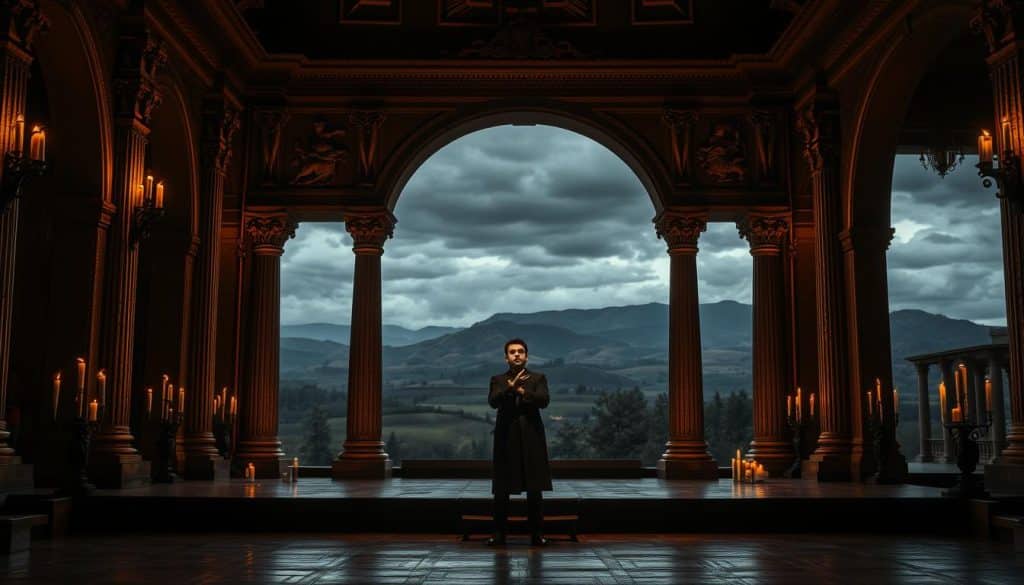
From Heretical to Canonical
When it first came out in 1635, critics were harsh. Church leaders saw its themes of free will as dangerous. One censor even wrote “DANGEROUS IDEAS” in the margins, like a warning label.
“A puzzle-box of paradoxes wrapped in celestial melodrama.”
In the 19th century, Romantics loved it for its bold ideas. They saw Sigismund’s struggles as inspiring. By 1920, universities were filled with scholars discussing Calderón de la Barca’s work.
The Play’s Academic Glow-Up
Today, this play is a favorite in many fields. It’s used to teach about existentialism, postmodernism, and even AI ethics.
| Era | Academic Use | Pop Culture Cameo |
|---|---|---|
| 1960s | Existentialism 101 | Borges’ Labyrinths essay |
| 1990s | Postmodernism seminars | Simpsons’ “Monkey’s Paw” parody |
| 2020s | AI ethics courses | Rick & Morty’s simulation rants |
Now, philosophers and scientists quote it. They use it to explain complex ideas. It’s amazing how a play that once faced censorship is now so influential.
Integrating the Play into Curriculum
How do you make 17th-century Spanish drama appealing to students who find Shakespeare too much? The trick is to use their love for digital media. Calderón’s work is not just a play; it’s a digital puzzle waiting to be solved.
Teaching Existentialism to Snapchat Natives
Ditch the old-school chalkboards. Begin by asking: “Is your Instagram persona more real than your real self?” Suddenly, Segismundo’s “¿Qué es la vida?” becomes eerily familiar. Here are some tactics to engage your students:
- TikTok soliloquy challenges where students redo Segismundo’s prison speeches with viral sounds
- Instagram story templates that explore Rosaura’s dual lives through split-screen filters
- Google Docs “Fate Simulators” where students live-edit each other’s life choices in real-time
“I dream I am bound in chains, and I wake to find myself truly bound.”
Prison Break: Educational Edition
Transform Basilio’s tower into a choose-your-own-adventure game. Our eBook offers interactive tools for students to:
- Imagine different endings based on various philosophies
- Compare Segismundo’s prison to today’s digital isolation
- Design funny “escape plans” that need textual proof as keys
The real magic happens when Spanish drama meets Gen Z’s existential fears. When a student says “This is just like when my TikTok got shadowbanned,” you know Calderón’s 400-year-old themes are hitting home.
Sample Discussion Questions
Imagine Shakespeare in the Hood meeting Black Mirror. That’s the vibe we’re going for. We’re turning Calderón’s 400-year-old story into a rap battle about fate and TikTok.
Reality Checks for Digital Natives
These questions use Gen Z’s worries to explore the play’s themes. Think of them as a spicy twist for boring schoolwork:
- Would Segismundo get canceled? Discuss his journey from wild prince to leader through today’s lens
- Rosaura’s revenge plot: Is it toxic feminism or a #MeToo moment? Back it up with the play’s words
- Astrological determinism: If your stars said you’d fail, would you study? Link it to the play’s fatalism
“What Would You Do?” – Baroque Edition
We’ve mixed the play’s tough choices into reality TV shows even Bravo fans would love:
“Life’s but a filtered selfie, and we’re all chasing likes in the dark”
- Your royal parent locks you in a tower “for the kingdom’s safety.” What do you do? a) Start a conspiracy TikTok b) Write a tell-all memoir c) Forgive them later?
- Find out your BFF is your half-sibling (thanks, AncestryDNA!). What’s your move? a) Leak the tea on Twitter b) Confront your parents at Thanksgiving c) Quote Act III about life’s illusions?
These lesson plans turn old stories into debates students choose to have. Tip: View philosophical ideas as “life hacks” – suddenly, Shakespeare’s words are super cool.
Additional Resources
Teaching Calderón’s masterpiece is now easier than ever. No more dealing with old books or hard-to-read texts. The digital world gives us better tools to explore this classic play.
From Page to Pixel
Project Gutenberg offers a free eBook version. Students can highlight important parts with ease. Google Books lets them track their notes, like a detective following clues.
For those who learn by listening, Spotify playlists mix old and new music. This creates a bridge between 1635 Madrid and today’s world.
Digital Toolbox for Drama Nerds
The Folger Shakespeare Library has lesson plans for Spanish Golden Age theater. They include AI-powered tools to map characters. CrashCourse’s YouTube videos on fate and free will are great for class prep.
Drama teachers can find original manuscripts at the British Library. Seeing 400-year-old ink blots shows how reality can change over time.
