

Imagine if Aristotle’s “universal truths” were now in dragon costumes, arguing with holographic ghosts. Modern theater is like a cultural TARDIS. It mixes old myths with new staging tricks that would surprise Salvador Dalí.
Le Bal’s dance is a mix of the living and the dead, where time bends like paper. It’s not just telling stories; it’s changing culture.
In the 1940s, dramas focused on life and death over drinks. Now, myth-based theater is like Sartre in a maze with a TikTok Minotaur. These shows don’t just use myths; they hack them with tech and designs that make Harry Potter seem simple.
Why does this matter? It’s because when Scola’s dreamy scenes meet Silicon Valley tech, we’re not just watching plays. We’re experiencing a memory upgrade. The stage is like a DeLorean, mixing ancient stories with AI. It’s chaotic. It’s amazing. And it’s changing how we see truth.
Introduction: Why Fantasy and Folklore Endure
Why do adults cry over stories of water nymphs and get upset about CGI dragons? Aristotle said it 2,300 years ago: “Tragedy cleanses the soul through pity and terror.” Today, myth-based theater is like a group therapy session with cool costumes.
Jean-Paul Sartre’s Les Mouches shows it’s not just about escaping. His version of Greek furies became a message of resistance during Nazi rule. The play’s tough choices, mixed with supernatural themes, let Parisians discuss tough issues safely. Fantasy drama isn’t avoiding reality; it’s hiding truth in plain sight.
Here are three reasons these stories last:
- Timeless cheat codes: Myths come with deep cultural meaning (no need for explanations)
- Plausible deniability: They let us critique power without directly naming it
- Collective catharsis: Sharing awe is better than scrolling alone
When Sartre made Zeus a small-time official in 1943, people saw more than gods. They saw the faces of Vichy officials. Today, playwrights use TikTok filters instead of thunderbolts, but the message stays the same. An Off-Broadway director once said:
“We don’t do allegory. We do ‘alternative facts’ with better lighting.”
So, when someone mocks “fairy tales for adults,” tell them: Water nymphs don’t care about your money. But they might help you get through tough times.
The Story of Ondine and Other Mythic Plays
Fantasy drama shines when reality fades. Ondine’s story is a perfect example. Jean Giraudoux’s 1939 play turned a water nymph myth into a wartime allegory. It made Parisian theatergoers wonder if mermaids or politicians were more deadly.
His La Folle de Chaillot is more than a play. It’s a mirror for societal decay, wrapped in scales and saltwater.
“We’re all just fish in God’s aquarium.”
Why does Ondine’s story keep coming back? It’s because directors love its metaphorical flexibility. After World War II, it became a symbol of nuclear fears. In 1983, it hit Broadway as a Wall Street siren. Now, it’s seen as a warning about climate change, blending ecological concerns with social media trends.
Ettore Scola’s Le Bal idea shows why these myths stick around. His ballroom setting lets the stage become anything. This freedom from reality makes these stories timeless.
Modern productions use this freedom to their advantage:
- Projection-mapped waterfalls replace old-school effects
- Tinder date scenes meet oceanic monologues
- Audience members get splashed in storm scenes
The real magic lies in how Ondine shows us, not just herself. Every production reflects our world’s darker corners. You’ll see corporate greed, environmental disasters, and influencer culture. She’s a mirror, polished with kelp and regret.
The latest version turns Ondine into a Gen Z content creator. Critics say it’s shallow, but that’s the point. Fantasy drama reflects our shallowest desires through mythic filters. Next up? Ondine as an AI hologram. Place your bets now.
Staging the Magical: Design and Effects
How do you make a dragon appear without looking like a theater prop? The secret is theatrical alchemy. It’s the mix of creativity and engineering that brings fantasy to life. Let’s explore the magic behind making magic believable.
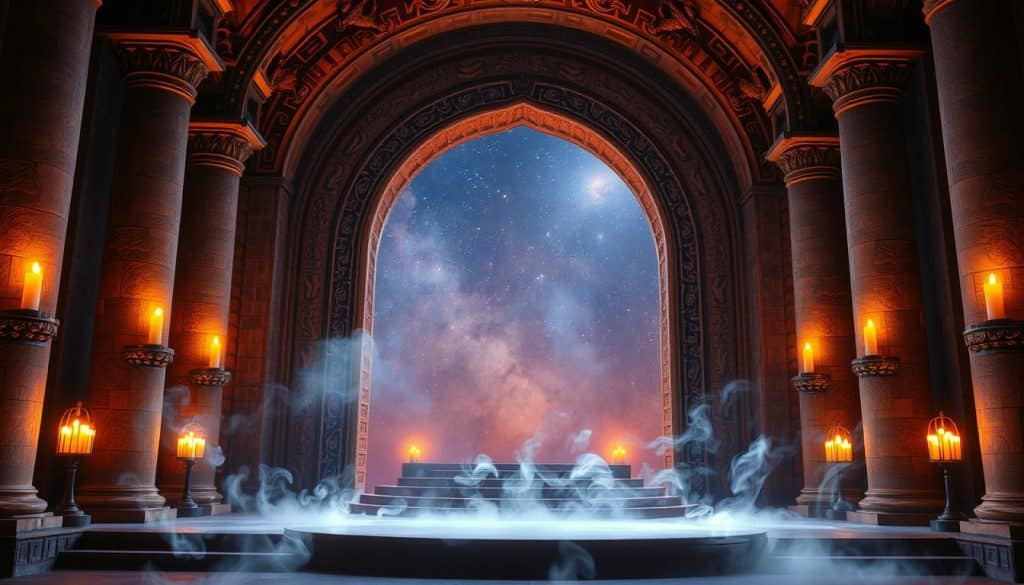
After World War II, designers had to be very creative because of limited resources. A 1947 Parisian production of Ondine used silk panels to create the illusion of water. This idea was later seen as a highlight of theater by film critic André Bazin. Today, designers use holograms and augmented reality, but the idea is the same: constraints breed creativity.
| Era | Signature Technique | Modern Equivalent |
|---|---|---|
| 1940s | Shadow puppetry + rotating flats | 3D projection mapping |
| 1970s | Analog fog + colored gels | Atmospheric haptic feedback |
| 2020s | Manual trapdoors | Magnetic levitation stages |
The magic happens when technology supports the story. Le Bal’s 2019 revival used cinematic transitions to blend scenes. Actors slid through walls that showed projections, making the transition between worlds seamless. This is magical realism in action: the ordinary becomes extraordinary through smart design.
Audiences today want big shows but also a personal touch. The answer is to mix old and new. A recent Off-Broadway fantasy drama used old pulleys and new AI textures. It created a fire-breathing serpent that felt both old and new. This is where magic really happens.
Contemporary Fantasy on Stage
Imagine a Tony Award voter and a D&D dungeon master teaming up. That’s today’s fantasy theater, where family-friendly plays meet magical realism. Stages now explore deep ideas through puppetry and meta-mythology. And yes, they include cool CGI dragon fights.
Back in the 1940s, Broadway loved Greek plays. Now, we have Hamilton-style shows that mix history with today’s sounds. Plays like Hadestown and The Lightning Thief dive deep into myths, making them feel fresh and relevant.
Today’s shows aim to balance big visuals with meaningful stories:
| Element | 1940s Approach | 2020s Solution |
|---|---|---|
| Magic Systems | Smoke machines & trap doors | Projection mapping + TikTok filters |
| Moral Complexity | Clear heroes/villains | Shapeshifting antiheroes |
| Audience Engagement | Program notes | ARG pre-show puzzles |
The magic lies in making magical realism feel real. Shows like Harry Potter and the Cursed Child show us. They mix fantasy with relatable human stories, making us care deeply.
This isn’t your old Narnia play. Today’s family-friendly plays come with guides and warnings. They ask big questions, like: Can a talking wolf stand for oppression? Should we talk about centaurs’ pronouns? Modern fantasy theater wants more than just applause; it seeks to change us.
Family vs. Adult Audiences
Why do today’s kids’ shows have deep themes like Sartre’s plays? It’s because of post-war consumerism’s dark side. Theater producers found a hit with family-friendly plays that appeal to both parents and kids. But over time, this genre has become two-faced.
The Disney style is all about sparkly dragons and villains who say sorry. But then there are plays like The Ocean at the End of the Lane. Here, magical realism is a way to fight against real monsters. It’s like comparing Bluey to True Detective: Fairy Realm Edition.
| Element | Traditional Family Plays | Modern Adult-Oriented Fantasy |
|---|---|---|
| Conflict Resolution | Hugs and life lessons | Blood pacts and moral ambiguity |
| Costume Budget | $500 (felt and glitter) | $50,000 (animatronic wolf fur) |
| Post-Show Conversations | “Who was your favorite princess?” | “Do you think the forest god represented capitalism?” |
This split shows our cultural confusion. We crave both childhood wonder and deep themes. So, we get plays that entertain kids and haunt adults.
Producers know they’re walking a thin line. One Broadway marketer shared: “We market family-friendly plays as ‘Harry Potter meets Kierkegaard.’ Parents think it’s educational. But really, we’re making existential dread fun.”
Teaching Myth Through Theater
Who needs Sunday school when Medea teaches conflict resolution? Modern myth-based theater is secretly teaching ethics. No chalkboards needed. Today, moral lessons come from Clytemnestra’s anger and Loki’s mischief.
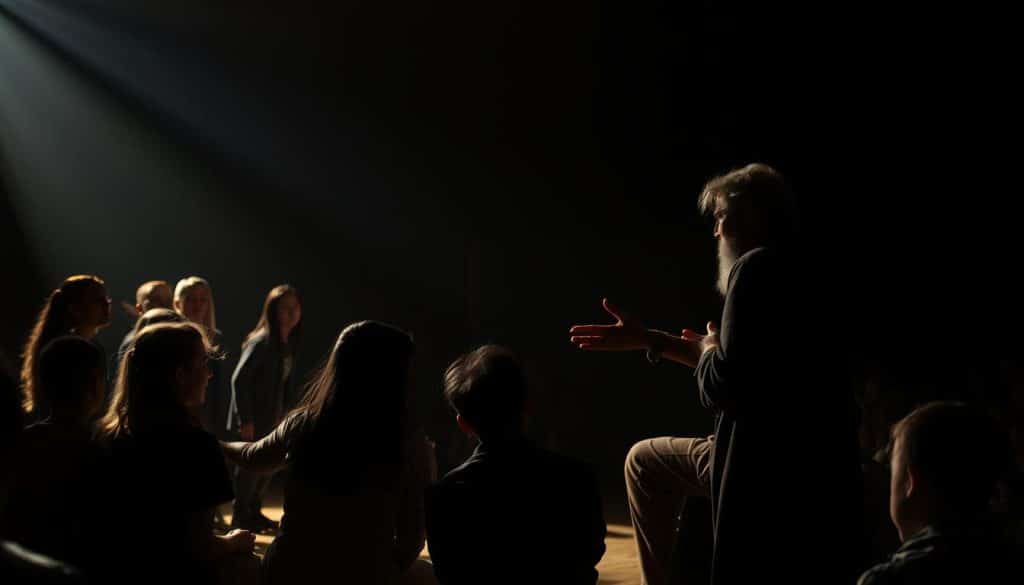
Sartre’s The Flies is now in philosophy classes. It makes students think about free will. They become Orestes, deciding if to challenge divine rulers. A UCLA theater professor says it’s like Westworld meets Plato’s Cave.
“We used Medea’s infanticide scene to discuss workplace retaliation. Ancient Greek horror makes HR policies unforgettable.”
Myth-based theater meets Gen Z’s values. Loki is their spirit animal because he represents fluid identities and rebellion. A TikTok review says Loki is like a therapist who says “maladaptive coping mechanisms” but in style.
Modern adaptations are getting smart:
- Hades-Persephone stories teach consent culture
- Indigenous myths teach about climate activism
- Afrofuturist Anansi plays show how to understand algorithmic bias
This isn’t your grandma’s morality play. Medea’s rage and Loki’s chaos test our worldviews. The question is: Which ancient god would pass your company’s diversity training?
Director and Designer Interviews
Ever wonder how artists make “water spirits believable” with a tiny budget? We talked to the minds behind Ondine and other fantasy dramas. They shared their real stories, the ones you won’t see in the show.
“They wanted a dragon’s aura for the price of a desk lamp. I showed them my electric bill and quit.”
This quote captures the struggle of modern fantasy theater. Designers face spectacle demands and budget realities. They often create drama behind the scenes. The Ondine team found a creative solution for their aquatic effects:
| Role | Challenge | Improvised Solution | Cost |
|---|---|---|---|
| Lighting Designer | Simulate underwater refraction | LED projections on shower curtains | $800 |
| Costume Director | Create “liquid” fabric movement | Recycled plastic wrap + industrial fans | $350 |
| Sound Engineer | Mimic mystical voices | Karaoke mic effects + wine-drunk interns | $0 (mostly) |
Directors shared the real cost of magic. One said: “Our flying rig once dropped an actor mid-swoop. Turns out audiences think falling centaurs are comedy gold.” These stories show the harsh truth – fantasy drama often relies on duct tape and dreams.
But, creative limits can spark innovation. The designer who quit over dragon demands later created a shadow-puppet kraken that stole the show. As one director joked: “Our budget limitations are just plot devices in disguise.”
Rising Trends in Fantasy Theater
Fantasy theater is changing fast, like a chameleon at a rave. Some trends stick around, while others disappear quickly. Let’s look at what’s working and what’s not.
The 1940s experimentalists would be amazed by today’s magical realism movement. Now, characters from A Midsummer Night’s Dream can appear above the audience. But, it’s not clear if this helps Shakespeare or just entertains tech fans.
One Broadway designer said:
“The 1940s were less about fairy dust and more about Freudian nightmares.”
Here are three trends that stand out:
- Climate allegories with teeth: Shows like An Inconvenient Truth and The Lion King tackle environmental issues. But, they don’t always hit the mark.
- Audience-as-protagonist: Plays where viewers decide the story’s direction. For example, Labyrinth of the Minotaur had 17 endings. But, most people chose the same option.
- Neo-mythic mashups: Think Medea on TikTok or Icarus as a crypto enthusiast. These ideas can spark great conversations or fail miserably.
Talking polar bears might not change minds, but magical realism can. A recent play left audiences with handwritten letters from “fairies.” It was simple but unforgettable.
AI-generated scripts, like Ragnarök 2.0, are a mixed bag. A Chicago theater’s AI-written play was a flop. It showed that machines can’t always understand human stories.
Audiences want wonder that means something, not just spectacle. As one director said, “We’re not making theme park rides. We’re exploring what happens when the theme park burns down.” That’s a trend worth keeping.
Further Viewing/Reading
Reaching this point without turning into a fairy or quoting Sartre is a feat. You’ve earned a special invitation to explore the world of folklore and fantasy. Start with Jean Giraudoux’s Ondine, where water nymphs explore human absurdity. Then, dive into Sartre’s The Flies for a look at gods who might fail therapy.
If you prefer Minotaurs to philosophers, check out Bull in a China Shop. This Off-Broadway play is a romp where the Minotaur does stand-up between existential crises.
For a feminist take on folklore, read Marina Warner’s From the Beast to the Blonde. It’s a critical look at Disney’s princesses. Maria Tatar’s The Heroine with 1001 Faces offers a fresh view of mythic women as clever survivors. It’s great for book clubs and games.
Watch the National Theatre’s Hadestown to see how Persephone’s story became a hit musical. It’s a commentary on climate change. Design fans will love Rae Smith’s work on War Horse, where puppets outshine humans.
Don’t miss PigPen Theatre Co.’s shadow puppet shows. They turn campfire tales into Twilight Zone episodes. The Folger Shakespeare Library has digital archives with Macbeth’s witches as TikTok stars. The Oregon Shakespeare Festival’s Into the Woods revival is worth debating.
For more, check out Emma Rice’s Wise Children company. Their shows blend folklore with modern flair, like Midsummer Night’s Dream meets RuPaul’s Drag Race.
Remember, JSTOR articles on ritual theater go well with bourbon. Drama Online’s fantasy stage collection is best with popcorn. Just be careful around mirrors if you’ve read too much Narcissus lore.
