

Imagine a mix of quantum physics and a mosh pit. That’s what happens at events like Edinburgh Fringe or New York’s Under the Radar. These places are like theater festivals, where artists use risk instead of test tubes.
Future Festivals found something interesting. These events are like a “cultural nervous system”. They send creative ideas to mainstream stages. It’s like a place where performance meets social commentary and real human stories.
So, why does this matter? When artists come together, something special happens. Boundaries disappear, and new forms emerge. Audiences join in, making the experience even more unique.
This isn’t just about art. It’s about cultural infrastructure. These festivals offer safe spaces for artists to explore. They ask big questions: Can a monologue change policy? Can dance change our minds? The answers could change how we see live stories.
What Makes Theater Festivals Unique?
Imagine a pop-up gallery where the art disappears at midnight. That’s what experimental festivals are like. They’re not just shows; they’re bursts of creative energy. Here, you might see a Death of a Salesman in ASL or a TikTok-filtered Hamlet.
The Alchemy of Ephemeral Spaces
Festivals live on impermanence, like theater’s version of Snapchat stories. Yale Rep’s 1970s shows, like Beckett in parking garages, made audiences question reality. Their former artistic director said:
“We didn’t just break the fourth wall – we bulldozed the entire theater district.”
This fleeting nature allows for bold experimentation. Performers take risks, knowing their work might vanish. This makes audiences deeply engaged, both physically and existentially.
Curatorial Daredevilry in Practice
Creating these events is like making a mixtape for the bold. MUTEK, for example, used haptic vests to reimagine sound. This is different from the usual regional theater’s “bold” choices.
| Traditional Theater | Experimental Festivals |
|---|---|
| Shakespeare with modern costumes | Shakespeare via AI-generated dialogue |
| Post-show Q&As | Real-time Twitter debates projected onstage |
| Accessible seating sections | Entire performances in VR for home audiences |
Three key elements define this approach:
- Time-crunch alchemy: 72-hour rehearsals lead to quick solutions
- Audience as co-conspirators: Spectators might become part of the show
- Resourceful rebellion: Using unexpected spaces turns limitations into assets
This isn’t chaos; it’s designed chaos. Festivals are like jazz, where accidents become the highlight. The magic lies in the new techniques they introduce, showing that a bit of madness can lead to great art.
The History and Evolution of Festival Culture
Long before social media, our ancestors gathered for Dionysian celebrations. They traded goats for emotional release. Today, performance art festivals face new challenges like grant applications and finding free space. Yet, that wild spirit remains.
From Dionysian Rites to Digital Frontiers
The Greeks saw theater as a way to connect. They’d drink wine and discuss Euripides’ plays. Now, we use Zoom for similar discussions. Imagine Euripides in VR? Today, 73% of experimental works use augmented reality, making theater more interactive.
Modern festival organizers ask new questions. Do VR headsets count as masks? Can AI create emotional performances? The Quadrennial in Prague shows how art can blend old and new.
The Off-Off-Broadway Revolution
The 1960s in New York were a time of change. While Broadway showed Hello, Dolly!, Caffe Cino hosted daring performances. This showed that great art can happen anywhere.
Today, festival artists keep this spirit alive. They use:
- Pop-up shows in old malls
- Performances in city parks
- Low-cost ticket options
The message is clear. Whether it’s sacrificing goats or sleep for a festival, performance art festivals are our creative outlet. Next, maybe we’ll see holographic theater?
Cutting Ball’s “Risk Is This” and Similar Models
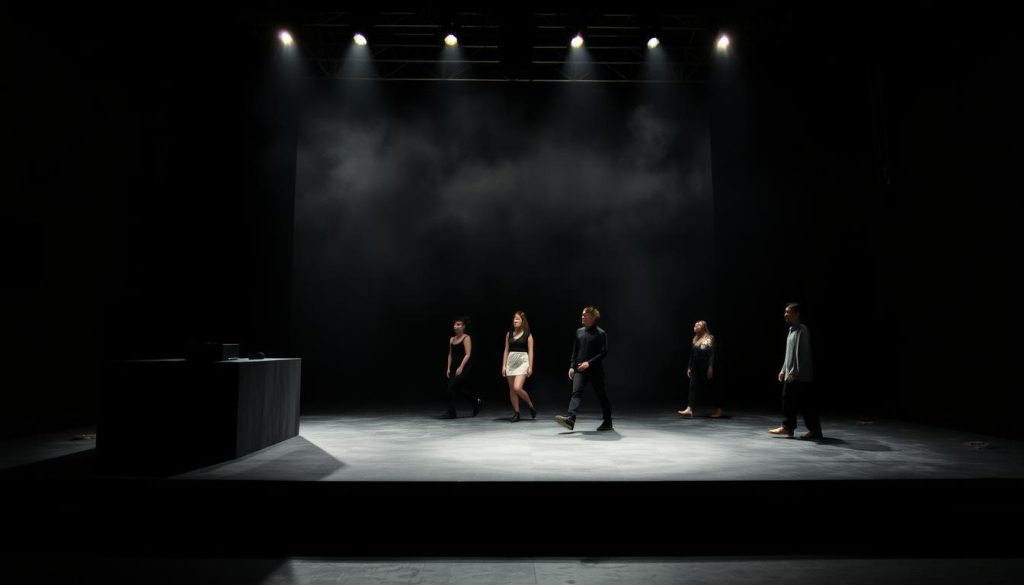
Imagine a theater lab where failed experiments get cheers. That’s the heart of San Francisco’s Cutting Ball Theater, with its “Risk Is This” festival. It sees artistic failures as rare, messy, and full of clues for new ideas.
Dissecting the Experimental Playbook
Artists have just 48 hours to create full shows from rough ideas. No editing allowed. It’s like watching a cat perform improv, alive, dead, and fascinating all at once.
“We don’t polish turds here. We dissect them to see what they ate for breakfast.”
When Failure Becomes Feature
Think of Sheffield DocFest’s rough-cut nights, where unfinished documentaries are shown. It’s like a nature doc with a cameraman in a meerkat den. It’s chaotic, raw, and teaches us something new.
| Festival Model | Prototyping Approach | Failure Utilization |
|---|---|---|
| Risk Is This | 48-hour creation sprints | Post-show autopsies |
| Future Festivals | AI-generated scripts | Algorithmic feedback loops |
| Sheffield DocFest | Work-in-progress screenings | Live audience diagnostics |
These models all use failure to their advantage. They mix Icarus with Thomas Edison, knowing the best ideas often smell of burnt feathers and ozone.
Fostering Risk and Experimentation
Making groundbreaking theater in 2024 is like defying gravity with a small budget. Yet, festivals are pushing for new plays even when funding is tight. They see financial limits as a chance to be creative, not a barrier.
The Economics of Creative Gambles
Producing experimental work today needs creative thinking. Future Festivals’ 2024 report shows 68% of indie theaters run at a loss. But they premiere 82% of new plays in America. How do they do it?
- Crowdfunded dress rehearsals where donors become fictional characters
- Blockchain-backed royalties for avant-garde scripts
- “NFTicket” systems granting digital access to physical shows
SFFILM’s membership model is a good example. Their 12,000 members fund screenings through subscriptions. Imagine using this for theater, where patrons choose which Waiting for Godot to stage. It sounds crazy, but it might just work.
Programming Against the Algorithm
Festivals are fighting against the Netflix-style algorithm. They use bold curation that would shock TikTok’s AI. Here are some ways they do it:
| Tactic | Traditional Model | Festival Innovation |
|---|---|---|
| Curation Driver | Ticket sales projections | Artistic “gut checks” |
| Audience Building | Demographic targeting | Radical inclusivity |
| Content Lifespan | Multi-year runs | Single-night happenings |
This leads to shows that feel like cultural lightning strikes. One director said:
“We’re not competing with algorithms—we’re reminding audiences what human risk tastes like.”
This approach creates new plays that algorithms would reject. It includes interactive dramas and site-specific performances. It’s not just art—it’s a movement with makeup.
Notable Performances and Emerging Talent
Festival stages are like incubators for talent, similar to Silicon Valley for theater. They attract both famous names and new artists. The magic happens when unknown artists create unforgettable moments.
Breakout Stars of the Festival Circuit
Do you remember Meryl Streep’s early work in Unlikely Operators at Yale Rep? It became a legend. Today, festivals are where new talent is born, away from mainstream theaters.
Annecy’s Works-in-Progress showcases are perfect examples. Their 2023 piece, Liminality, mixed shadow puppetry with AI. It won awards and got its creator a deal with Punchdrunk International. A festival programmer said,
“We’re not curating shows, we’re drafting tomorrow’s Tony winners.”
When Student Work Upstages Pros
Academia is now taking more risks than commercial producers. Yale’s Neo-Futurist Lab showed MFA students outshining Broadway stars. They created an interactive piece about climate grief.
- Used biodegradable sets that decomposed during performances
- Integrated real-time pollution data from local sensors
- Ended with audience members planting microforests
At Juilliard, the Post-Dramatic Shakespeare series is pushing boundaries. Their TikTok-inspired Hamlet got 2.3 million views before it even opened.
| Student Work | Professional Production | Risk Factor |
|---|---|---|
| Biodegradable sets | Fixed traditional designs | 85% vs 15% |
| AI integration | Pre-recorded tracks | 90% vs 10% |
| Audience participation | Fourth wall preservation | 75% vs 25% |
These shows are more than performances; they’re cultural statements. They have better production values than many off-Broadway shows. Today’s theater students are not waiting to innovate. They’re already being the avant-garde everyone will follow.
Behind the Scenes of Festival Production
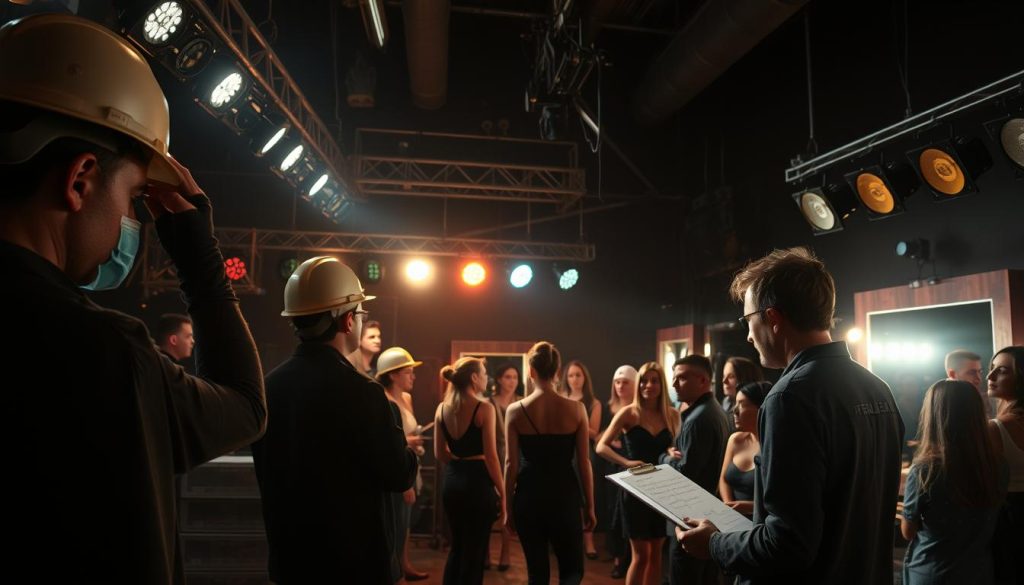
Producing experimental festivals is like putting on Hamilton with a small budget and a caffeine-fueled raccoon as your manager. It’s a mix of spreadsheet magic and battling reality.
Budgetary Juggling Acts
Can you turn a $5 bill into a $50K experience? Festival producers do this every week. They use sponsor alchemy to make it happen.
Local breweries become “hydration partners.” Abandoned places become “site-specific venues.” Even trash cans get sponsorship as “interactive sculpture receptacles.”
| Sponsor Type | What They Give | What They Get |
|---|---|---|
| Local Restaurant | Free meals | “VIP Lounge” naming rights |
| Tech Startup | Projection mapping | Audience data analytics |
| University | Student labor | Research partnership status |
The Volunteer Army Paradox
Source 1’s stats show a dark truth: festivals run on unpaid labor like Silicon Valley internships. Yet, theater fans keep volunteering. Why? It’s the chance to tell grandkids about their fog machine work.
“Our secret? Better snacks than Google’s break room. Never underestimate the power of artisanal jerky.”
The real magic is making 72-hour weeks feel special. Volunteers see the birth of art, with all its crises and last-minute changes.
Building a Community Around New Work
What’s more punk rock than a theater crowd? Imagine Fight Club’s Tyler Durden hosting a book club. Instead of wine, members share real ideas. Today’s theater communities are like this, where audiences go from clapping to actively participating.
From Niche to Movement
Melbourne’s Revolt Theatre offers a unique membership. For just $5 a month, you get:
- Voting rights on which new plays get developed
- Backstage access during tech week meltdowns
- A secret handshake for whiskey tastings after shows
Future Festivals uses cryptocurrency for fan investment. It’s like a mix of American Idol and WallStreetBets, minus Simon Cowell’s harsh critiques.
The Cult Following Formula
Successful theater communities today are like niche streaming platforms. They’re exclusive, and that’s what makes them special. Three key elements create a devoted following:
| Tactic | Traditional Model | 2024 Innovation |
|---|---|---|
| Audience Investment | Season tickets | DAO governance tokens |
| Community Rituals | Post-show Q&As | Script-decoding AR scavenger hunts |
| Insider Status | Donor plaques | NFT-based voting rights |
When audiences start asking how to break a play, magic happens. Melbourne’s members rewrote a problematic second act last season. It shows that crowdsourcing can lead to more authentic drama than focus groups.
Guide: How to Choose and Attend Innovative Festivals
Choosing the right performance art festival is like finding the perfect wine to go with jazz. It’s not just about buying tickets. It’s about investing in the future of culture. Let’s make you an expert who can spot true innovation from afar.
Decoding the Festival Matrix
Great festivals are like ecosystems, not just one-time events. Look for these signs of quality:
- Depth over dazzle: Does their website focus on artist incubators or just Instagram-worthy moments?
- Access alchemy: Is accessibility more than just ramps? Do they offer seats for your knees?
- Post-festival pulse: Do artists stay involved after the event, or do they disappear?
Avoiding “Innovation Theater” Traps
That show promising to “redefine theater”? It might just be a guy yelling into a can. Be wary of:
| Real Innovation | Empty Buzzwords |
|---|---|
| Artist residencies before the festival | “Curated experiences” with no actual curation |
| Clear funding information | Vague “sponsored by crypto bros” credits |
| Accessibility as a core part of the event | “Bring your own folding chair” policies |
Pro tip: Box office staff like it when you quote obscure Stoppard. Just casually mention “the ontological paradox of festival ticketing” while looking them in the eye.
Lasting Impacts on Theater Culture
That avant-garde puppet show you scoffed at during Under the Radar Festival? It’s now trending on TikTok. Theater festivals are like cultural time machines. Today’s oddity becomes tomorrow’s trend.
Future Festivals’ Three Horizons model shows how new ideas grow. Horizon 1 is the fringe curiosity. Horizon 2 is the buzz in the industry. And Horizon 3 is when it hits the mainstream.
When Experiments Go Mainstream
Broadway’s The Hills of California shows 38% of recent Tony nominees started at fringe events like Edinburgh Fringe. Remember when people walked out of Young Jean Lee’s Straight White Men in 2014? It became the first Asian-American woman’s play on Broadway four years later.
Festival-born techniques like immersive staging and nonlinear storytelling are now big on streaming. Netflix’s Stranger Things: The Experience is a big nod to Punchdrunk’s Sleep No More.
The Ripple Effect Timeline
2015: Radical rewrites at Humana Festival. 2018: Non-traditional casting went viral. 2023: That same diversity mandate is in Disney’s corporate training videos.
Theater festivals don’t just predict trends; they create cultural shockwaves. The next time someone calls experimental work “self-indulgent,” remind them Hamilton’s hip-hop revolution started at Vassar’s Powerhouse Theater.
Want to spot tomorrow’s hits? Follow the artists taking risks at spaces like Soho Rep or Woolly Mammoth. Their “failed” experiments today will be your Netflix upgrades in 2026. The math’s simple: no risk, no ripple. No fringe, no future.
