

What happens when art becomes dangerous? It’s not just about actors tripping over props. It’s about performances where artists handcuff audiences to chairs. Shows where stages vanish like Houdini’s rabbits. Welcome to the Fight Club of live art – where avant-garde performance isn’t just a genre, but a survival tactic.
In Minsk, the underground scene is different. While most theaters focus on ticket sales, Belarus Free Theatre worries about police raids. Their shows, held in basements and whispered like state secrets, turn spectators into co-conspirators. New York’s Walkerspace, known for its raw shows, closed its doors with the finality of a Shakespearean tragedy.
Why should you care? These spaces are society’s canary in the coal mine. When Walkerspace closed, it was a warning about commercialized creativity. The Risk Is This ethos isn’t about shock value. It’s about asking uncomfortable questions before the house lights come up.
Think of this as your backstage pass to performances that’d give your high school drama teacher nightmares. We’re diving into shows where the fourth wall isn’t just broken – it’s demolished with political subtext and existential dread. Curtain up.
What Defines an Experimental Theater Festival?
Imagine a TED Talk where the speaker starts juggling flaming cards. That’s the vibe of experimental theater festivals. They mix learning with excitement, turning art into a new experience.
SPILL Festival has dinner debates with a twist. Gob Squad performs in parking garages, making everyone part of the show. Belgian artist Jan Fabre says:
“We’re not here to decorate your world, but to create necessary tremors in its foundations.”
These festivals stand out from regular theater in three ways:
- Collision over polish: Raw energy beats perfect scripts
- Space as co-star: Warehouses compete with actors for attention
- Audience as accomplice: Your phone might be a prop; your hesitation, part of the story
This isn’t just art’s edgy phase. It’s theater’s chance to be bold and creative. The magic happens when the audience gets involved, helping shape the story.
Fire codes are tested, and walls come down. Amidst the risk and discovery, we see why live theater is important in our digital world.
The Legacy of “Risk Is This”
If theater were a contact sport, “Risk Is This” would be its X Games. It’s all about creative challenges and standing ovations. Olivia Satchell’s Risk Factory pushed actors to new emotional heights.
Imagine Sydney performers doing midnight improv and facing audience questions. They even changed scripts on the fly, using a dartboard for inspiration.
Suzie Miller’s Transparency shook things up with a drama about a child killer. It was like a sledgehammer to the theater. People left feeling stunned, wondering “Did they really just…?”
Miller made it okay to feel uncomfortable. She made theater feel like a thrilling adventure.
“We’re not here to help you sleep. We’re here to make you question why you ever could.”
Now, curators see calculated danger as a key ingredient:
- Risk as audience polygraph test
- Unrehearsed tech elements as creative landmines
- Controversial themes as cultural litmus paper
Why do people love this? Because Risk Is This taps into our desire for real, raw moments. It’s not just about shocking us. It’s about connecting through shared experiences.
When was the last time a play made you rethink your life during intermission?
The festival’s impact is seen in every producer who takes a risk. They’re not just making theater. They’re changing it.
World Premieres and New Play Lab Experiences
Imagine a place where tech ideas go up in flames. Now, add berets and deep feelings instead of code. Welcome to new play development labs. These places mix creativity with chaos, where avant-garde performance ideas either fly high or crash hard.
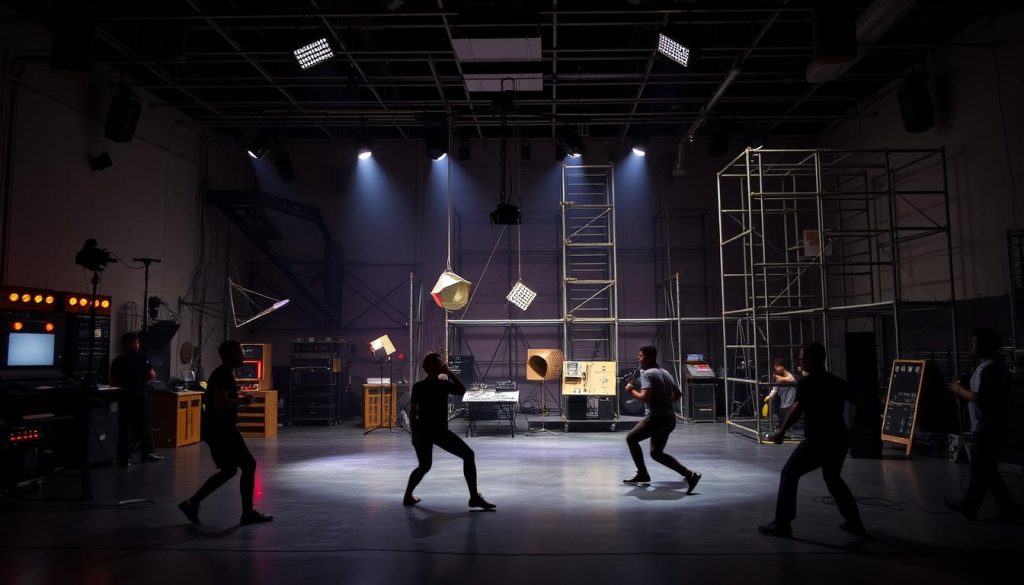
Griffin Theatre balances old and new works with skill. They mix Tennessee Williams with Shakespeare for a punk rock twist. Soho Rep’s WalkerSpace is like a secret club for bold theater, where shows might get standing ovations or walkouts.
| Venue | Specialty | Success Rate | Memorable Flameout |
|---|---|---|---|
| Griffin Theatre | Classic/New Hybrids | 1 in 3 | 2018’s “Hamlet: The TikTok Cut” |
| WalkerSpace | Experimental Text | 1 in 5 | The 4-hour Beckett mime sequel |
| New Dramatists | Political Satire | 1 in 4 | “Zuckerberg: The Musical” (RIP) |
Why do producers take risks on these shows? They create big waves when they hit. The process is like jazz, structured yet free to spark genius. Playwrights here break the fourth wall and remake it.
“Our lab is where good taste goes to die – so better ideas can be resurrected.”
The magic is in mixing tradition with rebellion. Imagine a session where Chekhov’s gun meets a glitter cannon. These labs show that new play development is about bold avant-garde performance, not safe choices.
Audience Participation: Pushing Boundaries
Imagine getting a ticket to an experimental theater festival with a liability waiver. Forget the usual applause. Today’s avant-garde shows turn audiences into active participants. The fourth wall is not just broken; it’s shattered by experiences that challenge even the most adventurous.
Blast Theory’s Rider Spoke lets cyclists pedal through London’s alleys, guided by whispers. It’s a mix of scavenger hunt and therapy. Ontroerend Goed takes it further, with audiences in wheelchairs being fed by strangers. You’re really engaged when you’re discussing trust with someone feeding you.
These shows use vulnerability as a tool:
- Personal space is used as part of the show
- Consent forms are used in the story
- The audience’s reactions shape the story
Kira O’Reilly’s infamous pig carcass installation pushed boundaries even further. Naked performers and animal remains made everyone question mortality. It’s a test of what we consider art.
This isn’t just about saying “yes” to the situation. It’s about embracing the unknown. The real show is the audience’s reactions. When the lights come up, everyone has been changed, whether they like it or not.
Profiles: Playwrights and Performers Who Take Chances
Every groundbreaking theater piece has a creator who’s both a philosopher and an adrenaline junkie. Nikolai Khalezin, a Belarusian playwright, turns secret police surveillance into an improv prompt. His work at Risk Is This festivals is a lesson in poetic resistance against political oppression. You don’t write dialogue when the KGB might be listening; you code it into shadow plays and whispered choruses.
Tim Etchells is like a mad scientist of time. His 24-hour performances challenge and reprogram audiences. Imagine watching actors change characters like kaleidoscopes while time disappears. It’s not just new play development; it’s cultural alchemy.
“The most dangerous art happens when you’re not sure if you’re making a masterpiece or committing career suicide.”
These artists have a toolkit sharper than any stage light:
- Caffeine reserves that shame coffee plantations
- Self-doubt repurposed as creative jet fuel
- The ability to turn censorship into standing ovations
| Creator | Signature Risk | Cultural Impact |
|---|---|---|
| Nikolai Khalezin | Staging dissent under surveillance | 35+ covert productions |
| Tim Etchells | Time-bending marathons | 12 countries, 200K+ participants |
What sets these creators apart from mainstream playwrights? They don’t just break the fourth wall; they blow up the theater. Broadway focuses on ticket sales, but Etchells’ team worries about audience members forgetting to eat. Khalezin measures success by regime officials sneaking into his shows.
The Risk Is This festival is their playground. Here, new play development means pushing creativity to its limits. The results are both terrifying and exhilarating, like watching someone juggle lit dynamite while reciting Shakespeare.
Behind the Scenes: Festival Organization & Community
Ever wonder what happens when creativity meets rules? Experimental theater festivals live in the space between “artistic freedom” and “fire code compliance,” making backstage stories more exciting than the shows. Let’s take a peek behind the scenes.
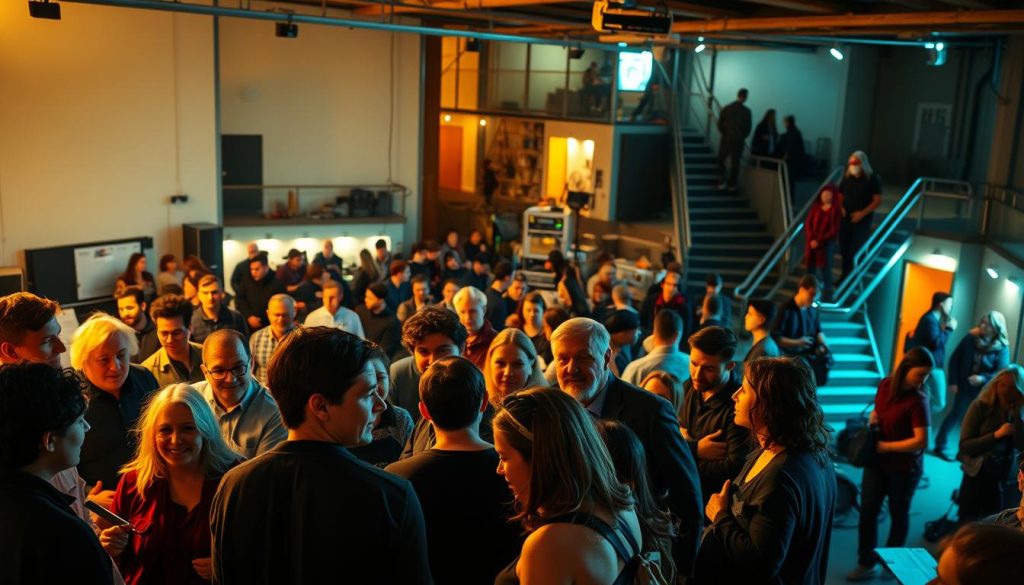
SPILL Festival sold 91% of their tickets, a feat that’s impressive until you see how they did it. They treat spreadsheets like art, with budget items that sound like Dadaist poetry:
- Item 17: Fog machine fluid ($380)
- Item 23: Emergency mop fund ($150)
- Item 42: Liability waivers printed on edible paper ($275)
Walkerspace faces different challenges, like dealing with rainwater buckets during shows. Their tech director once said:
“We don’t do site-specific theater—the building decides the blocking.”
| Festival | Budget Priority | Unexpected Expense |
|---|---|---|
| SPILL | Immersive tech | $1,200 for “atmospheric mold removal” |
| Walkerspace | Structural integrity | $4,500 in vintage duct tape |
These festivals are like punk rock startups—scrappy, passionate, and always on the edge. They turn OSHA violations into ambiance and budget shortfalls into creative challenges. The real magic is in celebrating avant-garde performance and building communities around it.
How do you plan a show with live chickens or spontaneous combustion? You don’t. You build in chaos and trust that audience engagement will show in “number of collective gasps” and “percentage of viewers who left changed.” The numbers might surprise you, even if the spreadsheets don’t.
Notable Moments and Surprises from Festival History
Experimental theater festivals are more than just shows. They challenge and change us. Franko B’s 2003 performance at Risk Is This is a prime example. His blood painting on canvas was so captivating that three people wanted to give their veins for the art.
Punchdrunk’s Masque of the Red Death turned a London warehouse into a Victorian plague party. People wore masks, drank absinthe, and found secret rooms. By the end, two thought they had caught the Black Death.
These events push the limits of what theater can do. When Franko B’s blood spilled off stage, someone called it assault. I agree. The best experimental theater festival moments are where art meets danger.
| Performance | Shock Factor | Audience Role | Legacy |
|---|---|---|---|
| Franko B’s Blood Works | Bodily Fluids as Medium | Accidental Activists | Redefined “Immersion” |
| Punchdrunk’s Masque | Plague Paranoia | Unwitting Patients | Site-Specific Standard |
| Risk Is This 2012 | Silent Disco Protest | Human Soundscape | Activism as Art |
In 2012, Risk Is This gave out headphones with real police radio. Soon, half the audience joined the protests. They became part of history.
These festivals don’t just show us change. They are the change. When your ticket is also a protest sign, you’re in for more than a show.
The Lasting Impact on the Indie Arts Scene
Experimental theater festivals don’t just create shows—they manufacture cultural weather patterns. When WalkerSpace closed in 2019, it sent a ripple effect. Indie spaces from Brooklyn to Oakland felt it. Every coffee shop with exposed brick became a possible stage for avant-garde performance.
Take Soho Rep’s artist development program. It’s not just nurturing talent—it’s strapping rockets to playwrights. Their alumni include MacArthur geniuses and Tony winners. This shows that new play development here is intense.
As one director said, “We don’t do safe spaces. We do collision spaces.”
SPILL has a secret: 65% of their audience is under 26. These young people are not just watching—they’re creating content. They’re the reason theaters now check the vibe.
“Festivals are where theater remembers it’s supposed to be dangerous.”
The magic is in the spillover effect. Shows start as experiments and become hits. That immersive vampire drama on Netflix? It started in a new play development lab.
These festivals aren’t just starting points—they’re cultural particle accelerators. They mix ideas, create energy, and change art forms. Next time you see an avant-garde performance go viral, look at the credits. It likely has festival roots.
How to Attend, Participate, or Support Experimental Festivals
Finding experimental theater festivals is like a treasure hunt. Start by following radical collectives like SPILL Festival. They use Instagram Stories and manifestos to connect with fans. Look for events like Brooklyn’s Under the Radar or Austin’s Fusebox Festival for a taste of the avant-garde.
Attending these festivals is an active experience. Gob Squad invites non-actors to join their shows, looking for people who are ready to dive in. The vibe is like a mix of warehouse style and “I might need to crawl through fake guts.” Don’t forget to bring cash for unique zines and lively debates at the bar.
Supporting these festivals is a way to show your cultural savvy. You can volunteer, donate to New Dramatists’ residencies, or just spread the word. Every time someone asks “But is this even theater?” during Thanksgiving, you’re helping keep the scene alive.
The true experience comes when you stop questioning and just feel it. These festivals are not just shows; they’re tests of how much you can handle. Remember, applause is only for the moments when everyone feels the discomfort together.
