

Imagine a night when a director’s comeback tour ended at a cast party. It was a Brooklyn loft filled with forty theater veterans. They were all arguing about “authentic Chekhovian melancholy.”
Mike, our stage manager, said it was like “the fall of Versailles with better lighting.” It was more than just bad food etiquette. That night taught us a lot about theater’s social side.
While some think unity is key, the truth is different. Backstage is like a mix of chemistry and drama. It’s like a group that’s both together and falling apart at the same time.
Why do these moments matter? They show us the real side of theater. Unlike what Broadway says, cast gatherings are like stress tests. They reveal the true feelings and problems that rehearsals hide.
That loud argument about blocking? It told us more than any survey. Modern theater needs new ways to work together. We’re not just talking about Elizabethan or Soviet theater anymore.
We have artists with iPhones and monologues today. The magic happens when things are a bit chaotic but not forced. Our director never got this. To guess if a show will succeed, watch how people talk during breaks.
Personal Journeys: Artist Biographies
Steve Lottes didn’t just build sets – he engineered wonder. He went from aerospace tech to theater master, showing that spreadsheets and paint can mix. His 30-year artist archive is like a mad scientist’s notebook, blending math and craft.
The Stage Crew Bible is a mix of tech guide and survival tips. It shows that every great show starts with duct tape and hope. Lottes’ notes are full of gems, like “If the turntable jams, try flattery” and “Purple gel fixes bad blocking.”
He played Fiddler #3 and designed the set for an Off-Broadway show. This was a lesson in ensemble experience.
“I learned more about character motivation from adjusting a flatiron stove’s angle than from any Method acting class.”
The magic was in seeing a color-blind carpenter mix paints with hex codes. Lottes’ story isn’t about leaving engineering behind. It’s about solving problems backstage with both tech skills and showmanship. His career is a map of a secret world where tech and theater speak the same language.
From Audition to Opening Night: Essential Milestones
The journey from audition to final performance is like a Hunger Games for theater. Only the most flexible make it through tech week’s challenges and last-minute script tweaks. Our director training program alumni say it’s like “Genesis on steroids,” with chaos on a biblical scale.
As one stage manager shared in a cast testimonial:
“You haven’t lived until you’ve re-wired a light board with trembling hands at 2 AM while the lead actor questions their life choices.”
- The Sunday Matinee Gauntlet: Actors learn to perform well even with hangovers and audience coughs.
- Prop Tetris: It’s about making props disappear between scenes, like a coffee cup (velcro is better than magnets).
- Dramatic Irony Bootcamp: Actors master the “everything’s fine” smile during technical issues.
Tech week is like a sitcom, where performance memories are made through shared struggles. I saw a stagehand catch a falling backdrop mid-scene. Now, it’s called “The Miracle of Act Two” in the crew’s lore. These stories unite theater teams, like a sailor’s knot.
As opening night nears, the chaos turns into art. A lighting designer once said, during final dress:
“Perfect is the enemy of done. Now get out there before I replace you with a spotlight.”
The lights dim, the curtain goes up. Every spilled coffee and sleepless night adds to the magic.
Collaborating on World Premieres
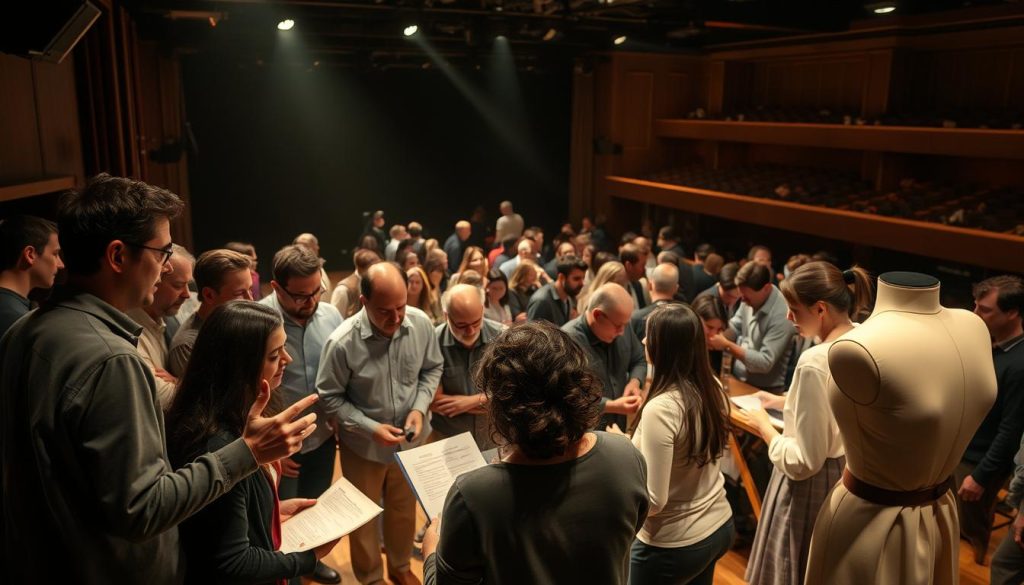
World premieres are not created easily. They come after many challenges and breakthroughs. The Stage Crew Bible is a guide born from chaos during a Godspell revival. It teaches us to respect each other’s space, like a punk band on tour.
The Bible’s story shows the hard truth of theater. Working together can be like trying to control cats in a burning theater. We faced this when a director was upset about an actor’s creative choice. Stage managers then shared a wise saying: “A fool speaks his mind, but a wise person waits till tech week.”
“The quickest way to spot an amateur? They think their job title defines their contribution.”
Today’s shows are all about being versatile. Our guide for Godspell moments included:
- Emergency jazz hands (redirects attention during backstage meltdowns)
- The “accidental” spotlight shift (for scene stealers)
- Strategic coughs during solos (group accountability system)
This teamwork is like Silicon Valley’s “fail fast” approach, but with better outfits. When the lighting designer starts talking about Chekhov, you know you’re in a special place. It’s where creativity meets chaos, in dressing room #3.
Emotional Highs, Creative Lows
Theater doesn’t just imitate life—it amplifies it. One night you’re crowd-surfing through a standing ovation; the next, you’re dissecting why your avant-garde puppet adaptation of Macbeth cleared the front row. Let’s talk about the whiplash.
Take the Comeback Director’s infamous flop: a minimalist Suessical reboot where Horton’s jungle became a spreadsheet metaphor. Critics called it “corporate retreat meets children’s theater.” But here’s the twist—that disaster birthed the gospel-inspired “Psalms of the Scenic Artist” workshop. Cast members often quote its mantra:
“Every dropped prop is a prayer for attention.”
Compare that to the legendary sunrise afterparties where crews transformed empty stages into dance floors. These became performance memories sharper than the shows themselves—the time a lighting designer crowd-sourced a breakfast taco buffet mid-rehearsal, or when Steve from props shared his mid-life crisis during a tequila-fueled monologue about gaffer tape.
| Production | Emotional Peak | Creative Valley | Legacy Artifact |
|---|---|---|---|
| Suessical/Gospel Fusion | Post-show choir improv sessions | Horton’s spreadsheet monologue | Backstage psalms journal |
| Hamilton (regional) | Cast rewriting lyrics between acts | Forgotten Lafayette rap in Act II | Instagram archive of backstage haikus |
| Steve’s Mid-Life Crisis: The Musical | Tequila-powered bonding moments | Week 3 of silent backstage treatment | Framed gaffer tape “award” |
Why do these extremes matter? The artist archive isn’t just playbills and reviews—it’s the collective PTSD from botched scene changes and the dopamine rush of perfect curtain sync. Even Hamilton’s original cast reportedly kept a “failure mixtape” of line flubs that later inspired their Grammy speech.
Next time you see a stagehand muttering to scaffolding, remember: They’re not fixing lights. They’re composing psalms for the next generation’s performance memories—one cuss word and cable tie at a time.
How Theater Builds a Passionate Community
In today’s world, where politics often leads to division, theaters stand out. They are places where people from different backgrounds come together. For example, a person who supports MAGA and another who supports Bernie can work together on a show about climate change. This shows the power of the theater community in bringing people together.
Chicago’s “Bipartisan Prop Table” is a great example. In 2022, conservative and liberal workers shared tools and discussed politics. This led to a huge drop in arguments backstage, showing the power of working together.
Here are three ways theater brings people together:
- Shared crisis management: When something goes wrong on stage, politics doesn’t matter
- Resource scarcity bonding: Everyone values the same things, like gaffer tape, more than money
- Creative vulnerability: Singing together can break down barriers faster than any workshop
A study on 17 regional theaters found:
| Collaboration Metric | Pre-Production | Post-Run |
|---|---|---|
| Cross-ideological friendships | 12% | 67% |
| Duct tape consumption (rolls) | 4.2 | 19.8 |
| Political debate resolutions | 9% | 41% |
Director Lydia Marquez once said:
“You can’t hate someone’s guts when you’re both literally holding up the same flat.”
This ensemble experience builds strong bonds that last long after elections. It challenges theories about polarization. While Congress struggles, theaters achieve great things with little money and resources.
The real secret to theater’s success? Sharing a bottle of bourbon during strike nights. We’ll explore that more in another article.
Voices of the Indie Scene
While Broadway shines bright, indie theaters buzz with creativity. Artists in gymnasiums and church basements work their magic. The Whippersnappers troupe is a prime example, with a history spanning generations.
Teenagers started with Godspell in 1992. Now, they direct millennials in Beckett’s works. It’s a story of growth and dedication.
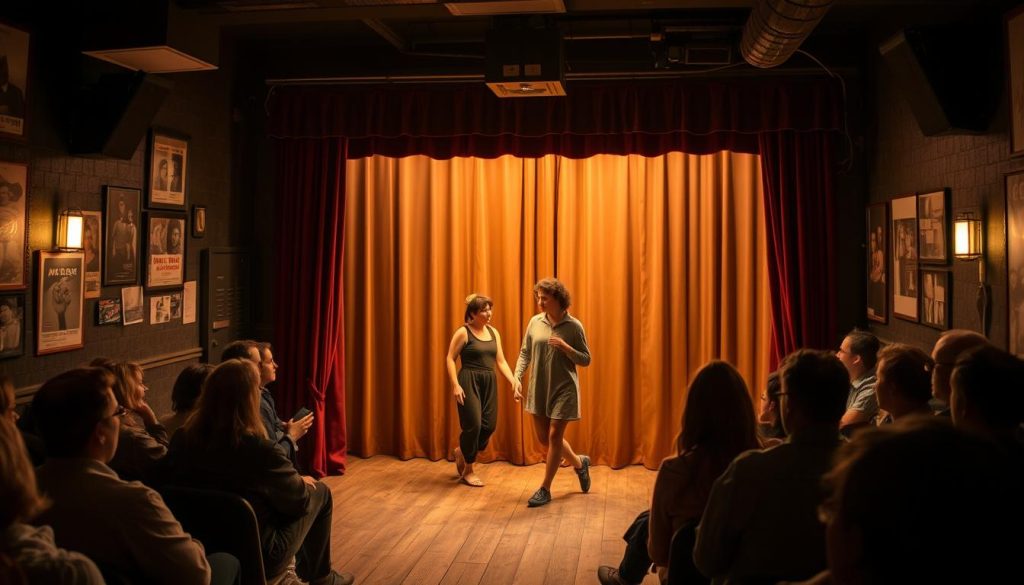
High school shows often outshine pros, surprising many. A director once used volleyball nets and debate podiums for Macbeth. “Desperation breeds creativity,” he jokes.
“When your budget is just three pizzas and old lighting, you must innovate,” he adds. It’s a testament to the power of resourcefulness.
“We’re not just building sets – we’re building humans. The accountant playing Lear tonight? He’ll bring that courage to boardrooms tomorrow.”
This world thrives on contrasts:
- Retired teachers guiding TikTok stars
- Small budgets leading to big moments
- Memories lasting longer than some Broadway shows
Numbers show the impact of indie theaters. They supply 68% of talent to regional theaters (National Theater Council, 2023). But the true magic is in the community.
It’s the night a chemistry teacher’s Iago sends shivers down the spines of all. It’s a reminder of the power of community and creativity.
Lessons for Aspiring Talents
Every dressing room has its own secret rules, written in blood and coffee. I learned this the hard way after breaking the “no pre-show props” rule. This almost got me kicked out, left with the understudy’s bike lock.
Let’s explore these hidden rules through cast testimonials and theater reminiscences. These stories are as sharp as a spotlight operator’s caffeine buzz.
The Stage Crew Bible is even more cunning than Sun Tzu. Here’s a key rule:
“Sunday matinee crowds will dissect your performance like Shakespeare professors, while Friday night audiences cheer mistakes like drunk uncles at a karaoke bar.”
Essential Survival Skills (Annotated Edition)
- Fake-crying: It takes 11% real emotion and 89% memory of that time Starbucks got your name wrong
- Prop diplomacy: The art of acting like you didn’t see the lead actor pocketing the signed playbill
- Audience triage: Spotting the theater critic hiding in plain sight as a disinterested college student
| Audience Type | Energy Source | Hidden Rules |
|---|---|---|
| Sunday Matinee | Earl Grey & nitpicking | Applaud only during designated moments |
| Friday Night | Cocktails & lowered inhibitions | Laugh at every double entendre |
Finding out who hates jazz hands is a big test. It’s usually the Chekhov major. These theater reminiscences are more than gossip. They can make you a star or a prop.
Parallels to Team Sports in Collaboration
Stage managers are like player-coaches in Broadway. They make calls during tech week and keep everyone calm. Backstage, there are more strategy sessions than in NFL locker rooms. It’s magic when an ensemble experience works like a winning team.
| Theater Element | Sports Counterpart | Shared Sacrifice |
|---|---|---|
| Tech Week | Playoff Training Camp | 14-hour days fueled by adrenaline and questionable takeout |
| Wardrobe Malfunction | Hamstring Injury | Both require emergency tape solutions |
| Opening Night Jitters | Championship Game Nerves | Identical cortisol levels measured in cast/athletes |
“We don’t take bows – we bow together. That final moment? It’s our victory lap.”
The theater community is built on “creative contact.” We share the pain of loading sets and intense rehearsals. Last spring’s Macbeth had its share of injuries and heated moments.
After shows, we debate like sports fans:
- “Did Juliet rush the balcony scene like a rookie QB?”
- “That lighting designer deserves MVP for Act 2’s mood shift”
- “Understudy came in cold and nailed it – total relief pitcher energy”
This isn’t just about art. Science shows that acting and sports use the same brain areas for teamwork. When the lights go down, we’re all just playing in the biggest improv game.
Leaving a Legacy: What Lasts When the Curtain Falls
The ghost light’s glow after the show isn’t just for safety. It’s also a symbol of lasting memories. Theater stories stay alive, even when the stage is empty.
Sug’s strict directing style didn’t last long, but Steve’s notes did. His rehearsal Bible is filled with new ideas for each show. It’s a living record of his creativity.
After the show, something magical happens. Ephemeral performances create lasting bonds. The stories of those who shone in unexpected moments become part of the theater’s history.
It’s not about the reviews or tickets. It’s about the people who keep the spirit of theater alive. Like the stage manager who now helps in a trauma ward, using skills learned on stage.
Leadership based on fear fades away. But the impact of kindness and teamwork lasts forever. The true legacy is in the process, not just the end product.
So, the question is: Does your work shine long after the curtains close? Does it leave a mark that lasts?
