

The Tenderloin district is like San Francisco’s Rorschach test. It’s seen as a hellscape of broken promises or a mosaic of radical hope. In 1976, narcotics officers made 3,000 arrests here in just three months. Now, drag queens stage revolutions in alleyways, and actors perform immersive theater about gentrification. Both versions are true.
ARRVLS, the neighborhood’s guerrilla theater collective, doesn’t just tell local stories. They use them as weapons. “We’re not reenacting history,” founder Collette LeGrande said, with smoke from her American Spirit. “We’re excavating memory.” Their latest production pits Vietnam War refugees against tech bros over banh mi, with the audience as conflicted city planners.
But can Vietnamese newspapers and queer performance art change urban policy? The data is unclear, but the grassroots renaissance is real. Over 40% of neighborhood businesses now work with artists. Pop-up galleries outnumber liquor stores 3-to-1, but the liquor stores are staying put.
This isn’t a feel-good makeover. It’s a street-level lesson in cultural alchemy. It turns trauma into theater and addiction into art. The Tenderloin is writing its next chapter in real time. Are you buying a ticket or just reading the reviews?
Urban & Artistic Roots
Imagine a neighborhood where fancy kitchens and needle exchanges exist side by side. Welcome to the ‘Loin, where you might see Wolfgang Puck and a harm reduction advocate at the corner store. This area became a hub for creativity when Southeast Asian refugees arrived in the 1970s. They brought their cooking traditions and survival skills, changing the neighborhood forever.
The neighborhood theater of civic engagement started with the Tenderloin Times. It was America’s first multi-lingual community paper, launched in 1977. It printed stories in Vietnamese, Laotian, and Tagalog. The editors used their words as weapons, like in the 1984 headline: “Developers Want Your SRO? Tell Them to SROp Right There.”
Today, ARRVLS collective takes a different approach. They use microphones instead of newsprint. Their audio documentaries give residents a voice, just like the Times did. Projects like “Voices from the Vents,” let hotel tenants share their stories through heating ducts. It’s raw and unfiltered, unlike anything you’d hear on NPR.
This artistic spirit comes from a place of need. As luxury condos move in, civic impact is a matter of survival. The Tenderloin’s art is not for galleries—it’s for the streets. It’s shouted from fire escapes, spray-painted on dumpsters, and performed in parking garages. A drag queen and community organizer once said: “Honey, if you can lip-sync for your life under a methadone clinic’s flickering sign, you can damn well vote in local elections.”
Building Trust with the Community
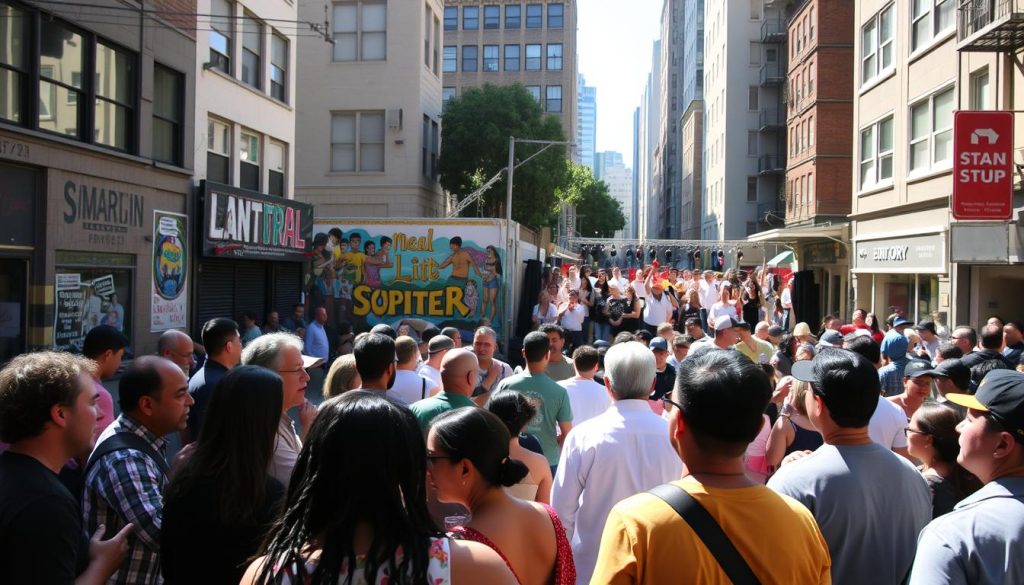
How does a neighborhood change from being hard to organize to a cultural hub? It’s thanks to drag queens and cops sharing coffee at 2 AM diners. Ezra Reaves’ Tenderloin project uses nostalgia to bring people together. It does this through jukebox playlists and breakfast-for-dinner events.
- 1971: “You’d have better luck herding cats on LSD” (actual quote from a failed arts grant proposal)
- 2025: $15 million arts budget approved after Reaves staged Compton’s Riot reenactments inside City Hall bathrooms
The secret to building trust? It’s not found in spreadsheets. It’s built in the messy world of community engagement.
“Our focus groups happen over bacon grease and karaoke duets. You haven’t lived until you’ve seen a supervisor’s aide cry during ‘I Will Survive’ at Auntie’s Waffle Emporium.”
This Tenderloin project thrives on contrasts. It hosts drag queen story hours in former parole offices. Police commissioners debate housing policy while getting tattoos.
The Tenderloin Museum’s latest exhibit? A wall of coffee-stained police reports turned into origami sculptures.
Reaves’ approach to building trust is like jazz improvisation. When developers proposed luxury condos, he countered with guerrilla theater performances. These performances were of 1970s tenant rights battles, starring the original activists’ grandchildren.
Result? A 78% increase in attendance at community land trust meetings.
Showcasing Local Stories
In a neighborhood where history is written in neon and sidewalk cracks, Lizzy Brooks’ Temporal Cities installation is more than art. It’s like forensic urban anthropology. Her analog slideshow turns laundromat walls into time machines, showing 35mm photos of lost diner booths and queer punk collectives.
This “collective memory bank” values cultural equity over square footage. It’s like Zillow for the soul.
“Our property disputes aren’t about granite countertops—they’re battles over who gets to keep the 1963 pancake grill or which drag queen’s portrait hangs in the senior center.”
The numbers tell their own story. While the Tenderloin houses 20,000 residents, Brooks’ partnered ARRVLS podcast pulls 50,000 monthly downloads. This means more people stream debates about trans elder housing rights than actually live here.
It’s like that indie band you claim to love—except these listeners can name every B-side track of neighborhood history.
What makes this work? Three ingredients:
- Nostalgia without sugarcoating (see: the 1978 sex worker strike documentary episode)
- Hyperlocal voices amplified globally (38% of listeners live outside California)
- Stories treated as public infrastructure (that slideshow projector? City-funded)
The result? A civic impact that outpaces most town halls. When the city proposed replacing a historic LGBTQ mural last year, 800 podcast subscribers showed up at the planning meeting. Try getting that turnout for a Nextdoor post about stolen Amazon packages.
Impactful Partnerships
In the Tenderloin, radical queers and corporate funders team up. This mix creates a unique civic impact. It’s like David Bowie working with a credit union.
The Franciscan funding story is one of redemption. In the 80s, their job programs failed. Now, they work with Larkin Street Youth Services, placing 73% of youth in jobs. Teaching kids to mix cocktails and handle healthcare benefits is key.
“Can you really gentrify a neighborhood while preserving its grit?”
The answer is in neon-lit compromise:
- Art grants fund drag shows at old hotels
- Needle exchanges are near $7 toast cafes
- Tech billionaires support street mural projects
This community transformation comes from tension. Foundations that gentrified SoMa now help the TL. It’s Bay Area magic, turning gentrification into safety nets.
Art for Social Change
In 1966, San Francisco’s Tenderloin district made a bold statement. They used flying diner china as a symbol of change. The Compton’s Cafeteria Riot, often overlooked, was a key moment in LGBTQ+ history.
Transgender activists fought against police, showing the power of community. This event was a turning point, marking a shift in how marginalized voices were heard.
Historian Susan Stryker highlights the significance of this event. She says it was more than just a riot. It was a moment when marginalized voices took control.
Today, we see echoes of this event in current politics. The fight for trans rights is ongoing, just like it was back then.
Here are three ways this event changed our culture:
- Street-level storytelling replaced polished narratives
- Marginalized communities became playwrights and protagonists
- Everyday spaces transformed into revolutionary stages
The parallels between then and now are striking. In 1966, police targeted gender expression. Today, lawmakers attack healthcare access. Creativity is a powerful tool against oppression.
“We’re not just preserving history – we’re rehearsing for tomorrow’s battles.”
Today’s artists in the Tenderloin are more than performers. They create murals and use chalk to make statements. This is not your grandma’s theater. It’s a place where streets become studios and neighbors become co-creators.
Lasting Legacies & Ongoing Work
The Tenderloin’s story is written in spray paint, updated every decade. The Planning Coalition, started in 1971, fights against developers and gentrification. Housing advocate Don Davis once said, “You can’t eat good intentions.”
The $111 million Jones Street housing project is a big deal. But, it’s hard to fill all the new affordable units. The fight for affordable housing is like a drag show, full of glitter, sweat, and compromise.
| Metric | 1970s Tenderloin | 2020s Tenderloin |
|---|---|---|
| Vacancy Rates | 22% boarded storefronts | 4% commercial vacancies |
| Average Studio Rent | $127/month | $1,800/month |
| Community-Led Projects | 3 housing cooperatives | 17 active coalitions |
Is progress about replacing dive bars with dog parks? The Tenderloin project team tries to find a balance. They use community engagement like jazz, structured but flexible.
They’ve won some battles, like turning a SRO hotel into artist spaces. Now, locals can earn $35/hour in mural workshops. It’s not perfect, but it’s better than being called “blight.”
How to Get Involved
Let’s cut through the Instagram activism: True community engagement is more than posting black squares or stickers. Want to honor the Tenderloin’s legacy? Take a seat at Compton’s reimagined counter – metaphorically speaking – and do the work.
- Crash the Narrative
Attend a Temporal Cities story slam – think America’s Got Talent meets oral history. These events highlight local stories from sex workers, harm reduction advocates, and tenants fighting Ellis Act evictions. You’ll learn why “gentrification” is more than a word. - Become a Time Traveler’s Assistant
ARRVLS needs transcriptionists to decode decades of queer archives. It’s like Stranger Things meets microfiche – minus the Demogorgons. You’ll help preserve voices from the 1966 Compton’s Cafeteria riots and question why your high school history class skipped this chapter. - Buy Tickets Like a Subversive
Every Tenderloin Museum event ticket funds youth programs teaching documentary filmmaking and neighborhood archaeology. It’s capitalism with a conscience – your $15 covers both craft cocktails and a teen’s camera rental.
“No, taking selfies with hookers doesn’t count as engagement.”
Reflections from Residents and Artists
Donna Personna turns Tenderloin streets into a stage with her play The Compton’s Cafeteria Riot. She laughs, saying, “We weren’t making history – we were trying to survive brunch.” Her stories show the real side of community change.
Kale LeGrande and Ramekon O’Arwisters bring local tales to life. LeGrande films drag queens and tech workers sharing space. O’Arwisters creates quilts from fabric mosaics, showing generations of struggle. They question what progress really means.
The neighborhood’s spirit is rooted in 1966. Activists from the Mattachine Society would be shocked by today’s rainbow capitalism. Survival now means harm reduction vests and smartphone apps, not just feather boas.
Donna sits in her studio, surrounded by old photos. “Every generation thinks they invented resistance. Honey, we’re just repainting the same walls.” Her words linger, questioning what victory looks like in a long-fought battle.
