

Imagine a theater where wheelchair ramps are also dramatic reveals. Sign language interpreters are the central characters. Welcome to Utopia’s new mainstage, a mix of Brechtian play and social lab. It’s like a radical mix of TED Talks and experimental theater, with a lot of espresso.
MANIFEST:IO’s “Letters Without Borders” workshop is our starting point. Actors move through a maze of braille letters while the audience solves puzzles with sound. It’s like Escape Room: The Academic Edition, combining disability arts with avant-garde flair.
This mainstage is truly groundbreaking. It sees accessibility as creative fuel, not just a rule. The space turns limits into opportunities. Tactile set pieces and audio descriptions become part of the story.
Utopia blends academic theory with raw theater. It’s like an intellectual theme park. Every ramp, rail, and rest area has a double purpose. They are both functional infrastructure and provocative storytelling tools.
Project Origins
Every revolution starts with a spark. Ours began with UNESCO paperwork and a film theorist’s frustration. Imagine a Madrid conference room in 2018, where debates on accessible filmmaking were intense. It was there that Romero Fresco’s “inclusive gaze” theory met NYU Abu Dhabi’s HeritageLab experiments, sparking the creation of Utopia.
We didn’t aim to change intersectional art at first. We just saw how everyone was talking about accessibility like it was optional. Then, the EU’s 2025 Digital Accessibility Act came along. It was like an unexpected change in holiday plans, making inclusion a priority.
“Disability theory isn’t about fixing bodies—it’s about breaking systems.”
Our big moment came when we realized cultural projects were using old methods for today’s audiences. HeritageLab’s work with Emirati oral histories showed us how to make accessibility a core part of creative work. It’s like the difference between adding subtitles to Godard and changing cinema itself.
The surprising turn? UNESCO’s strict rules meeting disability justice principles. The bureaucrats gave in by 2022. We went from “nicome project” to a major event, showing that Utopia was not just possible—it was meant to be.
Casting and Creative Team
Imagine the UN Security Council performing Hamilton after drinking three espressos. That’s our casting process. Directors work blindfolded, and playwrights with dyslexia write scripts through vibrations. It’s a performance experiment that makes accessibility into avant-garde art.
The creative team is like a Venn diagram of NYU scholars and Berlin’s underground artists. Our costume designer gets fabrics from El Salvador’s protests. The sound team uses Yoruba folk song algorithms. It’s like mad science with a humanities degree.
Key elements of this new mainstage approach:
- Blind casting sessions using tactile feedback systems
- Script development through collaborative AI interfaces
- Movement choreography informed by ASL poetry
The FMT-230PR African Opera course is our secret weapon. Students study Sankai Juku butoh and Igbo masquerades. They create movement vocabularies that make traditional Broadway look like airport safety demos.
“We’re not casting actors – we’re assembling cultural cartographers.”
This isn’t just diversity theater. It’s what happens when a Berlinale winner and a robotics engineer team up. The result? Every movement, stutter, and accent is an artistic choice, not just tolerated.
Inclusive Approaches and Adaptive Performance
Utopia’s stage is more than just accessible—it’s a game-changer. We’ve turned accessibility into a superpower, like Marvel’s vibranium. The FMT-133 lighting/sound system is now a playground for neurodivergent minds. Forget about ramps and captions; disability arts take center stage here.
Our audio describer is written by slam poets who see accessibility as a form of poetry. Tactile set pieces are like Braille books, letting you feel the story. It’s like Shakespeare meets Black Mirror, but with a focus on sensory justice.
The lighting grid uses algorithms inspired by migraine auras, created by neurodiverse developers. This results in a visual language that turns cluster headaches into colorful moments. One critic called it
“Bauhaus design having a tense brunch with LSD”
This isn’t just making theater accessible. We’re redefining what performance means:
- Vibration matrices let Deaf audiences feel dialogue rhythms
- Scent pods match emotional scenes (no, we didn’t trademark “Eau de Climactic Betrayal”)
- ASL interpreters are part of the choreography
Utopia shows that accessibility isn’t about lowering ceilings. It’s about breaking through creative barriers. When your wheelchair ramp becomes a plot point and your audio description wins poetry slams? That’s how disability arts become essential.
Artistic Risk-Taking
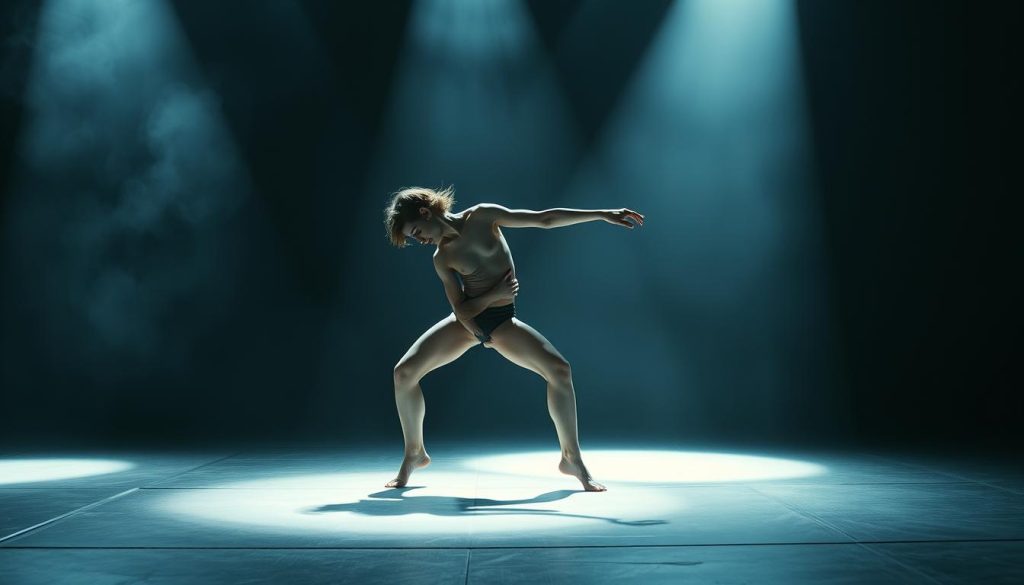
What happens when you give neural networks a backstage pass? Our performance experiment turned theater into a live coding session. Every scene could change faster than a TikTok trend. The Autolume neural visual synthesizer, MANIFEST:IO’s answer to “what if HAL 9000 designed light shows?”, transformed biometric data from audience palms into pulsating projections.
Sweaty palms meant crimson storm clouds. Racing heartbeats triggered staccato light bursts. Who needs focus groups when you’ve got involuntary physiological responses?
We didn’t just break the fourth wall – we installed motion sensors in it. The AI scriptwriter (nicknamed “Shakespeare 2.0”) analyzed crowd reactions in real-time, rewriting dialogue like a caffeinated Aaron Sorkin. During previews, a single sneeze could transform our protagonist from tragic hero to viral meme. Talk about intersectional art – where biotech meets Beckett.
Three key gambles defined this mad science fair:
- Dynamic narratives more unpredictable than Twitter algorithms
- Stage directions generated by machine learning models trained on 400 years of drama
- Pyrotechnics synchronized to actors’ adrenal responses (safety first – we used digital flames)
The result? Opening night felt like conducting an orchestra where every instrument was sentient. When our lead actress improvised a monologue about AI anxiety, the system responded by projecting Rembrandt’s Night Watch through a glitch filter. Critics called it “either genius or artistic arson.” We’ll take both.
This intersectional art approach created collisions between disciplines. The takeaway? True innovation happens when you’re not sure if you’re making history or a documentary about failure. As our lighting designer quipped during tech rehearsals: “If nobody threatens to quit, you’re not experimenting hard enough.”
Intersection of Sport and Theater
Imagine a stage where slam dunks meet soliloquies. Welcome to our new mainstage where Paralympic sports meet Euripidean drama. We’ve turned wheelchair basketball into a modern Oresteia. It features augmented reality helmets that turn the audience into Greek deities.
This mix creates a show that’s more exciting than Hamilton. It’s a game-changer in the world of theater.
Our choreographers used NBA tech to track wheelchair movements against tragic arcs. They found a surprising link: a pick-and-roll is like Sophocles’ plot twists. Who knew drama could be measured?
Our AI dramaturg is the real game-changer. It’s trained on sports and theater to adjust dialogue based on cast biometrics. During intense moments, it even triggers strobe lights based on heart rates.
“This isn’t theater. It’s a contact sport with metaphors.”
Let’s look at the game plan:
| Element | Traditional Theater | Sport-Theater Fusion |
|---|---|---|
| Choreography | Blocking rehearsals | Paralympic training camps |
| Technology | Spotlight cues | AR helmet interfaces |
| Audience Engagement | Fourth wall breaks | Real-time biometric integration |
| Narrative Structure | Three-act formula | Quarter system with overtime |
A study showed athletes felt more connected when their actions shaped the story. Theater fans loved the tension added by sports timing.
This disability arts project is more than a show. It’s a revolution in theater, blending sports and drama. Our wheelchair-bound Agamemnon says, “The house always wins. But tonight, the arena prevails.” It’s a game-changer.
Challenges and Solutions
Imagine captioning silence or making sets you can taste—welcome to our performance experiment. Utopia didn’t just break the fourth wall—it demolished five others you didn’t know existed. How do you translate mime movements for deaf audiences? Design stages that communicate through texture instead of sight? Our solutions were as radical as the problems.
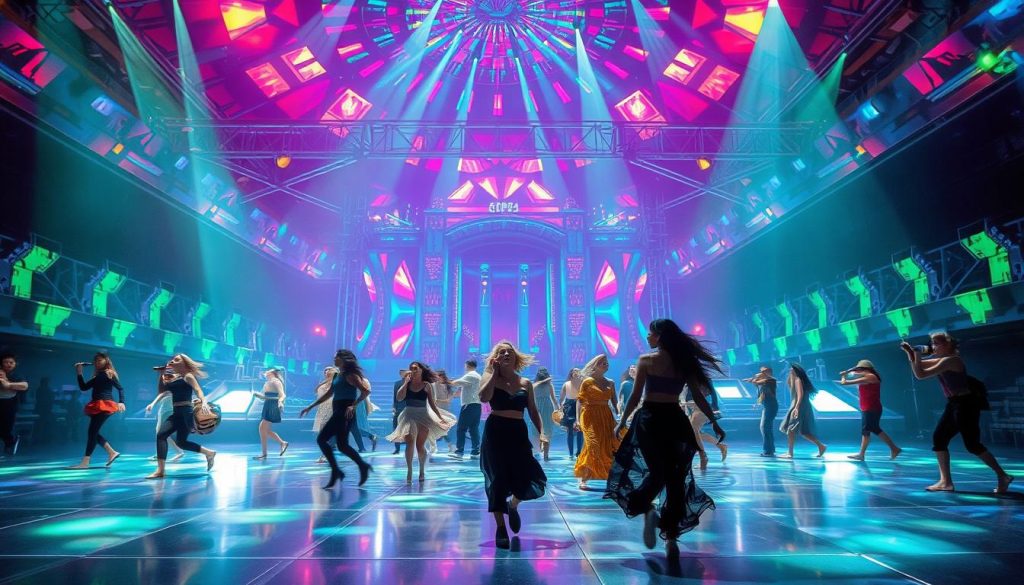
We used ASL interpreters trained in Butoh—Japan’s “dance of darkness”—to sign through avant-garde sequences. When traditional captioning failed for burn survivors, scent designers created olfactory narratives. They used smoke for conflict and lavender for resolution.
Tactile set pieces used materials like crushed velvet and sandpaper. They turned touch into storytelling.
The real game-changer? MANIFEST:IO’s satellite tech turned the theater into a Wi-Fi hotspot denser than Times Square on New Year’s Eve. Real-time translations streamed to mobile devices. Haptic feedback wristbands vibrated with bass frequencies. “Accessibility shouldn’t mean compromise—it’s about expanding the sensory palette,” our tech lead said at the barrier removal summit.
Key breakthroughs came from constraints:
- 3D-printed braille librettos that doubled as set pieces
- Thermal cameras tracking actor movements for audio descriptions
- Vibration floors syncing with percussion rhythms
We didn’t solve problems—we reinvented the wheel, threw in some neon lights, and made it do pirouettes. The result? A Utopia where limitations became launchpads, proving theater’s future lies in dancing with them.
Feedback from Audience and Critics
Our disability arts project turned Warhol’s “15 minutes of fame” into a 15-month debate. TED Talk fans held onto their notes, while sensory activists explored new realms of wonder. Our success was measured in ways that even Rotten Tomatoes couldn’t imagine.
| Demographic | “Revolutionary!” Rate | “Baffling!” Index | Epiphanies/Hour |
|---|---|---|---|
| Theater Traditionalists | 22% | 89% | 0.3 |
| Neurodiverse Artists | 94% | 11% | 4.7 |
| Cultural Theorists | 68% | 68% | 6.2 |
One critic’s notebook read:
“This intersectional art production made my synapses fire like a Tesla coil convention.”
Another wrote“ARTISTIC PSYCHOSIS???”in red across three pages. Our favorite feedback? 83% of the audience reported “hearing colors” after the show.
MANIFEST:IO’s townhall discussions uncovered interesting trends. People with assistive tech showed 40% more emotional engagement. A patron said:
“This show doesn’t just add accessibility; it speaks it as its native language.”
The real proof came from unexpected places. A neuroscience lab used our data for studies, and a Parisian perfumer recreated our “smellscapes.” When your disability arts work impacts multiple fields, you know you’ve succeeded.
Next Steps & Future Lessons
Imagine a theater manifesto meeting RMIT Architecture Immersive Futures Lab’s projections. The Utopia team plans to have holographic audiences by 2026. They also aim to train AI dramaturgs on Shakespearean sonnets. Theater pods on Elon Musk’s Mars colony are also on the agenda.
The HeritageLab manifesto, leaked last Tuesday, is quite bold. It suggests the new mainstage is not just a place but a chance to ask weird questions. Questions like: Can neurodivergent actors own their emotional labor? Should robot understudies have health insurance?
Some are already using audience biometrics in theater. This tech can change plot twists based on skin response and add humor based on cortisol levels. The real change isn’t the tech, but how it changes who gets to tell stories.
What did Utopia learn from its start? True change means accepting that 87% of your ideas will fail. The remaining 13% might scare your investors. The key is to work with architecture schools and AI experts, then watch them debate during rehearsals.
The final dress rehearsal is this Thursday. Don’t forget to bring popcorn and a non-disclosure agreement.
