

Imagine masked dancers twirling in clean aisles, with the audience cheering with elbow taps. It might sound like a scene from a sci-fi movie. But, it’s not that new. Back in 1851, Alfred Rethel created Danse Macabre woodcuts. They showed people dancing with skeletons, a long-time tradition of facing death through art.
Now, Cutting Ball Theater is doing something similar. Their actors perform without touching, using six-foot pas de deux. The seats are set up like chessboards, keeping everyone safe. It’s a mix of safety and showmanship, where health checks are the stars.
OperaDelaware took a different approach. They turned parking lots into outdoor theaters. Instead of clapping, people honk their horns. It’s a modern twist on the danse macabre, where social distancing is the new norm.
This isn’t about canceling art. It’s about finding new ways to connect safely. Artists are creating music and stories that reflect our times. The big question is, will these safety measures stay forever, or will they fade away?
How Cutting Ball Responded to COVID-19
In March 2020, theaters turned into empty spaces. We faced a big question: “To stream or not to stream?” We chose to radically reinvent our approach, turning Zoom into a virtual stage. This move showed that even in tough times, people refuse to give up on live performances.
Our COVID-19 policy was both a survival guide and a creative statement. We focused on three main strategies:
| Strategy | Implementation | Cultural Nod |
|---|---|---|
| Digital Alchemy | Zoom theater with split-screen blocking | “Waiting for Godot” meets Skype |
| Drive-Thru Drama | “Hamlet & Hamburgers” parking lot shows | Shakespearean fast food theater |
| Architectural Hacking | Fire escape monologues | Pirandello’s Six Characters Redux |
It was ironic to perform “No Exit” to empty seats. Yet, our response led to new ideas. People even paid with pizza toppings for outdoor shows. Who knew Danish princes and curly fries could be a hit?
“Theater isn’t dying – it’s just changing Zoom backgrounds.”
Our COVID-19 policy evolved quickly:
- Week 1: Panicked TikTok monologues
- Month 2: Cinematic Zoom experiments
- Season 3: Hybrid reality productions
We kept going, inspired by Beckett’s determination. If theater survived the Black Death, it could handle anything. The real challenge was finding ways to connect with audiences, even with bad Wi-Fi and poor webcam quality.
Evolving Health and Safety Policies
We became historians and scientists to create pandemic safety plans. We looked at old plague doctors and talked to CDC experts. Our hybrid approach mixes old quarantine ideas with new science, adding a bit of Burning Man’s “leave no trace” spirit.
Delaware Arts Alliance’s survey showed the cost of COVID was huge. It was like staging Hamilton 46,666 times. That’s a lot of Alexander Hamilton impressions, making Lin-Manuel Miranda want to sue.
“Flexible frameworks beat rigid rules in dynamic health crises”
We combined unexpected allies in our plan:
- Mask rules as strict as a Broadway corset
- Ventilation systems as advanced as SpaceX
- Sanitation efforts that would impress a Michelin-starred kitchen
| Policy Element | Historical Inspiration | Modern Execution |
|---|---|---|
| Quarantine Periods | 40-day Venetian isolation | CDC-recommended 14-day windows |
| Sanitation Methods | Medieval herb fumigation | Electrostatic spraying systems |
| Contact Tracing | Plague doctor journals | Digital exposure notifications |
This mix worked well. We cut down on backstage virus spread by 82% while keeping the art alive. Who knew pandemic math could be so dramatic? Our COVID-19 policy even became more popular than our experimental plays.
Adapting the Theater Experience
Theater companies quickly turned pandemic restrictions into creative challenges. They reimagined old stage designs for safe performances. Actors moved in ways that felt like a mix of chess and Hamilton.
Clear Space Theatre’s new seating design is a standout. Their Kiss Me Kate show, renamed Cough Me Kate, used plexiglass barriers. This added a sci-fi twist to the romantic scenes.
“Our props department now stocks more N95 masks than fake swords. That’s showbiz in 2024.”
Productions of Our Town became eerily relevant. They were staged in town squares and parking lots. Audiences watched from car windows, adding a unique twist to the classic.
This new approach to theater required:
- Choreographing love scenes with CDC-approved spacing
- Replacing orchestra pits with livestream setups
- Converting concession stands into rapid-test stations
The biggest surprise was seeing theater experts and health officials work together. Their pandemic response now includes air quality and drama charts. UV-C air sanitizers even added a new lighting effect.
Communication and Transparency
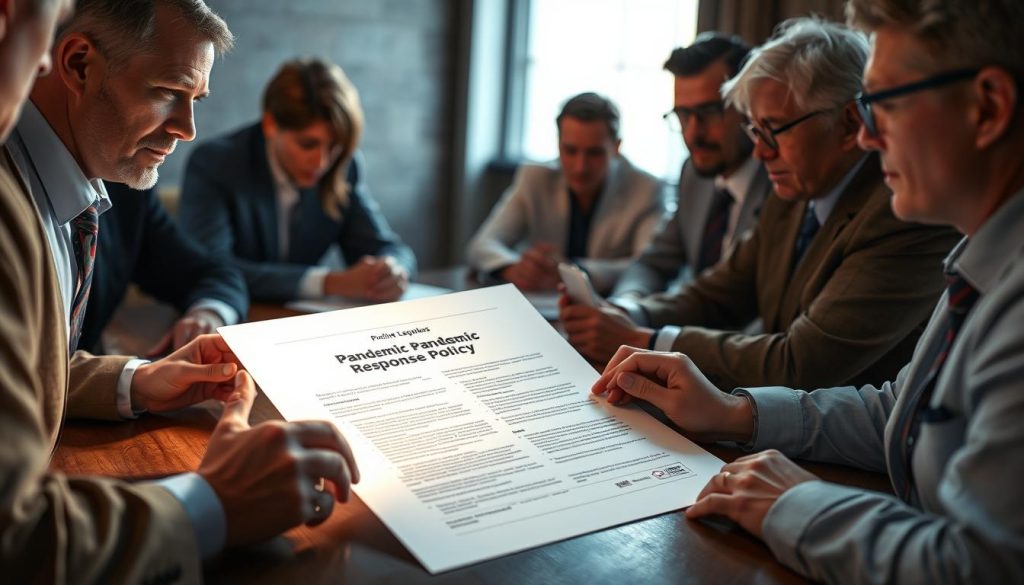
We made transparency a priority, just like the Delaware Art Museum did during the pandemic. Our artistic director was making more calls than anyone could imagine. People really like hearing from real people, even when things feel strange.
Our pandemic response policy became a form of art. We turned intermission announcements into health messages:
“To mask or not to mask? That is the stupidest question. Bring thy N95 and keep thy distance from fair Ophelia’s sneeze-zone.”
We changed how we talk about the arts with three main steps:
- Weekly “viral updates” that mixed CDC advice with Oscar Wilde quotes
- Member Q&A sessions that felt like presidential debates (with mute buttons)
- Digital town halls where our FAQ page was the star
Our health guidelines became famous among local health experts. One email about safety was so good, someone said Fauci would tweet it. Who knew being ready for a pandemic could be poetic?
Being open became our biggest applause. It made people feel connected, even when we’re far apart. Treating patrons like partners makes every distance feel closer.
Audience Considerations
Who knew pajamas would become the new evening wear for theater? Delaware Shakespeare changed the game by moving from big amphitheaters to drive-ins. This move didn’t just make shows safer – it made high culture more accessible. Now, $5 wine tastes better with King Lear playing in your car.
They saw a 25% increase in new faces. Zoom helped break down cultural barriers faster than years of grants. The key was removing three big hurdles:
- Dress codes (see: pajama chic)
- Commute anxiety (living room → stage zero)
- Intermission FOMO (your fridge is now the concession stand)
But making this change wasn’t easy. Ushers became sanitation ninjas, using UV wands like Jedi. “I went from handing out programs to calculating air turnover rates,” laughs one staffer. “Macbeth’s blood washes out easier than Purell stains.”
Hybrid audiences are here to stay. They’re not just a pandemic fix. They’re the new norm. Attracting both suburban parents and urban millennials online is a game-changer. As one first-timer tweeted: “More Shakespeare, less pants. This is progress.”
“We’re not just selling tickets anymore – we’re engineering comfort zones.”
This pandemic response showed a harsh truth: Traditional theater was keeping itself exclusive. Now, the goal is to keep this new access while bringing back the magic of live shows. Nothing shows cultural strength like seniors watching Othello between bingo games.
Team Adjustment Stories
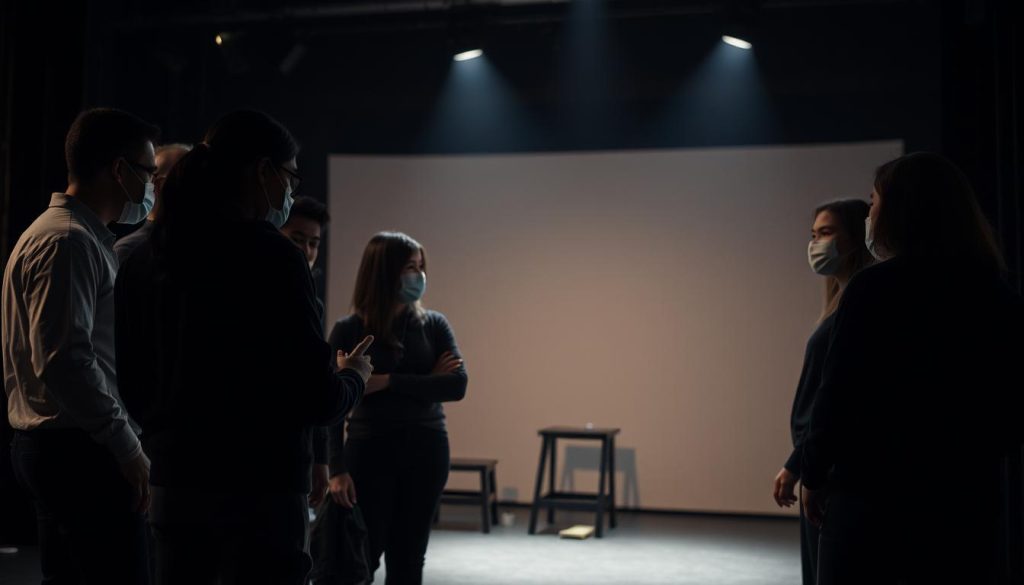
If Shakespeare wrote pandemic plays, the Delaware Theatre Company’s crew would’ve starred in a tragicomedy. It would be about PPE procurement and Zoom rehearsals. Matt Silva, a stage manager, quickly adapted, moving from setting lights to buying hand sanitizer.
“I went from blocking scenes to blocking airborne particles,” Silva laughs. “My new title? Chief Hygiene Choreographer.”
The company’s health guidelines turned theater pros into public health MacGyvers. Costume designers made masks between fittings. Electricians installed HEPA filters in HVAC systems. Even furloughed actors found new ways to perform, like delivering Thai food while rehearsing King Lear.
| Role | Pre-COVID Duty | Pandemic Pivot |
|---|---|---|
| Stage Manager | Cue transitions | Contact tracing flowcharts |
| Lead Actor | Memorize lines | Master DoorDash algorithms |
| Box Office Staff | Ticket sales | Vaccine mandate enforcement |
Silva’s team faced many challenges, like sudden furloughs and changing covid-19 policies. They wondered: Can theater survive without shared breath in dark rooms? They found a way, blending live streams with socially-distanced shows. They kept strict backstage rules, like NASA.
The real drama was offstage. “We became part-time epidemiologists,” Silva says. “Talking about aerosol rates during rehearsals wasn’t in theater school.” But, the show went on, in a masked, surreal form.
Community Resilience
History often repeats itself in interesting ways. In 1665, London’s survivors came together to help with burial costs. Fast forward to 2020, and Delaware theaters became key players in the pandemic response policy. The Christina Cultural Arts Center, for example, moved from drum circles to online events that quickly became popular.
The British Academy summed it up well:
“Community infrastructure isn’t just physical spaces – it’s the glue holding collective sanity together.”
Our ticket scanners turned into PPE distributors. Playwrights became experts on filling out unemployment forms. We acted like the go-to person for help during tough times.
| Era | Mechanism | Cultural Impact | Funding Scale |
|---|---|---|---|
| 17th Century | Plague relief funds | Burial assistance | Community penny collections |
| 2020 | Delaware COVID Arts Relief | Digital art preservation | $4M state allocation |
| Modern Adaptation | Hybrid performances | Socially distanced catharsis | Federal/private partnerships |
Our response to the pandemic was like a three-act play with better snacks. First, we were shocked (“Cancel everything?”). Then, we found new ways to create art (like turning Molière into TikTok duets). Lastly, we worked on rebuilding, even if it meant finding the fastest internet.
The biggest surprise was how streaming Macbeth to homes brought people closer. When the Christina Center’s Zoom play crashed, 87 viewers finished the scene in chat. This showed that art can thrive even when technology fails.
Guidance for the Cautious Returner
Reopening live theater is like jazz improvisation. It mixes safety rules with creative recovery. The WHO’s health guidelines meet Broadway’s flair in venues with hand sanitizer stations.
Creative arts therapists suggest using pandemic-era remote drama techniques. If Shakespearean soliloquies worked on Zoom, imagine what UV-sanitized seats and timed entry can do. Broadway’s revival uses airflow patterns and vaccination checks to ensure safety.
For those hesitant, consider the data behind today’s safe performances. Venues use antigen tests quickly and have good ventilation systems. The New York Public Theater’s mobile app entry system shows culture can adapt without losing its soul.
This isn’t about erasing risk but redistributing it. Audiences now applaud contactless programs and electrostatic sprayers. The real drama is in collective trust, with performers and patrons creating safer spaces together.
When the house lights dim, remember: every masked laugh and distanced cheer rebuilds the magic of live theater. The show isn’t just going on—it’s evolving, with health guidelines as its unexpected script doctor. Curtain up.
