

Imagine Athens in 441 BC. A huge amphitheater is full of people. Sophocles is about to make history with the Antigone premiere. It was like ancient drama’s first big moment, blending politics, family, and feminism.
Think of Olivia Pope in a peplos, using burial rights to challenge tyranny. It was a game-changer.
At its heart, it’s about a sister’s bold stand against power. Antigone refuses to follow Creon’s ban on burying her brother Polynices. This act is not just a defiance but a bold expose of a system that values order over people. It’s a story that echoes through time, reminding us of the power of standing up for what’s right.
Sophocles wrote this play during a time of great change in Athens. The audience at the Dionysia festival saw their society’s flaws on stage. This play’s timeless message is why it continues to make leaders nervous. It shows how art can challenge even the most powerful.
What makes this story endure for 2,500 years? It’s the clash between personal conviction and political convenience. In today’s world of quick fixes, Antigone’s quiet act of defiance is a powerful reminder of the impact one person can have. It’s a testament to the enduring power of courage and conviction.
Greek Rituals, Sports, and the Birth of Drama
Long before stadium tours or TikTok challenges, Ancient Greece merged spectacle with substance. Imagine oiled athletes throwing javelins next to poets reciting verse. The Olympic Games were more than just muscle shows. They were a mix of sports and theater, where every throw was seen as a sign of divine favor.
The Dionysian festivals were like the Burning Man of ancient times. They started as wild processions for the god of wine. But they evolved into structured competitions. Athletic nudity and masks were used to reveal universal truths, just like in theater.
Sophocles didn’t just write plays; he created story blueprints. His works, like HBO’s first series, had origins of drama themes we know today. These stories came from what was basically drunken karaoke with better costumes.
From sacred groves to amphitheaters, Greece showed us that storytelling and competition are timeless. We’ve just changed the prizes from laurel wreaths to Grammy Awards. The real win? Making deep thoughts entertaining enough to last through empires.
What Set Antigone Apart in Ancient Athens
Imagine fifth-century BCE Athens, where speaking out could lead to exile quickly. Antigone was the ancient world’s bold antiheroine, challenging patriarchal norms. Unlike Aeschylus’ Seven Against Thebes, Sophocles’ Antigone was a lyrical battle between right and wrong.
In Athens, women were often seen as background figures. But Antigone changed that. She defied King Creon’s law by burying her brother, showing the power of unwritten laws. This act was like throwing the rulebook into the Aegean Sea.
Sophocles made the idea of civil disobedience fascinating. He contrasted state power with individual conscience. Creon’s claim, “I am the state,” sounds familiar today, like politicians confusing their ego with the law.
The play’s roots of tragedy reflect Athens’ early democracy. Sophocles wrote this when democracy was younger than Bitcoin. Antigone’s fight with authority mirrors citizens’ struggles with loyalty and morality.
This ancient drama was more than entertainment; it was a powerful commentary. Even today, we’re discussing the same questions. The tragedy is that some leaders haven’t learned from Creon’s mistakes.
The Chorus as Spectator and Squad
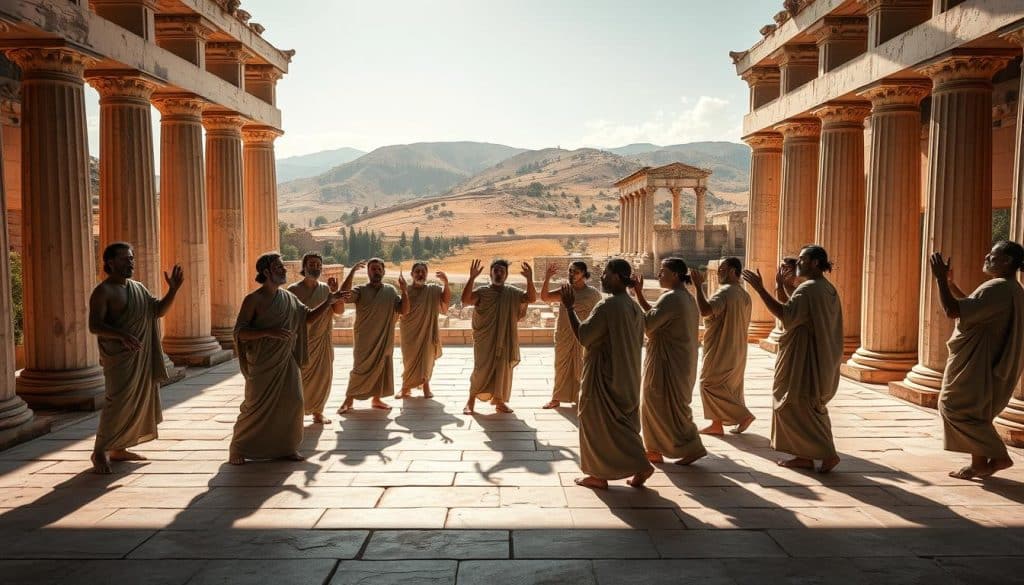
Think the Greek chorus just chanted platitudes? The Theban elders in Antigone were like a proto-social media feed. They were both wise philosophers and sneaky comment-section trolls. These elders didn’t just react to the drama; they were Athenian democracy’s id.
They served up hot takes through hypnotic rhythms. These would make Kendrick Lamar nod in approval.
Unlike Aeschylus’ more reverent choruses, Sophocles’ elders threw shade like podcast hosts. Their “Ode to Man” was not a stuffy hymn. It was a lyrical mic drop celebrating human ingenuity.
They also side-eyed our capacity for self-destruction. Ever notice how their antistrophes clap back at Creon’s tyranny like diss tracks in a hip-hop feud?
What makes these odes revolutionary? The musical structure functions as ancient mood rings. It shifts from hopeful major keys to ominous minors as disaster looms.
Their collective voice mirrors our modern political polarization. You’ll catch more layered commentary in their choral arrangements than in a season of Succession boardroom battles.
These elders weren’t just background singers. They were Athens’ conscience with a beat. They proved that in great ancient drama, even the peanut gallery gets verses worth quoting.
Myth, Power, and Public Competition
Forget Netflix. Fifth-century Athens had tragic festivals – a mix of art and chaos. Imagine Sophocles, a military leader by day and playwright by night. He wrote stories that could influence juries and cause riots.
This wasn’t just entertainment. It was psychological warfare with a twist – a chorus added to the mix.
Antigone’s story about a burial dispute was more than just a play. It reflected real power struggles in Athens. These struggles included backstabbing and political games. The Oresteia’s courtroom scene didn’t just solve a mythical feud. It showed the early days of democracy’s challenges through a fictional battle.
Here’s the amazing part: audiences voted for the winners, like judges on a reality show. But the prizes weren’t just fame. They were about shaping laws and military plans. Winning playwrights became cultural leaders, influencing society with their words.
The Olympic Games even helped out. The theatrical seasons matched the Olympic truce. This used sports fame to spread dramatic messages. It’s like Taylor Swift releasing music during the Super Bowl, but with ancient Greek flair.
These competitions showed drama’s true purpose: social survival training. When Sophocles asked people to judge fictional kings, he was teaching them to critique real leaders. Sadly, today’s politics could use more of this poetic approach.
Echoes in Modern Theater and Sports Arenas
What do Monty Python’s philosophers’ football sketch and Sophocles’ Antigone have in common? More than you might think. Today’s stadiums buzz with energy, just like ancient theaters. But now, fans wear jerseys and blow vuvuzelas instead of chanting.
Major League Soccer’s supporter sections are like updated choirs. Their chants are both ritual and challenge. When Portland’s Timbers Army protests VAR, they show the same defiance as Antigone.
FIFA’s 700-page rulebook is like Creon’s laws, but with better PR. Offside rules feel like divine commands. And VAR acts like our Tiresias, showing us truths we’d prefer to ignore.
The Olympic Games mix grandeur with danger on a world stage. Every mistake or doping scandal echoes ancient tragedies. We see heroes defy fate, just like ancient times. Today, we watch athletes defy physics and gravity.
When a referee checks video replay, think: Is this our deus ex machina? Or just Socrates’ spirit checking the offside line? The truth, like all great stories, blends poetry and penalty kicks.
Teaching and Studying Antigone Today

What do TikTok activists and constitutional law students have in common? They’re all diving into Sophocles’ Antigone like it’s the latest law. Today’s classrooms turn this ancient drama into a place to study power. Creon’s leadership is getting more attention than any tweet.
Teachers use Aristotle’s Poetics to fight against SparkNotes. A Boston high school mixes Theban drama with MBTI tests. They say Creon’s ESTJ traits explain his strict ways, and Haemon’s INFP shows his rebellion is like every teen’s fight for freedom.
Want to learn about Common Core? Try Constitutional Law 101. California schools link Sophocles with First Amendment debates. They ask if Antigone’s protest would pass in the Supreme Court. The answer is more complex than any Instagram post.
This isn’t your grandparents’ ancient drama class. Today, classrooms use Thebes’ story to understand modern issues. Want to know the secret? Look at Ismene’s decision-making through Game Theory. Suddenly, 441 BCE feels like yesterday’s news.
Why These Roots Matter
Malala Yousafzai uses Antigone in her Nobel Prize speeches. She’s not just mentioning Sophocles. She’s using 2,500-year-old survival tactics against today’s tyranny. The roots of tragedy go beyond ancient theaters. They influence everything from Heidegger’s philosophy to feminist movements and Twitter activism.
Creon’s actions today remind us of his stubbornness in ancient times. He’d sacrifice his nation’s future over pride. Antigone, on the other hand, shows us how to defy digital control with her ancient methods. That’s the real twist – these old stories outsmart today’s power structures.
Today’s protests don’t wear masks; they carry signs and hashtags. Political scientists study today’s conflicts through ancient texts. They’re not being fancy. They’re figuring out why authoritarian regimes fall when faced with truth-telling women.
The question isn’t if Greek theatre history is important. It’s if we’re brave enough to change the story.
Resources for Educators and Learners
Ever tried explaining the origins of drama to students who think Sophocles is a new indie band? We’ve found a way to make ancient stories seem as new as a TikTok trend. Our toolkit turns old scrolls into experiential learning that’s as exciting as a modern festival.
The Nexus teaching supplements are far from old-fashioned lesson plans. Imagine analyzing Antigone’s tough choices through Marvel’s Loki eyes or staging her battle with Creon as a rap battle. We’ve mixed ancient vase images with music scores, making history feel as fresh as today’s hits.
Want to get students thinking critically? Try our drinking game: sip every time Creon says “law” (you’ll stay sober to explain complex ideas). We’ve also turned Archimedes’ math into Wordle-style puzzles, making ancient genius go viral.
These resources don’t just teach ancient drama – they empower it. Whether you’re creating TikTok dances or debating Oedipus’s need for therapy, our materials make classics relevant today. The only challenge left? Figuring out how to use Greek masks on Zoom.
Antigone’s Next Act: From Papyrus to Blockchain
Antigone is now a hit in TikTok duets and VR chatrooms. A Berlin theater group lets audiences vote on Creon’s fate using blockchain. Stanford’s Digital Humanities Lab turned the play into a Twitch stream, showing Greek theater’s lasting appeal.
Feminist scholars are reworking Sophocles’ text. Dr. Emily Wilson’s translation highlights Antigone’s fight against patriarchy. The Queer Cut Collective makes Polynices non-binary, sparking debates on justice and power.
Now, you can experience Polynices’ death in VR while tracking your stress levels. Troupes use biofeedback to adjust performances live. It’s a blend of ancient drama and modern tech.
AR goggles are changing how we see Antigone. The National Theatre is exploring AI-generated endings. Creon might even find love on a parody dating app.
Want to get involved? Universities offer coding challenges based on Antigone. Classicists argue online about NFT ticket sales and Greek theater’s future. It’s a digital revolution.
