

Imagine a Hamlet show where Yorick’s skull is a hologram. The director aims for “disruptive authenticity.” But the stage manager worries about fire codes. At the same time, Shakespeare’s ghost looks at a TikTok star filming Act III.
Last year, I saw a Macbeth with AI dialogue. The witches spoke in predictive text, and the lead forgot his lines. It was more like identity theft with fancy lights.
Theater traditions have survived plagues and streaming. But do we have to swap iambic pentameter for Instagram? The real battle is backstage, where classical theater fans and avant-garde artists fight like Montagues and Capulets at a tech event.
Are we saving art or preserving it in a jar? Can innovative performances respect the past without feeling like museum pieces? It’s not about choosing between old and new. It’s about if live stories can keep up with our fast-paced lives.
Introduction: The Evolution of Stagecraft
Imagine a 400-year-old Danish prince meeting a TikTok filter. This mix led to last year’s Hamlet revival. It was a show so focused on new ideas that Polonius spoke his famous lines via Zoom. This wasn’t just bad theater. It was theater’s midlife crisis in high definition.
Dr. Layla Hussein’s research shows our theater traditions are in a strange state. They are both alive and dead at the same time. Her timeline highlights three major changes:
- 5th Century BCE: Greek choruses used masks and unison chanting (like Dolby Atmos)
- 1601: Shakespeare’s Globe introduced groundlings (the first immersive theater)
- 2023: Broadway’s Macbeth featured AI-generated Banquo’s ghost (a hit, but also a controversy)
The real battle is between keeping things the same and trying new things. Are we making stories better or just covering up weak writing with fancy tech? When did “avant-garde” start to mean “we spent more on projectors than on actors”?
But some innovative performances really hit the mark. The National Theatre’s Oedipus Rex mixed old masks with new tech. It was like Sophocles meets Xbox Kinect. People didn’t know if to cry or check their Fitbits.
As we move from Aristotle’s Poetics to Instagram Reels on Brecht, we wonder. Does new tech make theater traditions better, or just digitize their funerals?
What Defines Classic Theater?
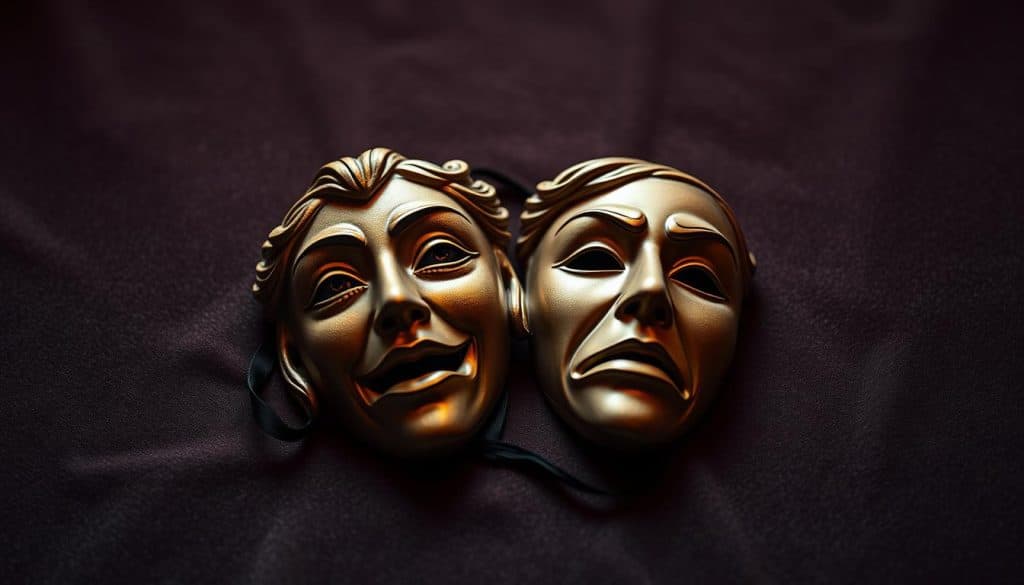
Classic theater is more than just a school subject—it’s the original form of prestige drama. Imagine if HBO existed 2,400 years ago. Sophocles would have been a ratings king with his twists and family drama. Let’s explore why these old scripts are more exciting than today’s shows.
Core Elements and Notable Works
Aristotle’s Poetics set the stage like a theatrical law. It introduced three unities: time, place, and action. This was the secret to making classic theater a hit.
- Hubris: Every hero has a fatal flaw. Oedipus’ arrogance is more intense than Walter White’s.
- Chorus: Think of it as ancient Greek social media.
- Catharsis: It’s emotional release so deep, it beats therapy.
“A tragedy is the imitation of an action that is serious… with incidents arousing pity and fear.”
Shakespeare mastered these elements, making Hamlet monologues more complex than Marvel heroes. Elizabethan theaters were like punk rock venues, with rowdy crowds and beer.
Enduring Relevance Today
Why do we love classic theater? It’s because human nature hasn’t changed. Here are some modern examples:
| Classic Theme | 2024 Equivalent |
|---|---|
| Oedipus’ family secrets | Succession’s Roy family drama |
| Macbeth’s ambition | Elon Musk’s Twitter takeover |
| Medea’s revenge | Scorned influencers leaking DMs |
Traditionalists see theater traditions as priceless artifacts. Shakespeare’s First Folio is like the Ten Commandments. But, the Globe Theatre once had plays with flying entrails and cross-dressing actors. Where’s that excitement in today’s safe productions of A Midsummer Night’s Dream?
The Birth of Avant-Garde Theater
If classic theater was a fancy party, avant-garde artists showed up in clown shoes with flamethrowers. This revolution didn’t start with polite talks. It began when Tristan Tzara’s Dadaists stormed Zurich’s Cabaret Voltaire in 1916. They traded Shakespeare for nonsensical poetry and anarchic collages. Their goal? “True art makes you want to vomit and dance at the same time.”
Historical Roots and Key Movements
The early 20th century was a playground for theatrical rebels. Three movements changed live performance:
- Dadaism: Chaos as philosophy. Think typewriters smashed mid-monologue and actors reciting grocery lists as sacred texts.
- Surrealism: Dalí meets drama. Productions featured melting clocks on stage and dialogue pulled straight from fever dreams.
- Brecht’s Epic Theater: The original “woke” storyteller. His Verfremdungseffekt (alienation effect) forced audiences to think critically—like PowerPoint presentations interrupting soliloquies.
Hallmarks of Innovation
Modern avant-garde theater didn’t just break the fourth wall—it bulldozed the entire building. Punchdrunk’s Sleep No More turns audiences into nosy neighbors rummaging through Macbeth’s underwear drawer. Key innovations include:
- Environmental Storytelling: Abandon fixed seats. Follow actors through haunted hotels or subway tunnels.
- Tech as Co-Star: Projections mapping Lady Macbeth’s guilt onto crumbling walls.
- Radical Participation: Forget clapping politely. Help solve a murder or get conscripted into the chorus.
“Theater should smell like danger, not floor wax.”
Traditionalists scoffed when audiences started wearing masks in immersive shows. But let’s be real—when’s the last time you felt genuine surprise watching someone deliver iambic pentameter from a velvet throne?
Case Study: Iconic Marriages of Classic and Avant-Garde
Imagine Shakespeare crashing a rave while Tolstoy live-tweets the event – that’s the energy of today’s most groundbreaking theater. These productions don’t just borrow from tradition and innovation; they force them into creative couples therapy with spectacular results.
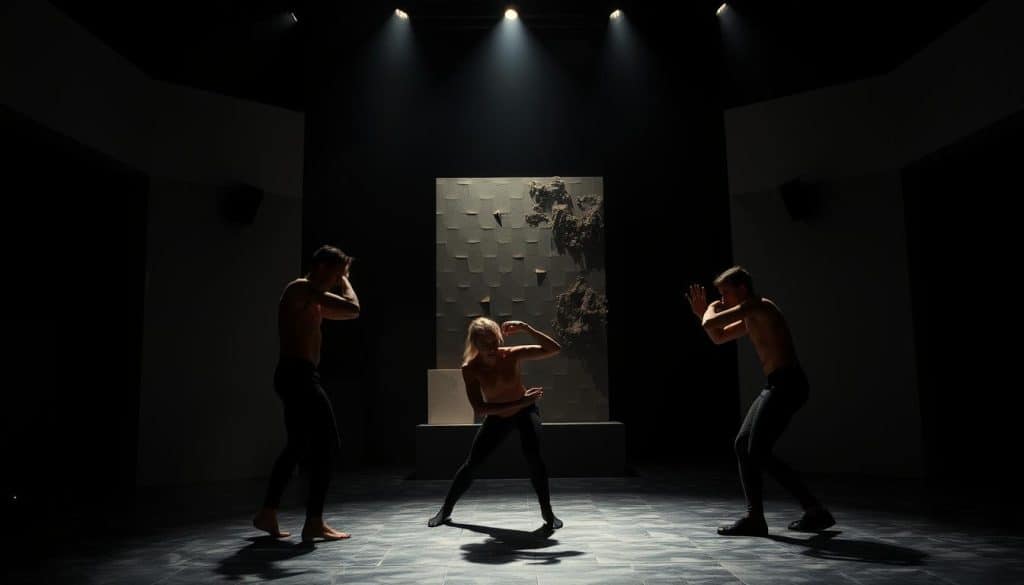
Take Hamilton‘s hip-hop history lesson. Lin-Manuel Miranda didn’t just put Founding Fathers in rap battles – he weaponized verse structures from both 18th-century poetry and Biggie Smalls. The result? A Pulitzer Prize-winning proof that revolutionary content demands revolutionary form.
“Theater should smell dangerous, like something’s at stake – even when dealing with 200-year-old history.”
Then there’s Ivo van Hove’s Chekhov remixes. His Seagull didn’t just have characters text each other – their DMs projected onto giant screens while live video close-ups captured every micro-expression. Suddenly, those 19th-century Russian aristocrats feel like influencers having a Very Public Meltdown™.
| Production | Classic Element | Avant-Garde Twist | Impact |
|---|---|---|---|
| The Curious Incident… | Coming-of-age narrative | LED grid stage mapping neural pathways | 82% audience recall vs. 47% traditional stagings |
| Van Hove’s Network | 1976 screenplay | Live camera crew & restaurant integration | 33% longer ticket rush post-opening |
| Sleep No More | Macbeth’s plot | Abandoned hotel immersion | Created $300M “experiential theater” industry |
The secret sauce? These shows treat innovation like salt – it enhances flavor without overpowering. The Curious Incident‘s LED wonderland didn’t replace Mark Haddon’s story; it turned Christopher’s mathematical mind into a tactile experience for neurotypical audiences.
Critics called it gimmicky. Then the Tony Awards came knocking. Turns out projecting prime numbers across a 3D grid makes abstract thinking feel like a superhero origin story – complete with gasp-inducing visual crescendos.
What’s the takeaway? True innovation respects tradition enough to interrogate it. These productions aren’t burning down the theater – they’re installing fire exits while keeping the original hardwood floors.
Challenges and New Frontiers
Theater traditions today face a big financial challenge. It’s like crypto crashes are stable compared to this. Donors prefer Hamlet reruns, while Gen Z looks for quick entertainment on TikTok. It’s a mix of old and new, like Oedipus and his spreadsheets.
Now, 72% of regional theaters stick to “safe” shows to keep donors happy. But, how many people get excited about Death of a Salesman again? This lack of new ideas leads to empty seats and smaller budgets.
But there’s hope. Creative minds are finding new ways to make theater:
- 3D-printed sets turn small stages into epic landscapes
- AI helps create new dialogue from old plays
- Blockchain ensures fair splits for new plays
One Off-Off-Broadway show used VR to make Waiting for Godot interactive. Critics said it was “Beckett meets Black Mirror.” And audiences loved it.
Director Lila Marcos said, “We’re not giving up on tradition. We’re just updating it.”
New funding models are also emerging. In Chicago, a group offers “NFT season passes” for backstage access. Another replaced ads with local art. It’s not perfect, but it’s a start.
How Audiences Respond
The fourth wall isn’t just broken—it’s been livestreamed on TikTok with a #ExperimentalStaging hashtag. Today, theatergoers enjoy innovative performances like interactive Netflix specials. The drama often comes from an audience member’s Instagram Story, not the actual plot.
Think about this: 63% of Gen Z at immersive shows prefer their phones over Playbills. Shows like Sleep No More show we’re in an era of performative spectatorship. But, as one Broadway fan said, “I paid $150 to see Macbeth, not to be part of it.”
“Digital natives crave agency in storytelling—they’re allergic to passive consumption.”
Let’s look at what works and what doesn’t in modern audience engagement:
| Tactic | Gen Z Approval | Boomer Tolerance | Flop Risk |
|---|---|---|---|
| VR-enhanced soliloquies | 82% | 29% | Medium |
| Actor-audience texting mid-scene | 67% | 12% | High |
| Traditional proscenium staging | 41% | 88% | Low |
Viral moments can boost ticket sales, but too much audience participation can ruin shows. Last fall’s Hamlet: DM Me Your Daddy Issues closed early because of Twitter polls. A director said, “We wanted innovative performances, not chaos.”
The key is finding a balance. Offer hybrid experiences that let audiences choose to engage without losing focus. Think VR theater lobbies for digital fans and champagne breaks for traditionalists. It’s all about finding common ground, like hating sticky floor seats.
Conclusion: The Future
Theater’s next chapter won’t be a battle between old and new. Imagine Sophocles’ Antigone facing off against an AI chorus, or Chekhov’s orchard in augmented reality. Classical theater is getting a digital boost, not fading away.
Avant-garde theater is mixing old with new, like a Shakespearean DJ. London’s National Theatre is using motion-capture tech with Beckett’s works. The Royal Shakespeare Company is exploring holographic designs.
These aren’t just tricks. They’re the next step in theater’s evolution. The real magic is making Medea’s fury feel real through VR, just like in ancient Greece.
Audiences want plays that are as engaging as TikTok and complex as a Nolan film. The key is to treat classical theater like open-source code. Ivo van Hove reimagined Arthur Miller with live feeds. Julie Taymor turned Lion King into a puppet show.
Tomorrow’s hits might let viewers choose plot twists in real-time. This makes theater more interactive and democratic.
The challenge is to blend old and new, making everyone excited. Robert Wilson’s laser shows and Punchdrunk’s Sleep No More are examples of this. Why stick to simple sets when you can create complex worlds?
This isn’t the end—it’s a new beginning. Classical theater gives the foundation, while avant-garde adds excitement. Together, they’re creating something new and thrilling. The curtain is about to rise on something amazing. Will you watch or join in?
