

Imagine a family feud that makes Thanksgiving arguments seem small. Sophocles’ play tells a story of vengeance so sharp it could cut through marble. It follows a daughter’s relentless quest for justice after her father’s murder.
Kristin Scott Thomas brings this primal rage to life in a way that critics call “draped sackcloth elegance”. This is a visual paradox for a character who is torn between right and wrong.
What makes this story last? It’s not the bloodshed, but the gut-punch question it raises. When does seeking justice turn into self-destruction? The play makes us feel like we’re part of every plan.
Scott Thomas’ performance is all about tension and pauses. She makes Electra’s obsession feel as fresh as a Twitter feud, yet as old as human nature. The real tragedy isn’t the death toll, but how the play reflects our own desire for revenge.
Modern viewers might see the roots of every revenge thriller in Electra. From John Wick to corporate dramas, the play’s themes are eerily relevant. In our time of cancel culture and outrage, Electra’s fire is as fierce as ever.
Revenge and Power Play as Motif
Revenge isn’t just a slot machine payout – it’s the whole Vegas strip of human motivation. Classical drama got this better than reality TV writers. They showed vengeance as both a valuable currency and a fierce battle.
Clytemnestra’s famous line, “An eye for an eye,” seems fair at first. But she’s trading eyes like baseball cards. This shows how extreme revenge can be.
The 1992 Derry production of this ancient feud was eerily prophetic. Actors staged fake killings weeks before real violence started. Art didn’t just imitate life – it handed life a script.
Agamemnon’s fate felt less like myth and more like real news. This shows how close art can be to reality.
Why does this primal sports competition of vengeance last? Maybe because we’re all playing Sophocles’ game. It’s filled with instant replays and victory dances on moral high grounds.
The Derry cast learned revenge works on Broadway time. Timeless, brutal, and always sold out.
As we binge-watch true crime and political smear campaigns, we wonder. Have we moved from spears to subpoenas, or are we just better at hiding the bloodstains? History’s scoreboard shows it’s always about power play – the ultimate contact sport.
The Cast: Building a Winning Team
Great theater isn’t just about one person—it’s a relay race of emotional grenades. Ian Rickson’s production gets this, blending Kristin Scott Thomas’ star power with Diana Quick’s complex Clytemnestra. It’s like Jordan and Pippen in togas, but with more fear of the unknown.
Quick’s queen isn’t just acting—she’s doing heart surgery on Euripides’ words. Her looks carry the weight of Sparta’s armor. Fiona Shaw’s experience adds depth to the ensemble, making them move as one.
Peter Wight’s servant, often overlooked, steals scenes with sharp lines. This isn’t just about stars. It’s theatrical alchemy. The show balances Scott Thomas’ fame with the play’s deep themes.
This Electra shines because of its director and actors. They treat silence as dialogue and see subtext in everything. The result is a show that feels like watching Olympic athletes play 4D chess with fate.
Staging the Greek Chorus: Teamwork on Stage and Field
What do classical drama ensembles and World Cup finalists have in common? Both need the precision of synchronized swimmers and the strategy of chess grandmasters. Forget halftime shows – the real magic happens when 15 voices act as one, turning shared pain into a perfect corner kick.
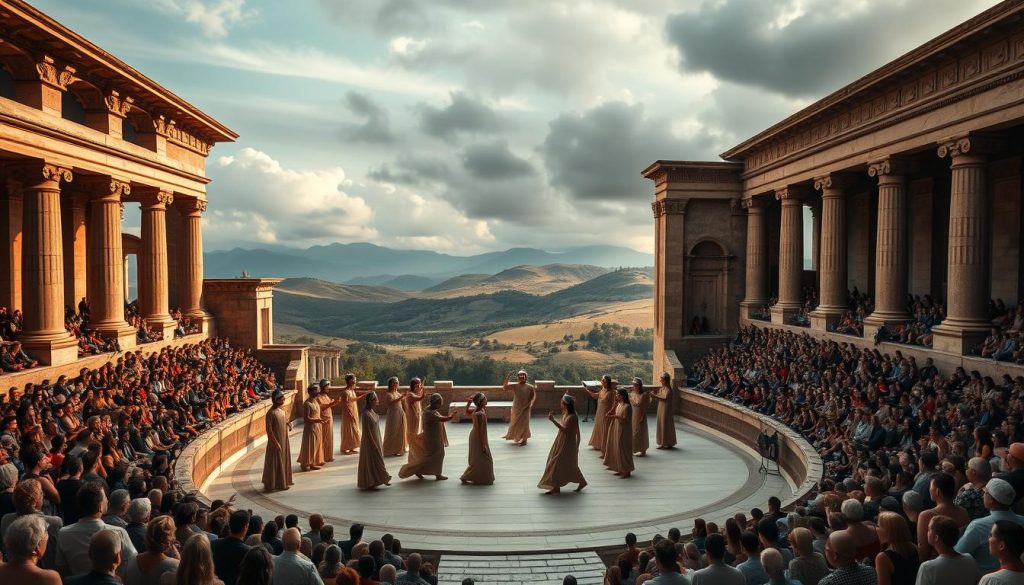
The 1992 Derry production found a way to make emotions hit home. Actors punctuated key moments by thumping soccer balls against the stage wall. This wasn’t just decoration – it turned Sophocles’ words into live sports commentary. Imagine the chorus’ cries matching the thok of leather on plywood, making grief feel real through athletic rhythm.
Modern directors could learn from stadium wave choreography. The best sports competition crowds don’t just cheer – they breathe together. A chorus that moves like Liverpool fans singing “You’ll Never Walk Alone” achieves something ancient scripts only hint at: raw human connection as art.
Here’s the kicker: this teamwork makes Shakespeare’s words sound like rec league poetry. When an ensemble works this well, they’re not just reciting lines – they’re conducting emotional surgery with Olympic relay racers’ coordination. The aim? To make ancient stories feel as urgent as penalty shootouts.
Director’s Vision for a Classic
Staging classical drama in 2024 is like an NFL coach’s strategy and a poet’s subtlety. Ian Rickson’s method is like Bill Belichick planning plays for Euripides. It’s about combining divine egos, ancient traditions, and modern audience desires.
Frank McGuinness’ translation makes iambic trimeters feel like verbal battles. It’s Sophocles meets Aaron Sorkin, with every line packed with tension. Peter Stein’s view of “text as combat sport” is perfectly captured here.
Mark Thompson’s circular stage design is a stroke of genius. It looks like a Roman coliseum and a CNN debate screen. This setup forces the ensemble to face each other and the audience in every direction.
Rickson’s key strategy is treating the chorus like a top sports team. They’re not just statues; they’re live commentators analyzing the drama. This makes the Greek tragedy feel like halftime commentary during the Super Bowl of human mistakes.
Why Audiences Love Electra
Why does a 2,500-year-old revenge story pack a punch like a Marvel twist? Sophocles’ Electra isn’t just ancient drama. It reflects our rage today, from palace courts to Twitter threads.
Today, we don’t just see Kristin Scott Thomas holding an urn. We feel the echoes of betrayal. Think corporate backstabbing or influencers using cancel culture. The Derry production showed us – stunned silence was like a collective “Same” from the audience.
Great tragedies endure because they hit us hard, bypassing fleeting trends. Electra’s tale of vengeance is timeless. It’s a blueprint for our own rage and its messy aftermath. We leave the theater questioning: “Am I the chorus in someone else’s drama?”
That’s the magic. While TikTok trends fade fast, stories that reveal our true nature endure. They’re as lasting as LeBron’s legendary moves.
Ancient and Modern Perspectives
What do Sophocles and Tom Brady have in common? Both were masters of anticipation. Sophocles predicted Freudian psychology, while Brady reads defensive schemes. Classical drama created the playbook for human psychology, with plot twists sharper than any pep talk.
Fiona Shaw’s performance of maternal rage was raw and real. Her grief showed how modern therapy sessions are less powerful than theater. Jung’s “complexes” are timeless because they show our messy side, unlike sports psychology.
Derry’s bomb-scarred streets taught me about sports competition more than trophies. Communities find normalcy in Friday night football, like Sophocles with shoulder pads. The ancients knew we need rituals, not just revenge or victory.
We’re trying to understand 2,500-year-old emotional codes. Why does Medea’s fury feel truer than TED Talks? The answers are between ancient theaters and your group chat.
Reviews, Educational and Community Impact
London critics compared the Old Vic’s latest ensemble performance to a winning three-pointer. They weren’t just showing off their vocabulary. The real triumph was in Derry, where the audience gave a wordless standing ovation for ten minutes. It was like seeing TED Talk organizers cry.
This wasn’t just applause. It was a cultural Hail Mary. People from different backgrounds came together through Sophocles’ drama. It showed that ancient stories can reflect our modern issues.
Teachers in Belfast are using this production to start important discussions. These talks are as intense as UN negotiations. The key is collective catharsis. This method makes audiences confront their feelings and find meaning.
Schools say students are now debating Electra’s choices with more depth. It’s like they’re discussing budget bills in Congress. The message is clear: ancient Greeks can teach us about living today. If only they could fix our Wi-Fi too.
Audience Engagement: Discussion and Workshops
Modern theaters now offer something exciting: workshops where audiences dissect ancient rage with $18 wine in hand. It’s like analyzing a March Madness bracket, but with existential dread at stake.
Fiona Shaw’s post-show talks in Derry were intense. Audiences didn’t just talk about Electra. They used its depth to face their own traumas. One person said it felt like “group therapy with better costumes.”
This isn’t just watching a show. It’s a group effort to uncover modern truths from ancient texts. Theaters become ensembles, not just places to watch.
Harvard’s Reading Greek Tragedy Online project shows how interactive formats connect us. They turn audiences into co-conspirators, debating Medea’s actions over Zoom.
Why does this work? Greek drama’s rawness cuts through small talk. It’s like a halftime speech, but it makes you question your morals.
How to See the Next Performance

Getting tickets to a show is like playing chess and hoping for a miracle. It’s not just about refreshing your browser. We’re talking about finding live drama that’s as exciting as a sports competition. It’s fast, like Super Bowl ads.
London’s Old Vic mixes old stories with new tech, and “stadium theater” turns you into a Greek chorus. But finding tickets is as tricky as betting on offshore betting sites. If you miss the chance, you’re left with low-quality recordings.
Here’s a secret: Keep up with venue newsletters. Box offices release tickets in waves, like a Taylor Swift concert. Scoring tickets is thrilling, but be careful of scalpers. It’s a tragedy to pay too much.
Exploring Greek Tragedy as Theatrical Sport
Greek tragedy is like a big sports competition. Every line is a high-stakes play. The chorus is like a tight team, performing in perfect sync.
Imagine Sophocles planning out catharsis on a chalkboard. And the Furies perform a halftime show, all thanks to Nike.
Electra’s final showdown is as tense as Game 7 overtime. The ensemble’s chanting at Derry’s venue is like a soccer team’s rhythm. It’s not just theater; it’s an extreme sport with emotional battles instead of physical ones.
Modern coaches could learn from ancient Greeks. Thespis started team-building by making actors step out. Sophocles’ stories are as deep as Belichick’s strategies. Electra’s grief meeting Orestes’ vengeance is like a precise play in Super Bowl XLII.
Watching athletes compete is like watching ancient rituals. The real win is surviving the show without getting hit by deep thoughts. Tickets for the next show sell out fast. Will your team make it?
