

Feeling alive? Try watching Norwegian soldiers with machine guns in Hamlet. Modern theater is all about Camus’ “strange joy” of absurdism. It gets more applause than any ending.
Global stages are like our collective therapist’s couch. World Cup protests are like Beckett plays. Dictators quote Macbeth at UN podiums. It’s like Shakespeare’s “tale told by idiots, full of sound and fury” – but now with TikTok and nuclear codes.
Why does Hamlet’s meltdown work with NATO uniforms? Political theater is now an Olympic sport. The drama isn’t about being alone in the universe. It’s humanity’s improv show against the universe.
This isn’t your philosophy professor’s existentialism. Today, drama is in border walls and trade wars. The show never ends, and the audience never leaves. The meaning? It’s in rehearsal.
Defining Philosophical Drama
Philosophical theater isn’t about finding answers. It’s about exploring big questions through language. Imagine Hamlet joining a TED Talk on quantum mechanics. That’s close to what it’s like.
Today’s theater loves questions more than answers. It’s like a hall of mirrors where questions bounce around.
- Shakespeare’s power plays: Macbeth’s “tomorrow” speech is more than poetry. It’s a deep dive into ambition, wrapped in beautiful words.
- Post-dramatic curveballs: Alison Croggon’s My Dearworthy Darling mixes old mysticism with new psychiatry. It’s like a literary bomb.
- The catharsis con: Why just feel emotions when you can question everything? Modern audiences love to have their views challenged.
This isn’t just old theater history. Today’s philosophical drama connects the past to now. It shows how our worries today are similar to those of the past.
Calderón’s question in 1635, “What is life? A frenzy,” feels like a tweet about our fast-paced lives today.
“The stage is a surgery table where we dissect collective consciousness.”
The magic happens when different cultures meet on stage. A Japanese Noh play meets Brecht’s alienation. German lights add to a Nigerian play’s story of colonial pain. This mix breaks all the rules and dances in the ashes.
Strindberg, Calderón, and Other Thinkers on Stage
Strindberg didn’t write plays; he held séances with Freud’s nightmares. His A Dream Play warps reality like a funhouse mirror. Characters change identities and logic follows the rules of dreams.
Consider this: when Indra’s Daughter says “Everything is possible, everything is probable”, she’s like a modern-day politician or your cousin at Thanksgiving.
Calderón’s Life Is a Dream takes existential whiplash to new heights. He asked the ultimate shower thought: If reality’s a construct, does rebelling against fate make you heroic… or just extra?
His prince Segismundo, locked in a tower, tests free will vs. determinism. His violent outbursts after release mirror our panic when algorithms decide our news.
These playwrights used drama to dissect human nature:
- Strindberg’s dream logic = early prototype for reality TV editing
- Calderón’s paradoxes = Renaissance-era Reddit philosophy threads
- Both used heightened stakes to expose society’s fragile masks
“What is life? A frenzy. What is life? An illusion.”
Modern directors analyze these works like tech bros quote Sun Tzu. Why? Because watching Segismundo struggle with fate hits differently when AI writes your emails. Strindberg’s fluid identities predict our TikTok persona-hopping.
Notice how Life Is a Dream’s central question—“If power is an illusion, why do we keep auditioning for the role?”—echoes in everything from celebrity influencer culture to congressional hearings. Calderón would’ve thrived as a podcast host. Strindberg? He’d absolutely have a viral Substack dissecting Elon Musk’s tweets through Jungian archetypes.
Their genius lies in framing life’s messiness as art worth interpreting, not problems to solve. Like a therapist who charges $300/hour to say “And how does that make you feel?” but with more soliloquies and fewer scented candles.
Modern Examples: Life Is a Dream in Context
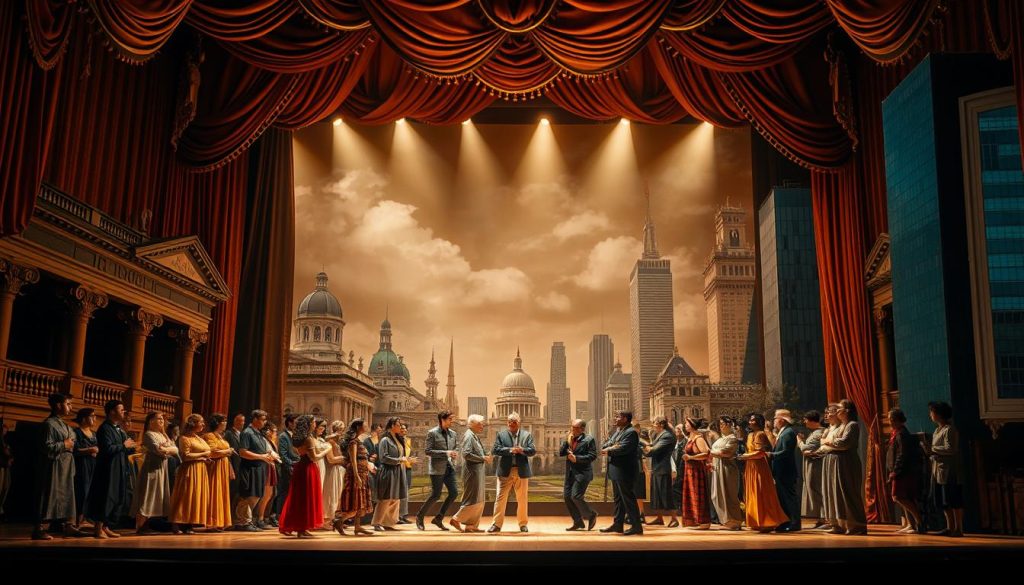
Calderón’s 17th-century play is like Shakespeare for today’s existential crises. It’s a timeless tale that speaks to us all. Let’s explore three ways it has been reimagined, showing its lasting relevance.
Tadashi Suzuki’s 2018 Japanese adaptation was a cultural bridge. It mixed Noh theater with Calderón’s words. This created a deep look at modern loneliness.
“We’re all testing versions of ourselves in different containers,”
the director said, echoing Silicon Valley’s spirit.
The pandemic brought a new twist: a Zoom play. It turned Basilio’s court into a digital maze. The team used:
- Glitch effects for Segismundo’s reality-warping soliloquies
- Chat box explosions during the “¿Qué es la vida?” monologue
- TikTok-style edits making Rosaura’s vengeance plot go viral (literally)
Ariane Mnouchkine’s 2022 version at Théâtre du Soleil made Rosaura central. It asked: What if the dream is actually patriarchy? The final scene, where women take down Segismundo’s throne, became a symbol for France’s #MeToo movement.
Corporate America has taken notice of the play’s themes. When a tech CEO quoted Segismundo during layoffs, it showed the play’s relevance. It’s a tale of power and identity in today’s world.
Life Is a Dream is a master of change. It shows how we all test our identities in digital spaces. Calderón’s work isn’t just about old times; it’s about our ongoing quest for self.
Cross-Cultural Approaches and Festivals
The Oslo International Theatre Festival now needs more interpreters than a UN security council meeting. They’re not just decoding Ibsen’s stage directions. We’ve entered an era where a Samoan Waiting for Godot makes existential dread feel like sipping mai tais on a beach. This shows international drama is about transformation, not just translation.
Three festivals are rewriting the rules of cross-cultural playwriting:
- Kyoto Experiment’s Noh-meets-absurdism mashups where ghostly warriors debate Camus over taiko drums
- Edinburgh Fringe’s “Global Satire Summit” featuring Argentinian Malvinas comedies and Ukrainian Putin puppet shows
- The Bhāva-Brecht Project in Mumbai merging classical Indian rasa theory with epic theater techniques
This isn’t fusion cuisine theater. When a Kabuki Macbeth uses blood-red kimono sleeves to visualize guilt, or a Bollywood Mother Courage features protest songs against Modi’s agricultural policies, we’re witnessing radical reinvention. The real magic happens when cultural collision sparks new questions. For example, what does “existential freedom” mean in societies where community outweighs individualism?
“We’re not staging dialogue between civilizations – we’re hosting their bar fight.”
The numbers tell their own story:
| Festival | Languages Used | Existential Crisis Flavors |
|---|---|---|
| Oslo International | 47 | Nordic angst meets tropical ennui |
| Kyoto Experiment | 6 + 12 dialects | Zen confusion × French absurdism |
| Edinburgh Fringe | 33 | Post-Brexit nihilism with global seasoning |
Yet the true test comes when these productions tour. That Samoan Godot confused Berliners expecting bleak minimalism – they got ukulele-accompanied waiting instead. But isn’t that the point? International drama at its best doesn’t travel well – it leaves jetlagged, disoriented, and infinitely more interesting.
The Drama of Sport as Existential Theater
What happens when 80,000 people scream in unison at a soccer match? It’s not just athletes running. You’re seeing philosophical drama through cleats and sweat. The World Cup is more than a tournament; it’s a global stage where politics and sports blend.
Lionel Messi’s 2022 World Cup win was like Hamlet’s moment with Yorick’s skull. Both moments ask: What does it mean to win in a world where every triumph feels fleeting? Sports today, from Olympics to NFL, draw from ancient myths. Those Olympic cauldron lightings? They symbolize Prometheus’ fire.
Stadium crowds are like Greek choruses. Argentine fans chanting “Muchachos” during the World Cup final didn’t just cheer. They narrated destiny, shaping the match’s emotional arc. VAR technology makes penalty calls like Kafkaesque trials, leaving players unsure of their fate.
“Sports are human life in microcosm.”
Tom Brady’s retirement speech was full of existential themes. His 23-minute farewell had more King Lear than LeBron’s “The Decision.” Brady, a gridiron god, wrestled with mortality after 22 seasons: “When I wake up in the morning, I feel like I’m 25… until I look in the mirror.”
Global sports events are now international drama platforms. Qatar’s World Cup sparked debates on LGBTQ+ rights, while Chinese Olympic broadcasts framed athletes as nationalist symbols. These events don’t just entertain; they let societies act out ideological conflicts.
Next time you watch a championship game, listen closely. Beneath the crowd and tackles, you’ll hear humanity’s oldest questions through whistles and goalposts.
Perspectives: Directors and Global Playwrights
Why did Ivo van Hove choose Zoom for absurdist theater? It’s because a frozen screen screams existential void. Modern directors use cross-cultural playwriting to make Strindberg’s ghost both applaud and facepalm at the same time.
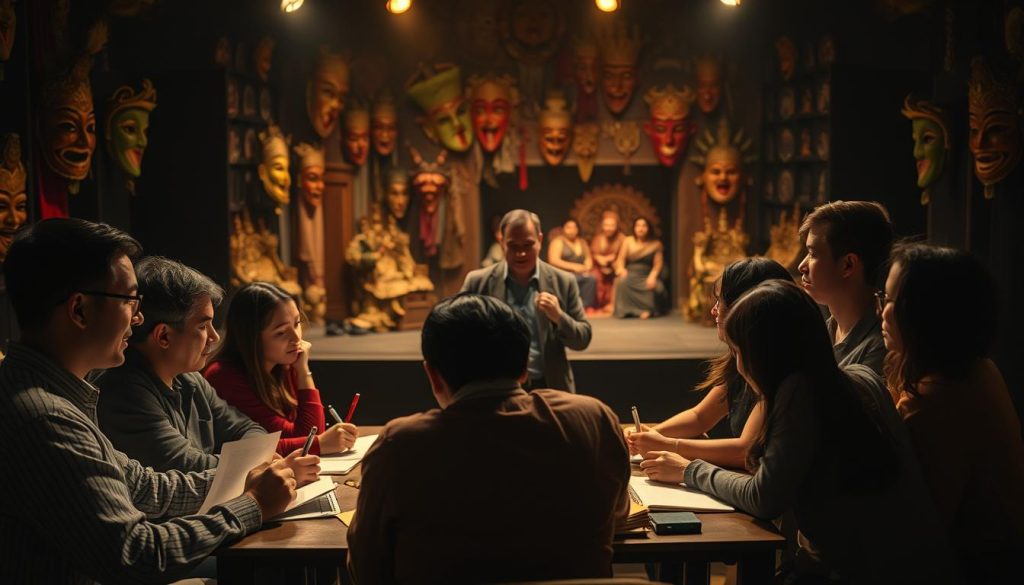
Tadashi Suzuki turns Miss Julie into a physical chess match with his biomechanical approach. Actors don’t just deliver lines; they metabolize them through controlled spasms and floor patterns. Suzuki says, “The body lies before the tongue does,” making Chekhovian subtext seem simple.
Ariane Mnouchkine’s Théâtre du Soleil takes collective creation to new heights. Their process for staging Buddhist parables through commedia dell’arte filters is like a philosophical potluck:
- Week 1: Improvising Kierkegaard’s Fear and Trembling as K-pop fan fiction
- Week 3: Rehearsing in complete darkness to “find the text’s spleen”
- Week 5: Accidentally inventing a new form of existential TikTok dance
Van Hove’s pandemic-era experiments with glitchy streaming platforms are the real innovation. His Waiting for Godot adaptation featured:
| Element | Theatrical Approach | Existential Payoff |
|---|---|---|
| Buffering screens | Modernized Beckett’s pauses | Audience confronted their own mortality |
| Chat box dialogues | Digital-age alienation | “We’re all typing into the void” |
| Accidental muting | Absurdist sound design | Existential dread meets tech support |
These mavericks show that cross-cultural playwriting is about cultural alchemy, not just translation. When Suzuki blends Noh theater techniques with Strindberg analysis, he’s not adapting texts. He’s creating philosophical hybrid vehicles that run on premium existential fuel.
“If your production doesn’t make the lighting designer question their life choices, you’re doing philosophy-lite.”
Audience Experience: Reflecting and Interpreting
Modern theater wants more than just viewers—it seeks accomplices. Patricia Cornelius’ SHIT makes you face gendered violence up close. It’s not just a play; it’s a trial where you’re a key witness. During intermission, you might wonder: “Are the Raisinets™️ in the lobby machine a metaphor for late-stage capitalism?”
Philosophical theater uses discomfort to make a point. Think of immersive Beckett shows where:
- Audience members face a choice: wait in a line or exit through a door that asks the meaning of life
- Support groups for existential crises are more popular than Uber rides after the show
- People tweet more about an empty chair than about celebrity news
“Beckett didn’t write endings—he wrote philosophical bear traps.”
The table below shows how international drama changes how we engage with theater:
| Aspect | Traditional Theater | Experimental Philosophical Theater |
|---|---|---|
| Audience Role | Passive observer | Unwitnessed juror in humanity’s trial |
| Emotional Engagement | Catharsis through resolution | Existential vertigo through unresolved paradoxes |
| Post-Show Discussions | “The lead actor was brilliant!” | “Does free will exist if the program’s font was Helvetica?” |
This shift makes theater like a Rorschach test. A Korean-German production uses synchronized swimming to critique neoliberalism. Your drink order after the show becomes a political statement. The brilliance lies in making you complicit in the themes you’re analyzing.
Social media amplifies this experience. TikTok analyses of Polish absurdist dramas beat cat videos in 14 countries. Reddit threads about interval snacks as metaphysical symbols get more comments than live congressional hearings. It’s clear: philosophical theater doesn’t end with the curtain—it invades your online conversations.
Practical Guide: Bringing Deep Ideas to Stage
How do you make Nietzsche nod along to a beat? Staging philosophical theater is a mix of deep thinking and bold creativity. We’re building thought cathedrals, not just plot sandcastles. Here’s how to craft cross-cultural plays that enlighten and confuse audiences.
Rule 1: Your program notes should be like a wild philosophy seminar. Patricia Cornelius shows how to mix everyday language with deep ideas. Imagine Brecht meets TikTok slang, with Žižek’s notes on reality TV. Give out Kierkegaard pamphlets with the tickets for extra points.
Shakespeare’s existential themes can guide us. That famous “All the world’s a stage” line? Today, it might involve AR debates on dualism while breakdancing. Make complex ideas physical – like Hamlet juggling Yorick’s skull while talking about death.
- Use untranslated ancient languages as rhythmic texture, not pretentious garnish
- Let metaphors become combat sports (Sartre vs. de Beauvoir wrestling match, anyone?)
- Treat philosophical concepts like special effects – deploy sparingly but impactfully
Cross-cultural playwriting is all about bold mixes. Combine Noh theater with slam poetry. Pair Stoic monologues with K-pop. Aim for a mix that’s so jarring, it feels like a philosophical pill.
“A good philosophical play should leave you needing both a drink and a PhD advisor.”
Test your curtain call idea with Camus quotes over EDM. Start with Nietzsche on lo-fi beats during transitions. Gradually add more existential tunes. Your final bow should feel like the end of philosophy camp – both exhilarating and draining.
The magic happens when ideas go beyond words. Mime shows on Heidegger or Beckett-inspired clown routines are perfect. Make them laugh first, then let the meaning sink in later. It’s like the theatrical version of nitrous oxide.
Recommended Reading and Performances
Start with Calderón’s Life Is a Dream in María Rosa Menocal’s critical edition. The footnotes alone could spark a semester of debates. Strindberg analysis gets a boost in Robert Greer’s Swedish Shadows. Pair it with Ingmar Bergman’s 1986 Hamlet film for a deeper dive.
Check out Lisbon’s Teatro da Garagem production of Life Is a Dream. Segismundo now trades his tower for a crypto wallet. Yes, that underground Bucharest Rosencrantz & Guildenstern remix makes blockchain philosophy click.
The Public Theater’s 2023 courtyard staging of The Ghost Sonata turned Strindberg’s nightmare into immersive theater. They used VR headsets and espresso martinis for the experience.
YouTube’s ASMR No Exit readings show Sartre’s hell isn’t other people. It’s 3D soundscapes of typewriters and rattling chains. For a more traditional experience, London’s Donmar Warehouse streams their Beckett cycle. They offer “existential crisis breaks” every 45 minutes.
Ever seen Waiting for Godot reimagined as a TikTok series? You might wish you hadn’t. These works entertain and weaponize philosophy through velvet curtains and uncomfortable seating. Ready to join the conversation where Camus meets curtain calls?
