

Remember when theaters were like sacred temples with velvet curtains? Now, they’re more like mad scientist labs. I love the chaos and creativity.
COVID changed theater, forcing a new script. PlayMakers Repertory Company’s virtual 2021 season was a hit. They mixed Zoom with Ibsen classics, creating something new.
Now, audiences want to join in, not just watch. Shows like Lady Grey and Edges of Time make you part of the action. It’s like Shakespeare’s “all the world’s a stage” come true.
The true innovation is how these shows are changing theater. They’re not just surviving; they’re redefining cultural relevance. Maybe empty seats were theater’s best script doctor after all.
Defining Experimental Theater
Experimental theater is when actors get a warehouse, a small budget, and a big question about life. It’s like Broadway meets a theatrical fever dream. It’s not just about performing; it’s about breaking all the rules.
Theatre de Complicité in the 1990s was a big change. Actors became part of the set, and words turned into physical actions. People left wondering if they saw art or a joke.
Today, shows like Sleep No More mix Shakespeare with a scavenger hunt. You might find Lady Macbeth’s earring or spill your drink on a ghost. It’s like a mix of Shakespeare and Escape Room: The Musical.
But, is this theater good or just a group therapy session? Boal’s work made audiences part of the show, solving problems together. Now, we might act out corporate deals or untangle yarn with strangers. It’s both scary and therapeutic.
This kind of theater loves chaos. It tells you to sit quietly, but also says “Your program’s edible, and that fire exit might be part of the show.” It’s not for everyone, but it changed the game, just like punk rock did.
Historical Background and Evolution
Experimental theater didn’t start in smoky cafés. It was born in boardrooms and Zoom rooms. Antonin Artaud’s Theatre of Cruelty (1930s) used discomfort as a creative tool. He said, “without element of risk, there is no theater.”
In 2020, performers did Waiting for Godot in Minecraft. This showed Artaud’s ideas can survive even in pixelated forms.
The 1960s Happenings movement is key to today’s corporate experiments. Allan Kaprow turned grocery stores into stages. This idea is now used by companies like Toolzone NZ. They use warehouse performances for employees, mixing Brechtian alienation with business goals. Innovation seems to thrive where business meets the arts.
“Corporate training is just poor theater with worse coffee.”
Let’s look at how things have changed:
| Era | Method | Corporate Parallel |
|---|---|---|
| 1960s | Audience participation in Happenings | Toolzone’s team-building improv workshops |
| 2020s | Zoom-era interactive plays | Meta’s VR onboarding experiences |
The tools have changed, but the spirit remains the same. Kaprow used random phone calls to shock audiences. Today, AI chatbots do the same. Both aim to break the mold of passive consumption.
Beckett would’ve been a hit in today’s workshops. His work fits perfectly into the post-pandemic scene.
The real innovation is using anarchic art for business growth. Woolsey Hall’s crisis simulations were more than rehearsals. They tested corporate strength. Artaud’s “cruelty” surprisingly fits into today’s business world.
Case Study: Lady Grey in Ever Lower Light
Let’s dive into the world of Lady Grey in Ever Lower Light. It’s not just a play; it’s a mirror for our changing times. This show, born in the pandemic, mixed Zoom with deep thoughts, all while keeping it casual.
Kathryn Hunter-Williams was the heart of this production. She taught acting online and brought to life Marvel Cooke, a journalist from the Harlem Renaissance. The magic was seeing her switch roles, all while staying in her comfy clothes.
“We used to debate Stanislavski in coffee shops. Now, we build characters between Amazon orders and baking sourdough.”
This show marked three big changes in play development:
- Using historical figures to reflect today’s issues
- Shifting rehearsals from real rooms to online spaces
- Audiences becoming part of the story through tech mishaps
| Aspect | Lady Grey | Edges of Time | Modern Echo |
|---|---|---|---|
| Historical Lens | Marvel Cooke’s journalism | Civil Rights era | Media polarization |
| Production Model | Hybrid virtual staging | Site-specific installations | TikTok theater snippets |
| Audience Role | Digital witnesses | Physical participants | Algorithmic curators |
These shows didn’t just adjust to lockdowns; they used them to their advantage. Lady Grey showed how our attention is split, while Edges of Time made empty spaces echo with important debates. The twist? They made tech troubles part of the show when Wi-Fi failed.
This isn’t old-school experimental theater. It’s play development in the age of scraps. It’s about creating art from what we have left. The question is, what will it evolve into next?
The Play Development Process
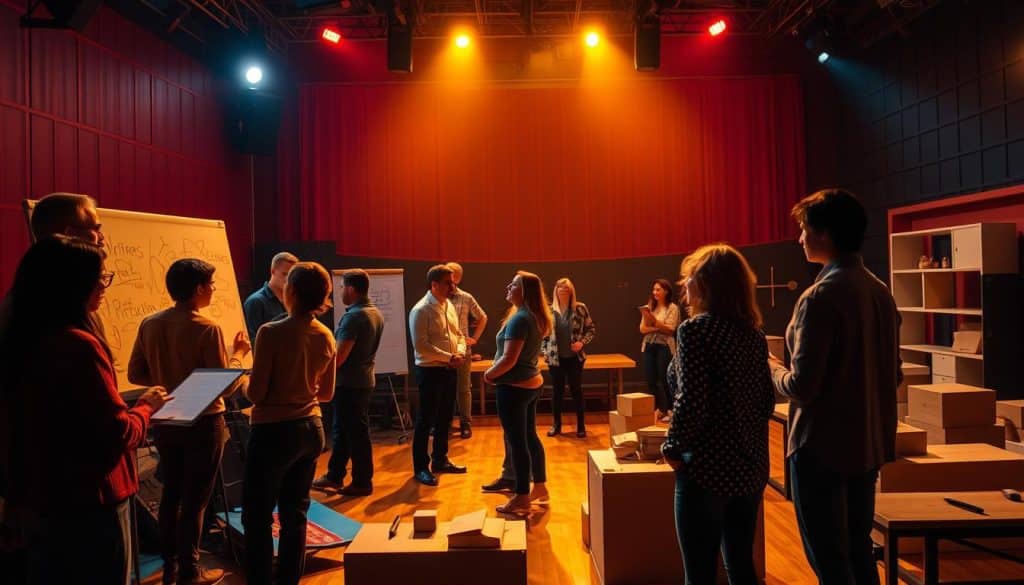
Creating experimental theater is like following a recipe written by a mad scientist – equal parts structure and chaos. Woolsey’s four-phase model includes framing, scripting, staging, and reviewing. His “scripting” phase once involved rewriting an entire act during a 3 AM coffee bender at a Brooklyn diner.
Let’s break down this theatrical sausage-making:
- Framing: Where directors and writers argue about metaphors over expensive sparkling water
- Scripting: The “hold my kombucha” moment when abstract concepts meet paper
- Staging: When actors discover the playwright never considered human biomechanics
- Reviewing: Artistic directors nodding solemnly while secretly planning budget cuts
Lawton’s Edges evolution (2018-2021) shows this process in action. It started as a Zoom-era existential crisis. It became a physical exploration of social distancing, using pool noodles to measure personal space. This is true pandemic innovation.
| Development Phase | Corporate Approach | Union/COVID Approach | Outcome |
|---|---|---|---|
| Rehearsals | “Bethell’s Beach Rules”: No notes after 5 PM | Equity-mandated 6ft spacing & air purifiers | Shakespeare’s ghost learns about OSHA compliance |
| Tech Week | All-nighters with Red Bull IV drips | Staggered shifts & sanitized light boards | Stage managers unionize via Slack |
| Premiere | Champagne toasts with investors | Livestreamed shows with virtual Q&A | Grandma now understands performance art |
“If only Shakespeare had OSHA compliance officers for his Globe fire drills.”
Modern play development is like a choose-your-own-adventure book. Every page says “consult the union contract.” PlayMakers’ safety-bubble rehearsals became accidental social experiments. Imagine building trust exercises while everyone’s masked and holding hand sanitizer.
The magic happens when structure collides with chaos. Corporate playmaking rules clash with live theater’s beautiful messiness. Yet, between the safety protocols and artistic tantrums, raw human stories emerge. These stories are often funnier and more profound than any sanitized corporate workshop could produce.
Site-Specific and Immersive Performance
The pandemic didn’t kill theater—it sent it on a scavenger hunt through America’s most unexpected spaces. Site-specific plays became survival tactics, turning Toolzone construction supplier workshops into makeshift stages. Parking lots became Shakespearean courtyards. When stages went dark, artists asked: “If not a proscenium, then where?”
The answer came wrapped in concrete poetry and hip-hop odysseys like “Temples of Lung and Air,” which turned fire escapes into percussion instruments.
Pre-COVID darlings like Then She Fell—the immersive Alice in Wonderland experience—suddenly felt like relics. Today’s hybrids are scrappier, smarter. Take Blood Done Sign My Name, which livestreamed from Clayton’s historic sites while viewers debated racial justice via Zoom chat. It’s theater if Brecht ran a TED Talk.
“Theater’s new mantra: Have folding chairs, will tour…your local Home Depot.”
Three key shifts define today’s immersive experiences:
- Venue fluidity: Toolzone’s yurt workshops host plays about labor rights
- Tech layering: AR projections transform stockroom shelves into forest canopies
- Audience agency: Spectators choose plot paths via smartphone polls during performances
| Era | Venue Type | Tech Integration | Ticket Price |
|---|---|---|---|
| Pre-COVID (2019) | Converted warehouses | Bluetooth headphones | $85-120 |
| Pandemic Era (2021+) | Hardware stores/parking lots | Livestream + Zoom interaction | Pay-what-you-can |
| 2023 Hybrid | Pop-up historical sites | AR overlays via mobile apps | $25-40 |
This isn’t just adaptation—it’s alchemy. When Macbeth gets performed in a Lowe’s garden center, the power tools become Birnam Wood. The real magic? Making audiences forget they’re standing next to lawnmower displays. As one director quipped: “Our set budget is whatever’s on Aisle 7.”
The revolution’s blueprint is clear: site-specific plays thrive on constraints, while immersive experiences weaponize intimacy. The question isn’t whether theater will return to traditional spaces, but how many Home Depot managers will start demanding royalties.
Audience Engagement in Experimental Spaces
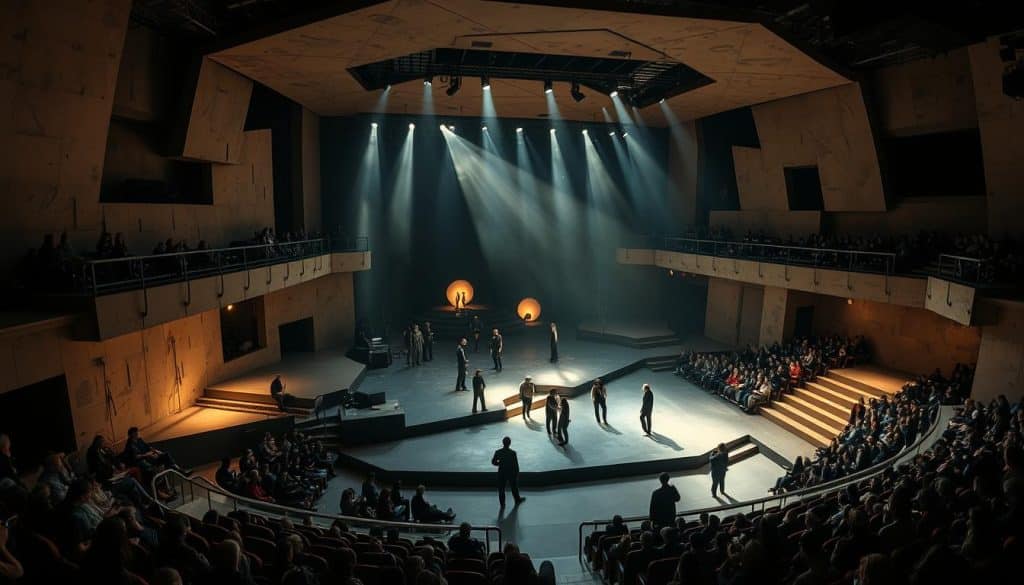
Experimental theater is more than just a show. It changes how we think and feel. A 2019 study from Stanford found that people who did improv felt 23% stronger self-concept alignment after performing. This shows that being part of an improv show can change how we see ourselves.
“Audiences aren’t spectators anymore. They’re co-conspirators in the theatrical heist of reality.”
Take Margaret Chen’s famous workshop in Brooklyn. Instead of the usual awkward talkbacks, she uses reverse heckling. This turns viewers into part of the show. People say it’s like a mix of Tinder and Tennessee Williams, where you swipe right on feeling open.
Paul Edghill’s work at CalArts is also groundbreaking. He uses 3D-printed sets that change during the show. This lets the audience help shape the story, making it their own. It’s like they’re guiding the story themselves.
| Aspect | Traditional Engagement | Experimental Tactics |
|---|---|---|
| Audience Role | Passive observers | Active co-writers |
| Physical Space | Fixed seating | Kinetic environments |
| Narrative Control | Linear progression | Choose-your-own-adventure arcs |
| Technology Use | Static lighting | Biometric feedback loops |
Woolsey’s “complicit audience” theory explains why these methods work. When people feel responsible for the show, they get a rush of dopamine. It’s like a group dream fueled by social bonds and good drinks.
So, when someone says immersive experiences are too much, tell them it’s more than that. We’re creating new worlds where your choices can change the story. It’s like your Uber rating decides the hero’s journey.
Future Directions and Technology
Let’s talk about PlayMakers Repertory Company’s As You Like It VR project. It didn’t work out, but it showed us theater wants real innovation. Not just tech tricks that are outdated.
UNC’s tech program is all about mixing tech and theater. Students like Miriam Edghill work on 3D models and interactive projections. It’s like Hamilton meets cutting-edge tech.
| Traditional Tools | New Tech | Hybrid Wins |
|---|---|---|
| Hand-painted flats | Projection mapping | Augmented reality backdrops |
| Paper tickets | Blockchain entry passes | Dynamic NFT collectibles* |
| Human dramaturgs | AI script analyzers | ChatGPT as Iago’s understudy |
*Those “limited edition NFT playbills” aren’t worth much. We learned tech should help tell stories, not be the main focus.
AI dramaturgs can check your scripts for errors. And blockchain ticketing can stop scalpers. UNC’s backstage platform makes digital changes easy.
Technology should be like Banquo’s ghost in theater – there but not taking over. But if you need tech experts for your show, we warned you.
Conclusion: Why It Matters
Avant-garde theater in places like parking garages or old hospitals is more than just drama. It’s a way to test and learn for the future. Laura Woolsey’s work and Benesch’s “molecular exchange” theory show how site-specific plays can change our views.
A study in 2011 showed that audiences leave theater changed. They feel it because they’ve walked through the story. This is something Broadway accountants often miss.
Les McNeill wants to grow regional theaters by $50M. But Erika Hunter-Williams is doing something different. She’s making productions that involve the audience, inspired by Marvel Cooke.
Avant-garde theater is not just about shows. It’s about using empty spaces to make a point. It turns warehouses and subway platforms into arguments in action.
The revolution might not be televised, but it could happen in experimental theater. While tech giants dream up VR worlds, site-specific plays use real life. They make stories that feel real, like gum on your shoes.
Experimental theater is not just surviving. It’s teaching us how to prepare for change. It’s about learning to rehearse for the revolution.
