

When Debussy’s Pelléas et Mélisande first hit the stage in 1902, it shook things up. It Yeeted Wagnerian grandeur into the Seine. It was like stripping a hit song down to its acoustic basics.
It made symbolism more important than big shows, and whispers louder than big songs. Art became a musical Rorschach test.
Now, TikTok users are turning sonnets into short stories. Why do we keep resuscitating old stories? Masterpieces are not just for museums. They’re like cultural shock treatments.
Boulez said Debussy’s work was like a bridge to the 20th century. True relevance means hearing old ghosts and finding new ways to talk to them.
Updating classics isn’t just about adding new filters. It’s like mixing chemicals to create new reactions. When Gen Z Mercutios rap between tricks, they’re not disrespecting old stories. They’re making them fresh and exciting.
So, when someone mocks a Hamlet remix with hyperpop, ask a question. Would Debussy’s radical music shock us more than a Travis Scott concert in Versailles? The answer is yes, because we always rewrite, remix, and revive.
Why Modernize Classic Plays?
Why bring old scripts into today’s world? Audiences want resonance, not just rewrites. When Golaud asks Melisande about her lost ring in Pelléas and Mélisande, it feels like a modern-day argument. Classic plays need a fresh look to stay alive.
The Dallas Opera’s use of land acknowledgment shows how to modernize. They name the Indigenous communities affected by their venues. It’s not just about saying the right thing; it’s about facing the past.
Director Jetske Mijnssen sees Maeterlinck’s dialogue as a therapist’s notes. Her Pelléas is about power struggles, not just love. Golaud’s jealousy is like today’s digital obsession. Melisande’s mystery is a classic case of gaslighting.
| Traditional Approach | Modern Reinterpretation |
|---|---|
| Medieval marriage alliances | Dating app algorithm politics |
| Mystical forest symbolism | Urban isolation in shared apartments |
| Fate-driven tragedy | Self-sabotage via Instagram stories |
Updating classics isn’t just about being “woke.” It’s about avoiding cultural sleepwalking. When old marriage talks sound like today’s dating, it’s not just about being PC. It’s about seeing our own patterns in history.
Modernizing isn’t about erasing the past. It’s about showing how little we’ve changed. So, when someone mocks a Hamlet remake with TikTok moves, remind them Shakespeare borrowed all his ideas too.
Case Study: Modern “Pelleas and Melisande”
Imagine taking a symbolist opera and setting it in a Scandinavian furniture showroom. The Dallas Opera’s 2024 Pelleas and Melisande does just that. It turns into psychological warfare disguised as lyric theater, like Ingmar Bergman directing a TikTok duet.
Director Jetske Mijnssen gives the opera a radical makeover. She replaces castles with IKEA-style minimalism. Her staging is:
- Replaces moats with recessed lighting that feels like “hostile architecture for lovers”
- Turns Debussy’s forest murmurs into the hum of unseen machinery
- Costumes Melisande in Gen-Z approved oversized blazers and chunky sneakers
Conductor Ludovic Morlot treats the score like a Spotify algorithm gone feral. His interpretation is:
- Amplifies string harmonics until they trigger ASMR tingles
- Pits woodwinds against each other in passive-aggressive duels
- Makes the famous fountain scene sound like Billie Eilish’s leaked demos
Soprano Lauren Snouffer’s Melisande is unlike any water nymph you’ve seen. She scrolls through phantom phones and delivers lines with influencer-grade vocal fry. Her Act IV breakdown is the operatic equivalent of deleting all social apps at 3 AM.
This contemporary adaptation doesn’t just update Maeterlinck’s 1893 text – it weaponizes modern anxiety. When Pelléas whispers “You have beautiful hair” in Scene 3, the line lands like a DM sliding into existential dread. Mijnssen proves that removing velvet drapes and suits of armor reveals the raw, ugly-beautiful nerve endings beneath.
Directors’ and Designers’ Contemporary Choices
Modern directors are not just updating classics. They’re making bold statements with their designs. Ben Baur’s set for Pelleas and Melisande is a prime example. Instead of medieval turrets, he uses white shelves that look like a corporate office or an IKEA store. This isn’t just set design—it’s a commentary on our society.
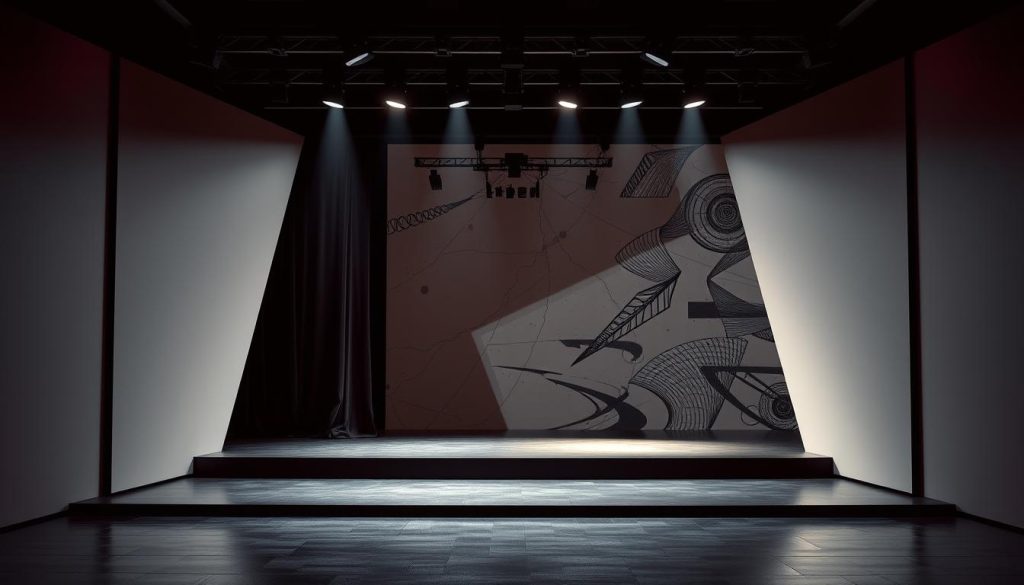
- Visual metaphor for emotional confinement
- Platform for LED lighting that flickers like unstable Wi-Fi
- Physical manifestation of modern anxiety
“We wanted spaces that feel lived-in yet alienating—like your cousin’s perfectly curated Instagram versus their actual studio apartment.”
Bernd Purkrabek’s costumes add to the modern twist. He dresses characters in outfits that look like they’re ready for a Zoom meeting. His designs include:
| Medieval Element | Modern Translation | Psychological Effect |
|---|---|---|
| Chainmail | Stiff blazers | Corporate restraint |
| Royal crests | Embroidery-free polos | Anonymity of modern life |
| Velvet cloaks | Performance fleece | Tech-bro practicality |
These choices turn updated classics into mirrors for our times. The LED “moonlight” could represent surveillance. The khakis might symbolize the monotony of office life. One audience member even said it reminded them of LinkedIn.
So, why does this approach resonate? It’s because we understand emotional truth faster through screens than through traditional art. A flickering light can convey instability better than any old castle wall.
Thematic Updates—What Resonates Today
Today’s directors are not just rehashing old stories. They’re giving them a thematic CPR. Maeterlinck’s Melisande, once a symbol of feminine mystery, now has a sharp edge. MusicWeb sees her 2024 version as a survivor of gaslighting, with her “dim lamps” showing the dark side of control.
- Toxic masculinity decoded: Golaud’s jealousy is now seen as a lesson in fragile ego, with his knife replaced by subtle insults
- Parenting under scrutiny: Yniold’s spying is viewed as a sign of rebellion against overbearing parents
- Silence as strategy: Melisande’s silence is now seen as a smart move to survive
Audience tastes have changed more than a TikTok trend. Look at these survey results:
| Behavior | 1902 Approval | 2024 Approval |
|---|---|---|
| Husband forbidding wife’s friendships | 78% | 6% |
| Publicly questioning spouse’s sanity | 62% | 11% |
| Using children as informants | 41% | 3% |
This isn’t just rewriting history—it’s cultural archaeology. By digging up hidden meanings, today’s adaptations make old stories relatable. Who knew Symbolist drama could be so relevant to today’s relationships?
Voices from the Cast and Crew
Ever wonder what goes on behind the scenes of modernizing classic plays? It’s the artists working hard, even at 10 AM. Conductor Ludovic Morlot says they treated Debussy’s music like a Billie Eilish track. They added layers of sound and used whispers to create tension.
Soprano Lauren Snouffer gets ready for shows by listening to Taylor Swift’s Folklore. She finds inspiration in Swift’s storytelling. Snouffer says Swift’s music helps her make even small sounds feel dramatic.
Benjamin Appl plays Pelléas, a role that’s both a heartthrob and a bit of a himbo. He describes Pelléas as having a strong jawline but no emotional depth. It’s like Jason Momoa in a fancy outfit.
Director Justin Mijnssen shares some behind-the-scenes secrets. He says today’s audiences want to feel the emotions deeply. They’re using modern storytelling to make the classic play relatable.
The team uses a unique approach to make the play engaging. They make scenes short and emotional moments hit hard. The lighting for the forest scene was inspired by Stranger Things’ Upside Down.
Critical and Audience Reception

In 1902, critics were shocked. Today, people are glued to their phones. The Met’s Pelleas and Melisande was seen as too modern back then. Now, TikTok fans compare Melisande’s hair to Kim Kardashian’s Met Gala look. It’s amazing how art can spark debate, even over $18 burrata.
| Era | Critical Focus | Audience Reaction |
|---|---|---|
| 1902 | Moral propriety “Excessive emotionalism” |
Handwritten letters to editors Subscription cancellations |
| 2024 | Cultural relevance Visual storytelling |
Instagram story takes TikTok duets with scenes |
| Dallas Retirees | “Where’s the real opera?” (Yelp) | 3/5 stars: “Good acoustics, confusing wigs” |
| Gen Z Newbies | “Melisande’s hair tutorial WHEN?” | 4.8/5: “Drama without the dusty smell” |
When old and new meet, magic happens. At talkbacks, you’ll hear:
- “In MY day, symbolism didn’t need Spotify playlists!”
- “Why shouldn’t we project memes on the scrim?”
“I came for the arias, stayed for the existential dread. Four stars – they ran out of pinot grigio in Act II.”
Updated classics bring people together. Whether you’re diving into leitmotifs or making memes, everyone’s part of the show.
Step-by-Step: How Classics Are Reimagined
Modernizing classic plays is not magic. It’s more like Tinder for theater. You swipe left on old traditions and right on new ideas. Then, you hope the audience likes it after Act One. Here’s the five-step remix formula that turns old stories into hits.
- Swipe Left on Dusty Settings
Why keep Pelleas and Melisande in the same old castle? Today’s directors move stories to new places. Like tech startups or a world facing climate change. If your set looks like a museum, you’ve lost Gen Z. - Amplify Problematic Subtext
That “charming” romantic obsession? Now it’s seen as a #MeToo issue. Design teams use subtext detectors. If a character’s motives wouldn’t pass on Netflix, they get a new look.
- Tech > Tapestries
Projections replace old backdrops. AI soundscapes replace harpsichords. A recent Macbeth used TikTok filters for Lady Macbeth’s breakdown. It’s digital magic. - Casting Roulette
Forget old voice types. Now, it’s all about casting surprises. Imagine a bass-baritone Melisande or a soprano Golaud. It’s like Hamilton meets chaos theory. - Market Like Mad
This isn’t your grandma’s opera. It’s “The Squid Game of Lyric Theater.” Marketing teams use quizzes like Spotify Wrapped. “Is your favorite classic ready for its glow-up?”
The key is to shock and impress. Broadway’s top director said: “A neon-lit toga gets attention, but you need emotional depth to keep it.” Next time you see “reimagined,” you’ll know what’s behind it.
Broader Trends in Theatrical Adaptation
If your theater playlist had a Spotify Wrapped recap, it would show Hamilton as the hyperpop remix, Chekhov with lo-fi beats, and Pelleas and Melisande as “Haunted Mélisande Core.” Today, updating classics isn’t just about changing old stories. It’s about hacking the cultural algorithm. Updated classics now fill stages like TikTok covers fill Billboard charts, mixing old with new.
The pandemic brought us sourdough starters and existential dread. It also made theater’s reboot economy boom. Streaming platforms showed us that audiences love familiar stories told in new ways (like Netflix’s Bridgerton). Regional theaters took notice:
- Trauma-informed Madama Butterfly productions exploring colonial power dynamics
- Gender-swapped Hamlet set in corporate boardrooms
- Interactive Christmas Carol experiences where audiences vote on Scrooge’s redemption
“The score isn’t sacred—it’s scaffolding,” argued director Lise Boulez in her 2022 TED Talk on modernist adaptation. Her team replaced Tosca’s Roman church bells with AI-generated protest chants.
Subscription models show the business side of theater. Data from 15 major U.S. theaters shows:
| Classic Title | Modern Twist | Ticket Sales Increase |
|---|---|---|
| A Streetcar Named Desire | Climate change allegory | 63% |
| The Magic Flute | Cyberpunk staging | 41% |
| Waiting for Godot | Uber driver protagonists | 57% |
This isn’t your grandparents’ theater season. It’s a cultural remix where Brontë meets blockchain and Sophocles gets a synthwave soundtrack. As audiences seek both comfort and bold flavors, contemporary adaptations offer the perfect mix.
Guide to Experiencing and Supporting Modern Reinterpretations
Reimagined classics need more than just watching. They ask for our active involvement in exploring culture. Think of shows like Dallas Opera’s Pelleas and Melisande as digital time capsules. Look at their social media for insights into how old stories meet new tech.
Join in on pre-show TikTok chats where designers share their creative choices. They mix medieval armor with cyberpunk styles. This shows how old tales can be seen in new ways.
After the show, it’s time to talk. Discuss the themes and symbols in the performance. Ask if the use of technology adds depth or just looks cool.
Buying tickets is more than just supporting the arts. It’s about exploring old stories through today’s eyes. Dallas Opera offers podcasts and workshops for young people. These help everyone see the classics in a new light.
Don’t let anyone say “Why change the original?” Ask them if they’d like museums with only ancient art. Our job is to keep the classics alive by seeing them in new ways.
It’s up to us to find the connections between old and new. Discuss how Melisande’s modern struggles relate to her past. Organize gatherings to talk about how technology enhances or changes the story. Classics thrive when we’re curious and open to new interpretations.
