

Imagine dung beetles giving stock tips and ants marching in line. Welcome to The Insect Play, a 1922 theatrical oddity. It’s even stranger than a TikTok algorithm convention.
This play mixes vaudeville humor with deep existential questions. It’s like Pixar’s A Bug’s Life but written by Karl Marx after drinking espresso martinis. The Čapeks’ characters reflect our own world’s madness.
Why bring back this rare classic today? It’s because our world of influencers and corporate drones needs a mirror. The Čapeks captured human folly in a dark comedy. Their vision is even more relevant than Black Mirror.
Stay with us as we explore why this play is as relevant today as it was a century ago. You’ll see your LinkedIn feed and anthills in a whole new light.
Allegory and Satire: Finding the Meaning
Imagine a beetle couple pushing a dung ball, like Wall Street traders with NFTs. This is the satirical brilliance of R.U.R. and The Insect Play. They use insect drama to reflect human foolishness. The Čapeks used science to expose greed, vanity, and endless growth.
Post-WWI Society Under the Microscope
The butterfly characters in these stories are like today’s TikTok stars. They focus on looks, not substance. The Chrysalis, a symbol of progress, dissolves while speaking. This tragic beauty warns us of ignored warnings for a century.
The Čapeks’ work isn’t just about the past. It’s a social commentary for today. Modern tech bros and their crypto mining are like the dung-ball capitalists. They show how we confuse action with purpose.
What makes these allegories memorable? They mock our flaws and how we justify them. Like termites, we build to no end, mistaking destruction for progress.
Using the Insect World as Team Sport
Instagram influencers might think they’re big, but 1920s butterflies were the real stars. Iris and Clytie’s mating rituals were like today’s social media battles, but way more intense. They didn’t need filters; their dances were the ultimate in showing off, with poetic insults and alliances as delicate as their wings.
Karel Capek’s work is more than just a competitive metaphor. It’s a reflection of our world. His butterflies aren’t just looking for love; they’re building their social status with aerial performances. It’s like they’re competing in a never-ending dance battle, with their followers cheering them on.
This isn’t just about bugs; it’s social commentary with a twist. The butterflies’ vanity shows us our own endless quest for validation:
- Building status through flashy displays
- Forming alliances through flattery
- Getting attention at any cost (even if it’s metaphorical)
Capek’s brilliance lies in making insect drama relatable. When Clytie’s suitors write sonnets in mid-air, they’re not that different from today’s social media influencers. It’s all about showing off, even if it’s in a poetic way.
Rarely Performed, Deeply Relevant
Why does a play that cuts deep into human nature sit idle? The Insect Play asks for more than just reciting lines. It needs actors to evolve through metamorphosis in the moment. And designers to create worlds that would make David Attenborough proud.
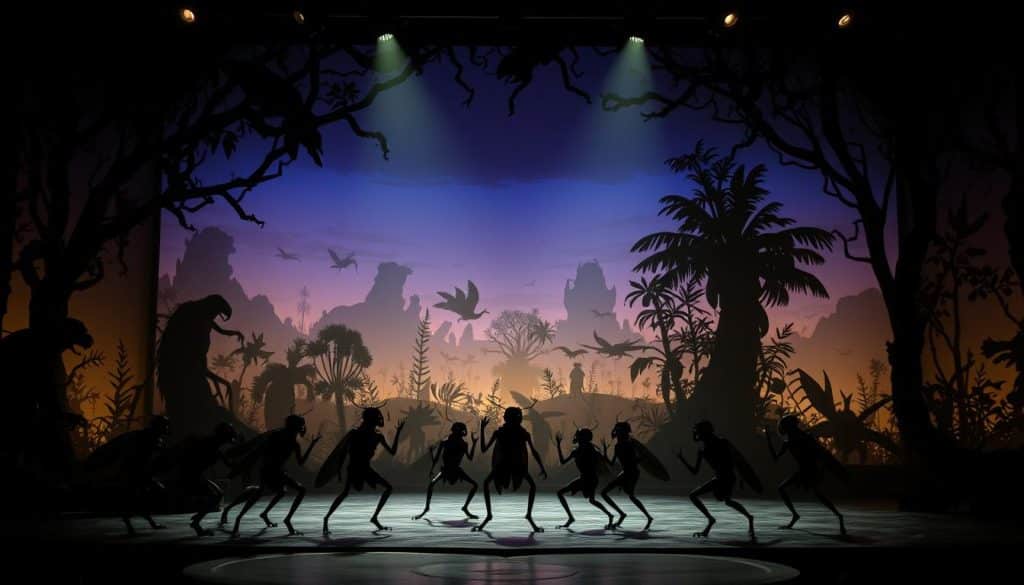
The 1999 Chicago revival showed this rare classic packs a punch. Critics said it was like a Marxist manifesto for tech bros. The dung beetle’s question (“Why roll this ball?”) echoed corporate struggles. And the ants’ chants (“Expand! Consume!”) seemed straight out of TikTok propaganda.
Staging Challenges and Modern Parallels
Bringing this play to life is a battle with insect economics. How many worker drones can you afford? Can your lead actress deliver deep monologues while trapped in papier-mâché? But when theaters dare to dive in, the allegory shines. That Chicago cast made military videos seem tame by comparison. Their soldier ants’ moves were like a mix of Nuremberg rallies and Call of Duty.
The real question is, why don’t we want more of this? A play from a century ago is more insightful about today’s world than CNN. Maybe it’s time to build those giant chrysalises.
Character Types: Social Climbing and Scrimmage
Meet the cast of The Insect Play – a group so relatable, they’d make your group chat blush. They’re not just bugs; they’re a group of modern dysfunction. They have antennae and exoskeletons.
Vanity-Driven Butterflies vs. Workaholic Ants
Felix the butterfly poet quotes Nietzsche at parties but lives with his mom. Iris is like a 1920s influencer, trading pollen for likes. The ants, on the other hand, work harder than anyone. Their inventor’s solution to overpopulation is quite something.
Mr/Mrs Beetle: Capitalist Caricatures
The beetle couple rolls their dung-ball fortune like a Jeff Bezos story. Their lives scream “hustle culture”. Their story is a competitive metaphor for late-stage capitalism.
This isn’t just The Insect Play – it’s our LinkedIn profiles in incognito mode. The real social commentary? We’re all one bad day from becoming these characters.
Staging the Satire: Creative Decisions
How do you make giant talking insects feel urgent in 2024? Karel Čapek’s rare classic first hit Prague’s National Theatre stage in 1922. Back then, actors dressed as moths fluttered fans. Today, directors aim to mix absurdity with a sharp edge.
The best shows use discomfort, like Cronenberg, not Pixar. They make you feel uneasy.
Butterflies in the original wore corsets so tight, they caused existential crises. Modern shows take this to the next level. One Off-Broadway version turned metamorphosis into body horror.
It featured writhing silk cocoons and strobe-lit convulsions. The secret sauce? Lighting that hints at doom, in Pantone #EerieBlack.
Anthropomorphism Technical Challenges
Designing insects that are pretentious but not too campy is a challenge. Too much antennae makes them cartoonish. Too little, and they’re too serious.
Čapek’s text wants creatures that are recognizably ridiculous yet unnervingly human. It’s a delicate balance between comedy and horror.
Why does this century-old satire remain impactful? It might be because we’ve mastered the art of self-importance. The true innovation? Making audiences squirm while they laugh at themselves.
Director’s Take and Symbolism
Staging Capek’s work is like hosting a dinner party for anarchists. You want the chaos to spark conversation, not burn the house down. The playwright’s background in experimental theater makes directors act as meta-narrative DJs. They mix absurdist comedy with sharp political commentary.
My approach is to let the text’s contradictions breathe. But I keep one foot firmly planted in capitalist reality.
Balancing Absurdism and Political Message
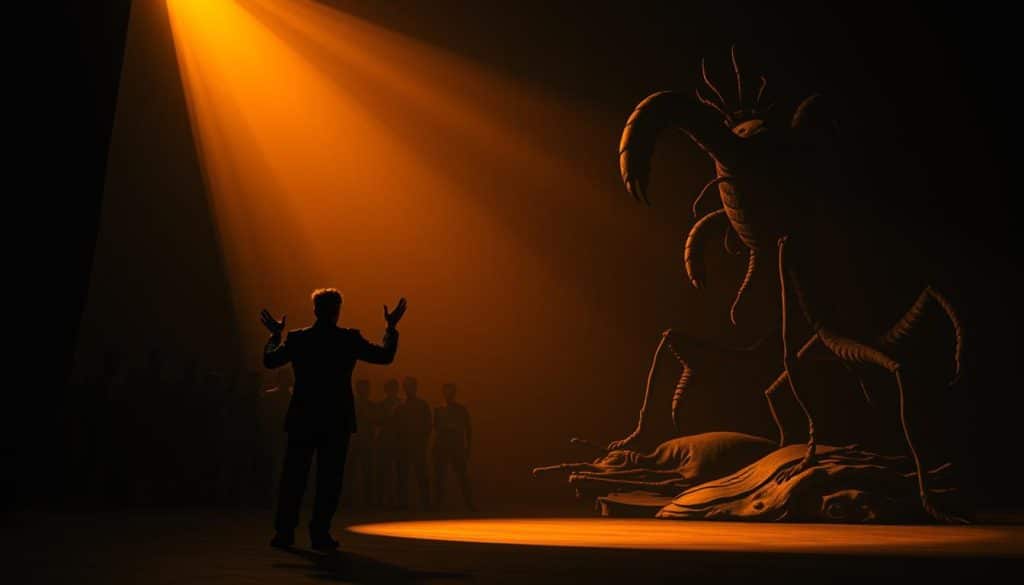
Think of the tramp narrator as your audience’s jaded Uber driver. Every battle scene should land like a competitive metaphor gone rogue. Was that last punchline about worker solidarity or corporate ladder-climbing? (Yes.)
Here’s the trick: stage romantic subplots with the cringe factor of a Zoom wedding. Make military strategists debate troop movements using office jargon. Capek’s genius lies in hiding Marxist theory beneath beetle costumes and slapstick – honor that duality without winking at the crowd.
The real magic happens when viewers can’t decide whether to laugh at the buffoonish bureaucrats or check their retirement accounts. That’s when the allegory becomes personal – and the kazoos start sounding suspiciously like protest chants.
How Critics and Scholars React
Imagine a room full of 1920s intellectuals staring at a text like it’s ancient. That’s how they saw this rare classic. They were torn between thinking it was absurd and creating the first “this you?” meme in literature. Lucia Mauro’s 1999 review summed it up well: “The original critiques read like Yelp reviews for a philosophy rave no one bought tickets to.”
Initial Confusion to Contemporary Reassessment
That 1922 review calling it “a socialist’s bad trip”? It turns out our great-grandpa critic was way off. He was predicting TikTok activism after drinking too much. Now, scholars see its impact everywhere – from Black Mirror to influencer culture.
What changed? We caught up. The work’s social commentary was ahead of its time. It needed social media and crypto to fully show its impact. Early readers saw chaos, but we now see a blueprint.
As one Twitter philosopher noted: “Turns out ‘bug nonsense’ was just satire wearing VR goggles 100 years early.”
So, when you see a deep-fried political meme or corporate dystopia joke, remember. Some early critic’s ghost is probably facepalming in the digital afterlife. The real question is, are we ready to admit how much we’ve become its living footnotes?
Audience Feedback: Laughing and Learning
Ever watched a comedy that made you laugh… until it didn’t? That’s what The Insect Play does. It starts with laughter but ends with a deep sense of self-awareness. Modern audiences see themselves in the play’s themes of hustle culture.
Shock of Recognition in Modern Performances
Silicon Valley tech bros hold their fair-trade lattes tighter when they hear the ant colony’s “efficiency engineers” talk about productivity. Startup founders see their pitch decks in the dung beetles’ relentless ball-rolling. This rare classic uses cringe humor to make us laugh and then realize we’re laughing with the characters.
After the show, people have big debates. I’ve seen MBA graduates argue about whether the butterflies represent influencer culture or venture capitalists. A finance director once asked, “Is optimizing labor just a fancy way of saying exploitation?” The play doesn’t give answers. It just holds up a cracked mirror for us to reflect on our own contradictions.
Key Takeaways:
- Laughter evolves into discomfort as audiences recognize modern parallels
- The production implicates viewers in the systems it critiques
- Post-performance debates reveal deeper societal self-reflection
Why The Insect Play Deserves Your Syllabus Spot
Forget dusty textbooks – Capek’s allegory thrives where TikTok essays meet term papers. Universities from Stanford to community colleges now include The Insect Play in their curriculum. They see it as a commentary on influencer culture and the gig economy.
The play’s themes are brought to life when digital natives analyze Mrs. Beetle’s hoarding through crypto bro mentalities. They also see ant warfare as a commentary on drone strikes.
From Lecture Halls to Twitter Threads
Modern students use the play’s metaphors better than professors. A recent Yale production had Gen Z viewers comparing the Chrysalis’ stunted transformation to climate policy gridlock. They called it “All vibes, no action” on TikTok.
Reddit threads explore whether tramp flies symbolize Uber drivers or AI chatbots. It’s a lively discussion.
The ultimate test? Ask any Zoomer about parasitic wasps and subscription capitalism’s endless paywalls. Their eyes light up as they connect Capek’s 1921 script to today’s burnout epidemic. That’s when The Insect Play becomes more than just reading – it’s cultural ammunition. Syllabus planners, take note: this century demands insects that bite.
