

Ayana Evans’ Brooklyn studio caught fire unexpectedly. A contractor’s blowtorch ignited the floorboards, setting off the smoke alarms. Twenty years of costumes were lost in the flames.
The sequined bodysuit she wore during a protest in Times Square was destroyed. The FDNY said it was an accident, but it felt like more. This kind of fire happens in many places, leaving artists without a home.
In Bushwick and Winnipeg, fires have destroyed art. Artists can’t afford fireproof safes. A recent drive to support Hyperallergic shows we value museums more than living artists.
Artists create our memories but often struggle financially. They work in spaces that are fire hazards. Emergency fundraisers help, but we need a bigger change.
Art spaces need better protection, not just emergency funds. If they had sprinklers, we’d all feel safer. Let’s work towards a safer future for art.
Why Emergency Fundraising Matters
Emergency fundraisers are more than charity. They are creative triage for cultural spaces. Artists earn about $27k a year, which is the cost of replacing a kiln after a fire. So, supporting local arts is now a survival strategy.
Winnipeg aims to raise $250k, while Candice Evans raised $23.5k for her ceramics studio. One effort replaces roof beams, and the other rebuilds entire creative worlds. Hyperallergic’s membership model shows it’s not just about pity donations—it’s 21st-century patronage, filling gaps left by shrinking NEA budgets.
Disasters don’t wait for grant cycles. When arsonists hit a Brooklyn arts hub, the community raised $150k in 72 hours. Crowdfunding platforms are now the first responders, using Venmo instead of fire extinguishers.
“You can’t Monet your way out of a crisis.”
Non-profits face a tough equation: 60% of arts organizations have budgets under $100k, while disaster recovery costs are over $200k. Emergency fundraisers help bridge this gap, turning hashtags into HVAC systems and Instagram stories into insurance policies.
This isn’t just philanthropy—it’s cultural infrastructure. Every dollar donated doesn’t just save a theater seat. It preserves the invisible wiring of creative communities. You can’t Netflix-and-chill your way to a vibrant arts scene.
Stories of Community Impact
When disaster hits an artist’s studio, it’s not like a Marvel movie. Instead, real humans quickly turn tragedy into action. They show us how arts resilience can be a survival strategy.
From Brooklyn to Winnipeg: Ashes to Advocacy
Brooklyn painter Marisol Evans lost her Yaddo residency portfolio in a 2022 fire. This included works for her C.R.E.A.M. career fair. But, her former students stepped up, raising more than her exhibition goals.
In Winnipeg, musician Rob Burton lost his instruments and teaching income in a flood. Local artists created a rotating residency program to help him. This kept him working while he rebuilt.
Cultural critic Lian Walsh said, “It’s memory erased. But when artists document loss on Instagram, they’re basically crowd-sourcing cultural CPR.”
This isn’t just about replacing lost items. It’s about preserving culture and history. The real magic is community support resilience. It doesn’t just restore what’s lost; it builds something better.
Evans’ students turned her career fair into hybrid events. Burton’s program now teaches disaster preparedness. This shows that when creatives face disaster, their communities evolve. It’s like artistic Darwinism with a heart.
Donor Benefits and Recognition
Non-profit donor outreach often feels like a bad infomercial. But what if supporting the arts delivered perks sharper than a Warhol silkscreen? We’re talking benefits that make your Spotify Wrapped look basic.
More Than Tax Deductions
Modern philanthropy isn’t just about writing checks and forgetting receipts. Winnipeg’s Border Crossings magazine and WAG (that’s Winnipeg Art Gallery for non-Canadians) pioneered membership swaps – donate to one, get perks at both. Imagine museum access and avant-garde poetry readings. Take that, 1040 form!
The Hyperallergic Model
When art journal Hyperallergic launched their membership program, they didn’t play nice:
“We’re not the Met’s PR team – our donors get real influence, not velvet rope illusions.”
Their tiered system includes:
- Shoutouts in exhibition audio guides (perfect for your inner Rodin)
- First dibs on experimental theater previews
- A “NFT-Free Zone” badge for $50+ donors
This tripartite alliance between galleries, publishers, and performance groups creates what I call “cultural compound interest.” Winnipeg’s model proves collaboration beats competition – like Voltron for the art world.
Pro tip: That $50 donation? It buys you 30 days of not hearing “blockchain” at gallery openings. Now that’s ROI even Scrooge McDuck would appreciate.
The Power of Group Solidarity
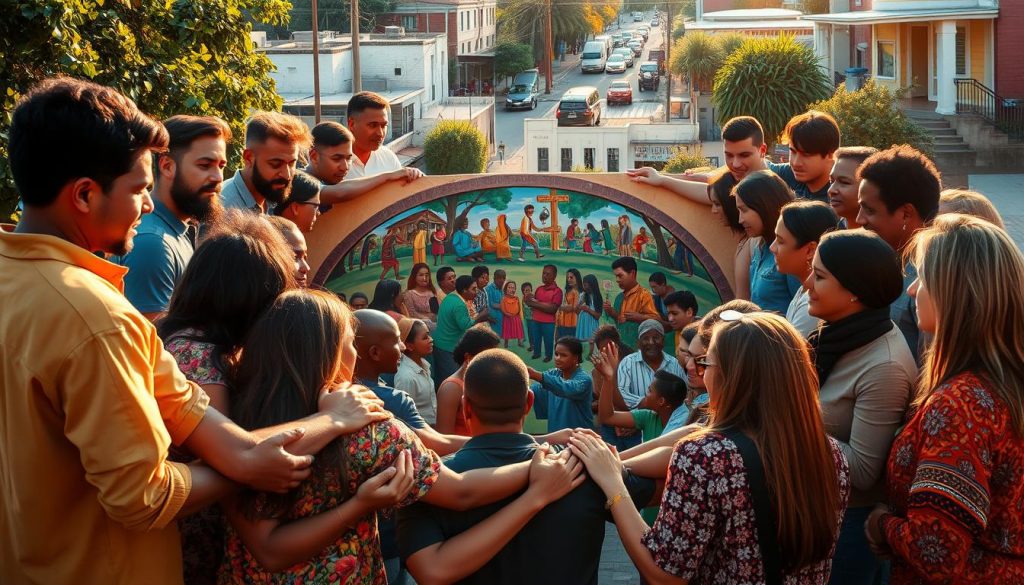
Imagine a jazz ensemble where the trumpet player becomes the conductor mid-solo. That’s arts mutual aid in action – structured chaos with a backbeat. When disaster hits, creative communities don’t wait for instructions. They improvise relief efforts faster than you can say “encore.”
When Creatives Become First Responders
New York’s art scene responded to COVID-19 lockdowns like a Broadway understudy nailing an opening night. Within 72 hours of theaters closing:
- Dancers transformed studios into PPE assembly lines
- Gallery owners created virtual fundraisers
- Musicians staged rooftop concerts for displaced artists
Winnipeg’s cross-discipline response was even more inventive. Printmakers traded lithographs for 3D-printed respirator parts. Poets became grant writers. The whole operation felt less like charity and more like a well-choreographed flash mob.
“We’re not just saving art – we’re saving the people who make your city worth living in.”
| City | Response Time | Key Actions | Funds Mobilized |
|---|---|---|---|
| New York | 48 hours | Virtual galleries, artist stipends | $2.1 million |
| Winnipeg | 72 hours | Equipment sharing, mental health support | $650,000 |
| London (Grenfell) | 96 hours | Community workshops, legal aid | £1.4 million |
The 2017 Grenfell Tower tragedy showed a grim truth: cultural workers often arrive before official disaster teams. Photographers documented survivors’ stories. Theater groups organized healing circles. Yet when the cameras left, these responders needed help themselves.
So, who tunes the piano when the concert hall’s on fire? Supporting local arts isn’t charity. It’s disaster preparedness with better aesthetics. Next time you admire a mural or laugh at an improv show, remember: that creativity might literally save your neighborhood someday.
Easy Ways to Give
Why stick to the usual digital tip jar when you can give in creative ways? Today’s emergency fundraiser scene is more exciting than a charity bake sale. You just need to know where to look.
Beyond the GoFundMe Tipping Jar
The Dreadnaut Brass Band didn’t just ask for help after their van blew up. They sold cool “Ashes & Saxophones” merch instead. It’s like disaster capitalism meets punk-rock practicality.
Hyperallergic shows that donor outreach can be smart. For $50, you get early exhibition previews. Spend $500, and you can name a gallery bench. It’s a way to leave a lasting mark.
Think about fun runs where pledges grow with each lap. You could fund a theater’s new roof with donations tied to performances. It’s like a marathon and Kickstarter combined, without the sweat.
Corporate Matching for Culture
Did you know your employer might double donations to arts groups? Companies looking to boost their diversity efforts often match donations to arts nonprofits. Just ask them.
| Company | Match Ratio | Annual Cap | Cultural Focus |
|---|---|---|---|
| Microsoft | 1:1 | $15,000 | STEAM education |
| 0.5:1 | $10,000 | Digital arts | |
| Starbucks | 1:1 | $5,000 | Local theaters |
| Patagonia | 2:1 | $20,000 | Environmental art |
Pro tip: Ask for matching donations during your performance review. HR teams are more likely to say yes when they’re busy with spreadsheets.
How Sports and Arts Teams Survive Crises
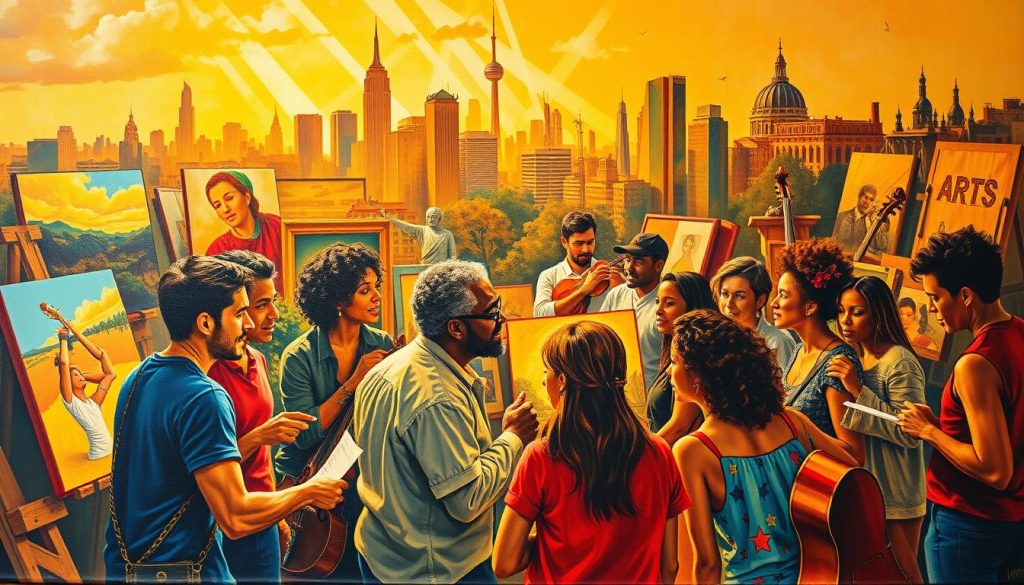
Surviving a crisis in the arts is like a long relay race. The baton might even catch fire. Unlike pro athletes, creative teams often have to hustle hard. This hustle is like what a lemonade-stand tycoon would do.
Lessons from the Fun Run Playbook
Do you remember your third-grade jog-a-thon? That same spirit is behind arts resilience. Schools make thousands of dollars with $1-per-lap pledges. Musicians even crowdfund to replace gear lost in disasters.
The Winnipeg punk scene is a great example. When their rehearsal space burned down, they quickly rebuilt. Drummer Layla Cheney said:
“Our mosh pit crew became a disaster relief crew overnight. We rebuilt faster than a TikTok trend dies.”
Now, let’s talk about non-profit survival tactics:
- 68% of artists lack proper equipment insurance (NEA)
- Elementary school fun runs average $5k-$15k in emergency funds
- Local theater groups now host “marathon play readings” as benefit events
Jazz pianist Marcus Evans kept teaching through Zoom while rebuilding his studio. He turned insurance delays into a lesson on improvisation. His approach? “Performance art meets gig economy.” It’s about turning disaster into an opportunity for growth.
Ensuring an Artistic Future
We keep Renaissance masterpieces safe in climate-controlled vaults. But, we let living artists work in places where mold grows freely. If cities are stages for culture, why do we write bad building codes?
Building Code for Cultural Infrastructure
Winnipeg and NYC face crises in studio safety and artist displacement. These are signs of a failing cultural foundation. That’s why we need the Artist SEER Rating (Safety/Equity/Efficiency/Resilience).
Evans Collective’s roof was a disaster before the fire. Architect Lila Torres says:
“We design museums to protect Picassos, not the painters making tomorrow’s masterpieces.”
- Safety: 62% of indie studios lack proper fire exits (Winnipeg Arts Council 2023)
- Equity: NYC’s artist live/work spaces decreased 40% from 2019
- Efficiency: HVAC upgrades could reduce studio energy costs by $18/sqft annually
This isn’t about fancy lofts. It’s about making art spaces safe and efficient. Investing in arts resilience means protecting our culture’s future.
Spreading the Word
Digital campaigns now shape how communities rally during crises. Hyperallergic’s social media strategy transformed art advocacy by blending urgency with dark humor. Their 2023 fire relief posts outperformed cat videos in shares.
CBC’s coverage of the Evans Studio fire became a masterclass in donor outreach. It proved disaster reporting can spark action when paired with clear calls to donate.
From Hashtags to Help
Evans’ smoke-filled footage evolved into digital-age Dorothea Lange imagery. Its rawness cut through algorithm-driven feeds. A TikTok creator’s 37-second tribute to the studio attracted 100 donors alongside viral views.
This shows community support resilience thrives when creativity meets platform literacy. #ArtApocalypse now trends where ice bucket challenges once ruled, without the damp socks.
The Meme-ification of Mutual Aid
Snark beats sincerity in today’s attention economy. Successful campaigns weaponize irony. Memes comparing lost paintbrushes to fallen soldiers generate clicks, then converts.
Avoid prayer-hand emojis – they’re the participation trophies of crisis response. Instead, repurpose pop culture templates. Imagine a “This Is Fine” dog surrounded by flaming easels, captioned “Donate like your favorite gallery depends on it (it does).”
Sports teams rebuilt through fun runs and merch sales. Why can’t arts groups harness that energy? Share disaster footage with donation links sharper than a No. 2 pencil.
Tag local journalists. Remind audiences that cultural infrastructure – theaters, studios, rehearsal spaces – needs building codes tougher than Broadway’s toughest critic. Every retweet becomes a brick in tomorrow’s creative foundations.
