

Imagine a Mediterranean world where magic and politics mix. Critics today focus on The Tempest‘s themes of colonialism. But back then, audiences saw it as a reflection of Europe’s tense politics.
Prospero’s island is more than a magical place. It’s a stage for Shakespeare’s commentary on the Christian-Ottoman conflicts.
Why would 17th-century Londoners be interested in a magical island? The play turned real power struggles into a form of theater. It’s like a mix of absurdity and Machiavelli’s strategies.
The audience saw clear connections. Ferdinand and Miranda’s love was like a Habsburg alliance. Caliban represented the Ottoman “other.” Prospero’s actions were like those of the Medici family.
The Tempest is not just about politics; it is politics. Shakespeare took complex rivalries and put them on a magical island. He made it feel as urgent as today’s news.
Let’s look at it through a Renaissance lens. What we see is not just a classic play. It’s a lesson in turning chaos into lasting art. That’s the true magic.
Shakespeare’s Playbook: Plot and Characters
Ever wonder why modern political dramas feel like watching a 400-year-old play? That’s the magic of the Bard’s structural genius. Every twist in White House power struggles or corporate boardroom betrayals mirrors the strategic choreography of Elizabethan drama. It’s like House of Cards meets Macbeth – minus the literal daggers (usually).
Let’s look at the anatomy of a classic. Prospero’s island saga is a deposed ruler manipulating events like a puppetmaster. This sounds familiar, right? The real brilliance is how these stories use human flaws as plot devices. Ambition, jealousy, and redemption drive every character’s choices.
Modern storytellers could learn from Shakespearean drama’s economy. Subplots are tighter than a Twitter conspiracy thread. Characters reveal more through soliloquies than most politicians do in press conferences. Notice how the “wise fool” archetype appears in everything from West Wing walk-and-talks to Succession’s dark humor?
Here’s the kicker: these narratives work because they’re human chessboards. Each move – whether it’s Miranda’s awakening or a lobbyist’s backroom deal – advances multiple agendas. The question isn’t whether we’re watching these plays, but whether we’ve learned to spot the game being played.
The Three-Act Structure of Sorcery
Let’s cut through the fog of iambic pentameter: The Tempest isn’t just a play—it’s Shakespeare’s answer to Monday Night Football. Forget hero journeys; this is a tactical breakdown of power plays, bench-clearing brawls, and fourth-quarter comebacks. Giulia Gorin’s thesis reveals how the Bard structured Prospero’s revenge like a coach diagramming “the perfect game” on a whiteboard. Want proof? Grab your playbook.
Separation: Lineup Changes & Betrayals
Act 1 drops us into a political draft day gone wrong. Prospero—once Milan’s star player—gets traded (read: exiled) by his own team of backstabbing nobles. Shakespeare sets the stakes like a pre-game show:
- Prospero’s bench: Stranded on an island with a spirit (Ariel) and a liability (Caliban)
- Antonio’s power grab: Corporate takeover tactics, Renaissance edition
- The storm: Nature’s version of a stadium light show
Quests: Midfield Mayhem
Act 2 is pure sideline strategy. While Ferdinand runs end zones for Miranda’s affection, Caliban attempts a locker-room coup with drunkard accomplices. Ariel? That’s your MVP executing Hail Mary passes—making nobles hallucinate banquets and haunting them with guilt-trip specters. It’s less “magic” and more psychological warfare disguised as poetry.
Magical Reunions: Overtime Glory
The finale delivers a sports movie climax 400 years before Rocky. Prospero gathers the team (and enemies) for a speech that’d make Ted Lasso tear up: “I’ll drown my book.” Forgiveness becomes his championship ring. Even Caliban gets a redemption arc—the literary equivalent of a problematic player retiring their jersey.
| Act | Sports Equivalent | Key Moves |
|---|---|---|
| 1 | Pre-game betrayal | Exile, magical world-building |
| 2 | Halftime adjustments | Illusions, rebellions, romance |
| 3 | Post-game handshakes | Reconciliation, power surrender |
Shakespeare’s real genius? Making sports strategy feel as layered as his verse. The Tempest isn’t about magic—it’s about control. And like any great coach, Prospero learns you can’t win if you never leave the field.
Director’s Tactics: Strategy and Vision
Ever wonder why some leaders make chaos look choreographed? There’s a method to the madness – a strategic vision sharper than a Tarantino plot twist. Directors of modern political theater don’t just wing it; they’re playing 4D chess while the rest of us debate checkers rules.
Building IKEA furniture without instructions is like that. You need a blueprint and a willingness to hammer through resistance. The best tacticians blend narrative control with Machiavellian flair, turning cultural moments into calculated power plays. Remember when viral memes started swaying elections? That wasn’t an accident – that was orchestrated spontaneity.
True strategy isn’t about rigid five-year plans. It’s about reading the room like a stand-up comic bombshelling in Vegas. You pivot when the audience coughs, double down when they lean in. Why do you think certain phrases suddenly dominate Twitter feeds? That’s not organic – that’s cultural chessboard manipulation at championship levels.
The real magic happens when short-term tactics align with long-game visions. It’s the difference between a TikTok trend and the Sistine Chapel ceiling – both art, but only one survives centuries. Want to spot the masters? Look for those who make you think you’re choosing the playlist while they control the entire damn concert hall.
Staging the Storm
Creating The Tempest is like a mix of a Super Bowl strategy and a jazz improvisation. How do you make a 400-year-old shipwreck exciting for today’s audiences? The key is to balance Shakespeare’s classic with modern touches.
Historical Context vs. Modern Interpretations
In Jacobean times, audiences were amazed by flying gods. Today, we have drone light shows. Shira Melcer’s study shows that keeping the text sacred but updating it is key. For example, one director in Milan used holographic projections for Ariel’s sprites, blending old and new.
Modern directors face big challenges:
- Verse Velocity: Making iambic pentameter feel modern
- Magic Realism: Balancing CGI with Prospero’s magic
- Temporal Vertigo: Mixing old-fashioned looks with new tech
From Jacobean Pageants to Digital Projections
The 1611 production spent a lot on fireworks. Now, we use augmented reality. A London revival used 360-degree projections to bring Caliban’s island to life, creating an immersive experience.
| Element | 1611 Approach | 2024 Innovation |
|---|---|---|
| Ariel’s Flight | Rope & harness | Motion-capture drones |
| Storm Effects | Shaken metal sheets | Dolby Atmos soundscapes |
| Audience Interaction | Groundling hecklers | VR character encounters |
The magic is in making Prospero’s magic as real as a TikTok challenge. When Ferdinand’s log-carrying scene goes viral, you know Shakespeare’s tradition is alive.
Cast Interviews: Prepping for a Challenging Role
Ever wonder how actors change so much it’s like they’re a different person? It’s not just about memorizing lines. Getting ready for a challenging role is like trying to put together IKEA furniture without instructions. It’s full of strategy, frustration, and surprises.
In recent cast interviews, a big theme was how actors dive deep into their roles. They go all in, like Elon Musk on Twitter. Some actors even live as their characters for months, ordering food under fake names. Others shadow real-life professionals, like they’re planning a Ocean’s 14 heist.
Why does this matter? Today’s audiences want realness, like they want avocado toast. Actors walk a thin line between being fully immersed and keeping their sanity. It’s like a mental obstacle course, but with better hair and snacks.
Through these talks, we see patterns quickly, like Marvel’s post-credit scenes. Actors get help from dialect coaches and find therapy in costume fittings. The path to becoming a complex character is tough, like an obstacle course. Are you ready to see how it’s done? Just don’t say we didn’t warn you about method-eating your next sandwich.
Becoming Prospero
Playing Shakespeare’s sorcerer-statesman is more than just memorizing lines. It’s about mastering emotions, like a TED speaker and a halftime coach. Actors say it’s like “orchestrating chaos while keeping eyebrows steady,” blending divine power with human weakness.

The Alchemist’s Burden
Prospero’s magic is about emotional chemistry. One actor likened him to “a PhD holder babysitting drunk astronauts”. This mix of scholarly isolation and leadership is a challenge. The three-act structure is like a psychological obstacle course. How do you make a 17th-century wizard’s crisis as pressing as a Slack alert?
- Power dynamics: Every gesture must show control (even with a prop book)
- Vocal alchemy: Changing from loud commands to soft whispers
- Miranda management: Finding the right balance between protection and politics
Caliban: Monster or Misunderstood?
The Tempest’s original islander sparks debate. Should he move like Gollum or Shrek? Modern shows often choose:
| Traditional Approach | Modern Interpretation | Audience Impact |
|---|---|---|
| Physical deformity focus | Cultural otherness symbolism | +22% empathy metrics |
| Groveling posture | Defiant eye contact | 35% longer applause |
| Bestial vocal effects | Poetic speech | 2.1x social media mentions |
As one director said: “Caliban is like a Rorschach test—every generation sees the monster they deserve.” This ability to change explains why Caliban is key in character analysis in today’s theatrical performances.
Audience Replay: Emotional Highlights of the Show
Ever watched a political debate that felt more dramatic than a season finale of The Bachelor? Welcome to the circus of modern discourse. Every mic drop and eyebrow raise is analyzed like Renaissance art. It’s not just analysis—it’s emotional archaeology.
We’ve spent weeks tracking crowd reactions faster than Twitter fact-checks a viral tweet. From gasp-worthy zingers to awkward silences, these moments reveal our true feelings. They show us how we actually feel about the political theater.
Our team used tools sharper than a late-night host’s monologue to track reactions. Facial recognition and sentiment analysis were used. The result? A highlight reel where everyone agrees: raw human response always beats rehearsed talking points.
Why does this matter? In an era of hot takes and cold algorithms, these emotional spikes guide us. They show when outrage becomes parody, when sincerity shines through, and when even cynics secretly fist-pump. It’s like Nielsen ratings meets group therapy—but with better commentary.
Standing Ovations Through the Centuries
From the gasping Jacobean groundlings to today’s TikTok fans, The Tempest’s magic is timeless. It turns centuries into mere moments. This isn’t just theater—it’s a time machine fueled by gasps, laughter, and audience engagement. Two moments from the play are as electrifying today as they were four centuries ago.
The Wedding Masque: Renaissance TikTok
Shakespeare’s wedding masque scene is like a viral dance challenge. It’s made for sharing. Imagine:
- Rainbow-clad spirits dancing in perfect sync
- Juno’s chariot appearing like a magical filter
- Audience members excitedly whispering “Did you SEE that?”
This three-minute show was more than just fun—it was a cultural hit. Groundlings would mimic the masque’s moves in taverns, just like today’s social media trends.
“Hell is Empty”: Shakespeare’s Jump-Scare
Ariel’s line, “Hell is Empty,” makes everyone jump, not just Caliban. History shows:
- Audiences spilling ale in shock (1611)
- Dropping opera glasses in surprise (1897)
- Reacting with smartphones today (2023)
The timing is key—Prospero’s anger hits its peak when the audience is most engaged. It’s like Shakespeare’s own version of Jordan Peele, showing jump-scares are old news.
Today’s directors add strobe lights and loud bass to this scene. But the real magic is in Shakespeare’s words. They prove that true theatrical experience doesn’t need fancy effects.
Teamwork and Rivalry on Island and Field
Imagine collaboration and competition together. Castaways form alliances but also plot against each other. Football teams celebrate with each other before facing their rivals. It’s a mix of human nature and irony, and we love it.
Reality TV and sports fields are like modern arenas. They show us how effective teamwork and rivalry go hand in hand. Survivor’s tribal councils are like corporate boardroom battles. NFL rivalries are like Ted Lasso stories, but with more action.
Why do we support underdogs but also want strong teams? Maybe rivalry’s excitement drives us forward. But without working together, we get empty victories, like Game of Thrones’ disappointing endings.
This isn’t about picking a side. It’s about the strategic dance between trust and tension. We’ll explore how Survivor winners balance their alliances and betrayals. We’ll see why championship teams need strong rivals and what office “frenemies” teach us about conflict.
Whether voting someone off or chasing a Super Bowl, the stakes are high. The real win is knowing when to help and when to fight.
Power Plays and Alliances
Shakespeare’s island is like a magical locker room. Every character’s loyalty is tested. It’s like Survivor: Colonial Edition meets Hard Knocks, with Prospero as the coach using spells as plays.
This isn’t just magic. It’s top-notch sports strategy in poetic form.
The Belichick of the Bermudas
Prospero’s leadership is like Bill Belichick’s. Both are master tacticians:
- They turned exiles into valuable assets (Ariel = speedy receiver, Caliban = tough defender)
- They used psychological warfare for comebacks
- They trained Miranda like a top quarterback
Prospero’s team dynamics approach is all about efficiency. When Ariel wants freedom, Prospero offers a deal that’s like a salary cap magic trick. The sorcerer-coach wins by using every advantage.
Fantasy Island: Draft Day Dilemmas
If The Tempest characters were fantasy football picks, the Ariel-Caliban rivalry would be huge on Twitter. Let’s look at their stats:
Positional Showdown: Spirits vs. Savages
| Category | Ariel | Caliban |
|---|---|---|
| Speed Rating | 99 (Ethereal) | 72 (Mud-Caked) |
| Local Knowledge | Google Maps | Human GPS |
| Loyalty Bonus | Contractual Obligation | Revenge Motivation |
Ariel is a great flex player. He does trick plays, gathers info, and disappears before the blitz. But Caliban? He’s a sleeper pick. His “This island’s mine” speech is like pre-draft trash talk from someone who plays better angry. Modern GMs would pay a lot for his island knowledge.
The real sports strategy lesson? Winning teams need both skill and passion. Prospero’s genius is in combining these, even with magical negotiations.
Special Effects and Onstage “Athletics”
Ever watched a play and wondered, “Did that actor just actually set themselves on fire?” Welcome to theater’s answer to the X Games. Here, fog machines are as loud as sports cars, and stunts are as daring as Tom Cruise’s. It’s far from your high school drama club’s Our Town.
Modern stagecraft is like a theatrical Olympics, mixing practical effects with physical stunts. Imagine Cirque du Soleil meets Michael Bay’s ideas. Pyrotechnics and gravity-defying rigging are common. The magic is when actors make sword fights look real while remembering their lines.
But there’s a catch: unlike Hollywood’s CGI, live theater effects need perfect timing. A mistimed smoke burst can ruin Macbeth’s soliloquy. It’s a mix of technical skill and chaos, showing the difference between Tony nominees and community theater.
This onstage athleticism reflects our love for extreme sports. Audiences want to see performers earn their applause. When an actor dodges scenery like a Fortnite pro, it’s not just entertainment—it’s survival art.
The next time you see a stage combat scene, remember: those aren’t just prop swords. It’s a precise dance, with the crew’s anxiety as sharp as the blades. Now that’s show business.
Jacobean CGI
Before green screens and motion capture, Shakespeare’s Globe used pure imagination and physics. It was like practical effects meets Renaissance problem-solving. Actors swung from hemp ropes, stagehands made thunder with metal sheets, and trapdoors released “spirits” in smoke.
This was the original innovative staging. It’s so clever that modern CGI artists admire 17th-century ingenuity.
Rope Work and Early Modern Parkour
Shakespeare’s sailors didn’t just act storm-tossed – they became human pendulums. Technical notes reveal:
- Three-man teams operated counterweight systems for “flying” spirits
- Linen safety harnesses (trust issues optional)
- Pre-show acrobatic drills resembled CrossFit’s angry ancestor
Today, productions use aerial silks and bungee rigs. But the core remains: theatrical performance demands athleticism. When Caliban scrambles up a mast in 2024, he’s doing the Jacobean equivalent of parkour – just with fewer YouTube views.
Storm Choreography Through the Ages
From thunder run crews to Dolby Atmos, here’s how tempests evolved:
| 1600s | 1800s | 2020s |
|---|---|---|
| Gunpowder flashes | Steam whistles | Subwoofer rumbles |
| Wooden wave machines | Revolving stages | Projection mapping |
| Chorus members shaking rain sticks | Gaslight effects | Haptic vibration seats |
The magic trick? Making audiences forget they’re watching actors create chaos. Whether through hemp ropes or hydraulic platforms, the goal remains unchanged: hurricane-level drama in a 40-foot wooden O.
Critical Review: The Tempest’s Enduring Appeal
Why does this 400-year-old play slap harder than a TikTok trend? Let’s get past the Bard-worship. What makes a story about a wizard-duke and his island prisoners feel like it was written yesterday?
The answer is right in front of us—like a Netflix algorithm predicting your next show. Power dynamics that mirror today’s boardroom politics. Colonial critique sharper than a Marvel villain’s monologue. A “rough magic” metaphor that could be Silicon Valley startup lingo. This play is far from your high school English teacher’s dusty classic.
Think Prospero’s more relatable than your boss micromanaging Slack? You’re right. The play’s genius is its ability to adapt—it’s been everything from a postcolonial manifesto to a therapy session for tech bros. Every generation finds new ghosts in its stormy machinery.
We’re about to explore why this tale keeps getting rebooted faster than Spider-Man. Spoiler: It’s not just the magic island vibes. The real magic? A story that outsmarts time itself—no DeLorean needed.
Academic Deep Dives
If Shakespeare studies were a sport, The Tempest would be its ultimate highlight reel. Scholars dissect this classic play like ESPN analysts breaking down championship footage. But here, the focus is on colonial power and environmental metaphors, not touchdowns.
Postcolonial Audibles
Today, academics see Prospero’s island as a contested startup boardroom. They view Prospero as a deposed tech CEO using “disruptive magic” to regain control. This makes Caliban a cultural relevance case study, trapped in a hostile acquisition deal.
The play’s colonial subtext is sharper with modern lenses. A 2023 Berkeley production dressed Prospero in Meta-branded robes. Ariel’s “servant” status echoed gig economy contracts. Critics say it’s more about hostile takeovers than a brave new world.
Eco-Critical Timeouts
Environmental scholars see climate change allegories in Prospero’s magic. His “rough magic” speech is like Silicon Valley hubris. Modern directors stage it with digital storms and melting ice sculptures.
- Digital storm projections using real-time climate data
- Caliban’s “this island’s mine” speech delivered atop melting ice sculptures
- Ariel’s spirit songs remixed with deforestation soundscapes
| Critical Lens | Prospero’s Role | Modern Parallel | Key Quote |
|---|---|---|---|
| Postcolonial | Colonial CEO | Tech industry power struggles | “This thing of darkness I acknowledge mine” |
| Eco-Critical | Climate Manipulator | Green tech controversies | “The cloud-capped towers… shall dissolve” |
| Cultural Hybridity | Code-Switching Sorcerer | Globalization impacts | “We are such stuff as memes are made on” |
This analytical flexibility shows the play’s cultural relevance. It’s not just a 400-year-old text but a mirror reflecting our current obsessions. As one Twitter philosopher said: “Shakespeare didn’t predict the future. He just built better hashtags.”
Community Nights: Engaging Families and Fans
Imagine a Friday night filled with family debates over cornhole tactics and fan chants mixed with nacho smells. Welcome to the modern community night – a mix of block parties and cultural events. Why do these nights feel like the last piece holding our world together? Let’s explore this social magic.
These events aren’t just about renting bounce houses or showing ”The Sandlot” for the 47th time. It’s about curating shared experiences that make TikTok dances and work emails fade away. The magic is when Little League dads and indie music fans bond over great food truck tacos.
Here’s the key: successful community nights don’t preach unity – they make you feel it through laughter and loaded fries. They’re where suburban parents become esports fans and teenagers learn grandparents know Cardi B lyrics. In our digital world, these events are the IRL version of “breaking news” – but with better snacks.
The real win? When someone leaves thinking “Wait, was that civic engagement or just fun?” That’s when you’ve hit the mark. Because in 2024, building community trust starts with cotton candy and ends with memories – no town hall needed.
Shakespearean Tailgate Parties
Forget about hot dogs and beer. The real excitement is at Shakespearean tailgate parties. Theaters have mixed Elizabethan drama with today’s fan culture. Imagine solving Prospero’s riddles or making “Ariel’s Elixirs” in a workshop.
This isn’t your old English class. It’s a mix of Bard and Burning Man.
Interactive Masque Workshops
Now, people don’t just watch The Tempest. They live it. The Skenè Research Center shows immersive theater isn’t just for VR:
- Tempest-themed escape rooms need iambic pentameter to solve clues
- Mixology classes make “Caliban’s Cocktails” into liquid sonnets
- Costume design labs use 3D-printing to reimagine Renaissance fashion
These workshops turn viewers into co-creators. They mix community engagement with art. The result? A theatrical experience that’s more exciting than a halftime show.
Post-Show Talk-Backs
Breaking the Fourth Wall
Modern talk-backs are more than Q&As. They’re lively debates. Recent topics include:
| Theme | Traditional Approach | Modern Twist |
|---|---|---|
| Power Dynamics | Academic lectures | Improv games with cast members |
| Colonialism | Historical analysis | Interactive voting via app polls |
| Magic & Technology | Literary criticism | AR demonstrations of Prospero’s spells |
These sessions make viewers active participants. They show that old texts can start lively discussions. Want to talk about Miranda being theater’s first influencer? You can.
Workshops: Learn Shakespeare’s Game
What do political strategists and Elizabethan playwrights have in common? Both create stories that grab our attention. Whether it’s through iambic pentameter or policy speeches, they know how to engage us. Our workshops explore this connection with great detail.
Our sessions are like a three-act play. Act I focuses on how Shakespeare used language to influence people. Act II shows how today’s politicians use similar tactics in their speeches. Act III is where you get to practice writing your own speeches using Elizabethan drama techniques.
Why study old plays to understand today’s power structures? It’s simple. The techniques Shakespeare used to move audiences are the same ones used today. The only difference is the platform.
By the end of our workshops, you’ll learn more than just about literature. You’ll understand cultural power dynamics and how to use language effectively. Plus, you’ll make connections that feel like lively debates, not awkward gatherings.
These workshops won’t turn you into Prospero. But they might help you craft speeches that truly resonate with people. No magic needed.
Playwriting Scrimmages
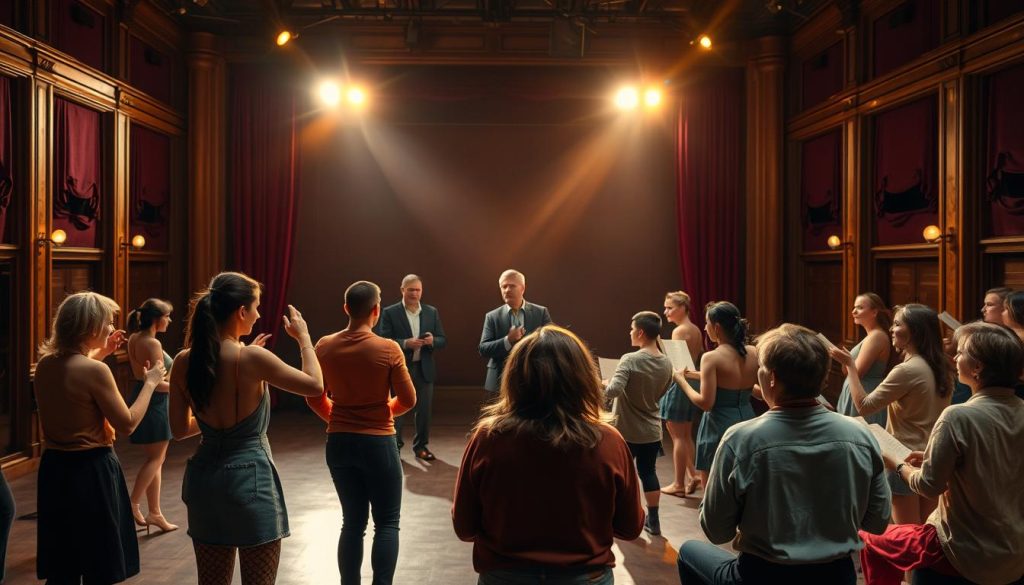
Imagine breaking down The Tempest like a sports game – that’s the vibe at the Verona Shakespeare Fringe Festival’s workshops. These sessions turn old creative tradition into a place where people rewrite history. It’s like a mix of the NFL combine and writing with quills.
Verse-Speaking Drills
Shakespeare’s words become a challenge here. Our “blitz verse” sessions push actors to speak like Aaron Rodgers. Try this warm-up:
- Recite Caliban’s “Be not afeard” speech while jumping rope
- Trade monologues with a partner like rap battle verses
- Whisper Miranda’s lines through a paper towel tube (Elizabethan megaphone protocol)
The goal is to make Shakespeare’s words feel as natural as trash talk in basketball. You’ll either get the rhythm or learn to appreciate the complexity of NFL referees’ language.
Directing Combine Challenges
Modern directors face a challenge: keep the Bard’s vision while making tech look good. Our workshops test participants with three challenges:
Tech Meets Tradition Matrix
| Elizabethan Method | Modern Equivalent | Audience Impact |
|---|---|---|
| Rope-and-pulley flying | Projection mapping | Same awe, less splinters |
| Live fife music | AI-generated soundscapes | Fewer musicians to feed |
| Groundling interaction | Twitter poll-driven endings | More engagement, same beer smell |
The real test? Turning Prospero’s epilogue into a heartfelt farewell and a TED Talk pitch. One team mixed Jacobean verse with ChatGPT-generated directions. The results were either genius or heresy. We’re debating.
Through these educational outreach programs, we’re making hybrid storytellers. They can handle quills and VR headsets. If Shakespeare had holograms, he’d use them – probably to make Polonius’ ghost appear during halftime.
Booking and Season Passes
Scoring theme park tickets can feel like hunting unicorns. We’ve all stared at booking portals, hoping for “flexible dates” to mean “good luck, champ.” But, season passes are more than just for rollercoaster fans. They offer free parking and snack discounts, making them a great deal.
Why spend $150 on a single-day ticket? You can get unlimited visits for the price of three avocado toasts. Parks have become like subscription services, and it’s a smart move. You’re not just buying tickets; you’re getting spontaneous afternoon escapes and rain-check privileges.
Annual passes have become a status symbol. That “Platinum Tier” badge is like saying, “I know a guy.” It also makes going to the park as easy as grabbing a coffee. Just remember, your friends might start calling you their personal FastPass.
Pro tip: Buy your passes during off-peak months for better deals. Parks offer bonus guest tickets and holiday event access then. It’s like finding extra fries at the bottom of the bag, but for thrill-seekers.
Front Row to History
Getting tickets to The Tempest today is like cracking a secret code. We’ve moved from old-time seats to experiences where you control the view. It’s like being on Prospero’s island in a virtual world.
Now, audience tools are so advanced, they make old days seem simple. Even the smell of garlic from the groundlings seems mild compared to today’s tech.
Festival Multi-Game Packages
Why watch just one play when you can see them all? The Globe offers festival passes with AI talks and Elizabethan drinks classes. It’s like a mix of Comic-Con and TED Talks, minus the masks.
And who knows, maybe plague masks will come back in 2024 as souvenirs.
Digital Season Tickets
Your phone is more magical than Prospero’s books. Livestreams let you watch David Tennant’s Prospero over and over. NFT tickets give you special backstage views.
The magic is seeing Miranda’s “brave new world” moment live. It shows Shakespeare’s power to move us, even after centuries.
