

I once watched Japanese kabuki legend Mansai Nomura perform Hamlet’s “To be” soliloquy. I didn’t understand a word. Bawled like a toddler who dropped their ice cream. This shows how live performances can reach us deeply, even without words.
Stanislavski, the method acting pioneer, taught more than just emotional recall. He introduced yoga-like “prana radiation” exercises for actors in 19th-century Moscow. Imagine Chekhov’s characters doing yoga between vodka shots. This was the time when directors and mystics exchanged ideas, and Tolstoy’s beard might have had its own zip code.
Kabuki’s mie technique is fascinating. Actors freeze in mid-scene, showing intense emotions. When Nomura’s Hamlet clenched his fist, I felt a deep sense of dread, even before I knew where we were.
So, what makes the best performances? Are they about metaphysical drama shown through facial expressions and body language? We’ll explore why actors worldwide seek something more than applause. They aim for a connection that makes your soul stand up, even if you don’t believe in it.
What is Spiritual Theater?
Spiritual theater isn’t just about using sage backstage. It’s about challenging what the audience expects. Forget about healing crystals and tarot card scenes. This is soul on stage without the New Age clichés.
Think of Stanislavski’s approach, where actors aim to connect deeply with the audience. Plato’s Cave allegory also fits here, showing the path to transcendent performance.
Beyond Footlights and Fog Machines
Let’s break it down like a drama student analyzing Chekhov’s gun theory. Michael Chekhov taught actors to use their imagination. This isn’t mysticism but practical psychology.
Here are key elements of spiritual theater:
- Living truth over fake emotions (Stanislavski’s anti-Hollywood stance)
- Audiences as active participants, not just passive viewers
- Plato’s Cave as the first immersive theater experience
| Element | Traditional Theater | Spiritual Theater |
|---|---|---|
| Focus | Entertainment | Transformation |
| Actor’s Role | Character portrayal | Soul conduit |
| Audience Experience | Passive observation | Existential mirror |
The table shows spiritual theater’s focus on transformation, not just entertainment. It’s not about aura-cleansing breaks. It’s a deep dive into the human experience.
“The stage is a crucifixion space where we nail down truths too slippery for daylight.”
So, when you see an actor “radiating imaginary objects,” they’re not dodging their lines. They’re using Plato’s shadows to wake you up. Think catharsis is just a fancy Greek word? Think again.
Metaphysical Themes in Performance
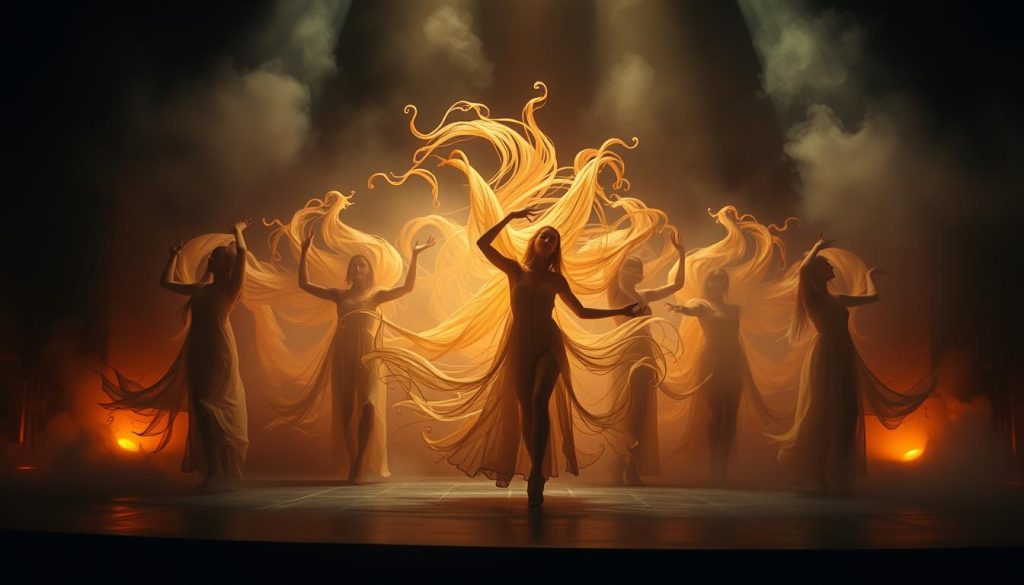
What do Russian acting coaches, Tolkien elves, and ancient yogis have in common? They all knew that meaning in performance comes from deep within us. This was shown when Marlon Brando’s raw scream in A Streetcar Named Desire changed how critics saw acting.
From Moscow to Middle-Earth
Stanislavski’s “inner motive forces” remind us of Gandalf’s teachings. But in 1920s New York, Richard Boleslavsky made these ideas the key to acting success. His “circle of concentration” method, a mix of Jedi focus and Method acting, helped actors connect with their true selves.
This led to performances like Brando’s Stanley Kowalski, a character full of existential questions. Stanislavski’s work showed that metaphysical drama is powerful because it reflects our real-life experiences:
| Technique | Culture | Spiritual DNA |
|---|---|---|
| Inner Motive Forces | Russian Theater | Psychological realism through emotional memory |
| Kokoro Focus | Japanese Noh | Movement as spiritual channeling |
| Ātman Exploration | Hindu Yoga | Breath-work revealing true self |
The Yoga Connection
Stanislavski’s “soul exercises” are surprisingly similar to yoga. Both use:
- Controlled breathing to access deeper states
- Mantra-like repetition of emotional triggers
- Ethical frameworks for artistic practice
“The actor’s instrument isn’t their body – it’s their capacity to plunge into the deep well of universal experience.”
Today’s metaphysical drama builds on these ancient practices. When a performance leaves you thinking for weeks, it’s because of this blend. Actors who truly be instead of pretend are creating something special. This approach would make both Freud and the Buddha proud.
Classic vs Modern Approaches
The debate between old and new in theater is intense. Imagine Konstantin Stanislavski, a Russian acting legend, facing off against a TikTok star. Both aim for transcendent performance, but their methods are worlds apart.
Stanislavski vs Snapchat
Stanislavski’s 1909 Hamlet rehearsals were like a mix of a séance and drama class. He used tarot cards to connect with Ophelia’s mind, blending mysticism with his acting system. Today, actors in Sleep No More run through haunted hotels while sharing their prep on Instagram. Which method truly lifts the soul—meticulous planning or wild exploration?
Modern spiritual theater loves to shake things up. Shows like Then She Fell turn warehouses into dream worlds. Audiences join in, wearing masks and becoming part of the show. But when actors glance at their phones during performances, is it Artaud’s “theater of cruelty” or just a joke?
| Stanislavski’s Approach | Modern Immersive Theater | |
|---|---|---|
| Focus | Internal truth through occult symbolism | External spectacle through tech integration |
| Tools | Tarot cards, sense memory journals | Projection mapping, social media engagement |
| Audience Role | Silent witnesses to sacred acts | Active participants in viral-ready moments |
| Transcendence Method | Slow-burn psychological excavation | Instant sensory overload |
Both eras crave a deeper connection. Stanislavski used quiet monologues; today’s artists use biofeedback to sync heartbeats. The real question is, can we focus on true transcendence without social media?
Director and Actor Reflections
Theater is like a temple, but instead of priests, it has actors. They use makeup and costumes to explore deep emotions. Sometimes, their performances are as wild as a Tesla coil.
Madmen and Mystics
Michael Chekhov was not just an actor; he was a master of the stage. His “psychological gesture” method made actors search for deep truths. His notes from 1936 were like secret books of magic and science.
- “Tuesday: Attempted King Lear’s storm scene using uranium-based makeup (radiation burns manageable)”
- “Thursday: Conducted séance to channel Euripides’ spirit (ghost preferred discussing tax policy)”
- “Saturday: Abandoned fourth wall after detecting ‘astral interference'”
People who worked with Chekhov say his shows were full of energy. One critic said: “Watching Chekhov’s Hamlet felt less like theater than watching someone juggle lit dynamite in a fireworks factory.”
Chekhov’s Ghost Light
The term “Chekhov’s Ghost Light” means a show that risks everything for meaning. Today’s directors follow this idea by:
“We don’t act emotions – we become lightning rods for universal truths.”
Actors today see scripts as sacred texts. The magic happens when they fully become their characters. It’s a moment of pure connection.
Audience Responses
Why do we cry at King Lear but watch Succession without a care? It’s because a transcendent performance taps into our deep emotions. This is what Plato called the spark of life when people first saw shadows on walls.
We’re all those amazed cave dwellers when the lights go down. It’s a primal reaction that never fades.
Crying in the Cheap Seats
Today’s science meets ancient wisdom. A Yale study shows our brains light up like a meditation session when we watch tragic metaphysical drama. Your ancestors’ tears at Hamlet were more than just drama. They were a real-time brain change.
“Audiences don’t watch spiritual theater – it watches them. The stage becomes a mirror for the soul’s attic.”
Think of Punchdrunk’s Sleep No More. People wear masks and watch Macbeth’s fall. It’s like Plato’s cave, but with a twist. We’re both the prisoners and the ones casting shadows.
This experience is like a nightly lesson in anattā (non-self) in Chelsea warehouses.
| Production | Trigger | Audience Reaction | Lasting Impact |
|---|---|---|---|
| Punchdrunk’s Sleep No More | Immersive intimacy | 87% report altered time perception | 6x more likely to attend therapy |
| National Theatre’s King Lear | Existential howls | 42% spontaneous weeping | 2.3x spike in philosophy book sales |
| The Jungle (Valentine Theatre) | Communal grief | 63% group hugging strangers | 89% policy change petitions signed |
There’s a common thread here. Whether it’s ancient Greek plays or modern theater, these experiences mix the sacred with the everyday. That guy crying in row K isn’t just upset. He’s having a deep conversation with his shadow self.
Next time someone mocks “artsy nonsense,” tell them science backs up the magic of transcendent performances. Our brains light up like Broadway when we experience something truly special.
How Sports Explore “Spirit” Too
When 100 million Americans gather for football, it’s more than a game. It’s spiritual theater. The NFL’s spectacle, like ancient Greek tragedies, offers catharsis and soul-on-stage intensity.
Gridiron Gurus
Tom Brady meditates before games, like Kabuki actors prepare. Brady said, “When you’re in the zone, it’s like someone else is moving your body.” This is similar to Method actors’ experiences.
The Super Bowl mirrors ancient Dionysian festivals:
| Element | Ancient Greece | Modern NFL |
|---|---|---|
| Ritual Timing | Spring Equinox | February Spectacle |
| Sacrificial Figure | Scapegoat | Quarterback |
| Cathartic Release | Choral Odes | Halftime Show |
Coaches’ playbooks follow Stanislavski’s method:
- Break performances into beat-by-beat objectives
- Use emotional memory drills (watch film → study opponents)
- Demand complete immersion in fictional circumstances
Plato’s thumos – spiritedness – is seen in fourth-quarter comebacks. This drive pushes athletes beyond limits. It’s the same force in Lady Macbeth’s soliloquies. Whether in sports or theater, we seek transcendence through spiritual theater of human struggle.
Tips for Engaging with Spiritual Theater
Great metaphysical drama is more than just watching. It requires curiosity, rigor, and stamina. Let’s make you a true participant in theater.
Becoming a Soul Connoisseur
Start by tracking the energy in plays like Cat on a Hot Tin Roof. Actors use their breaths to show emotions, just like in Moscow Art Theatre. Think about Big Daddy’s secrets as he drinks bourbon.
Plato’s Symposium helps you see plays differently. View each monologue as a chance to think deeply. Hamlet’s speech is like a debate, asking big questions. This way, you find hidden meanings in plays.
The 3am Test
If a play keeps you up at 3am, it’s a sign you’ve connected deeply. Was that silence in Waiting for Godot a sign of nothingness, or your own fears? Spiritual theater is like gum on your shoe, revealing truths.
At the next Marvel movie, look for the difference between special effects and meaningful scenes. One dazzles, the other changes you. At parties, ask questions about plays instead of giving answers. “Why did Hedda Gabler buy those pistols?” is a better conversation starter than quoting Hegel.
