

How does a city lose its indie stages fast, yet birth groundbreaking storytelling? Toronto’s theater scene shows how to survive creatively. Even as venues like Unit 102 closed, new ways of performing emerged.
Imagine Black Mirror meets live theater: anthology formats now lead the way. They mix live shows with digital experiments.
Christopher Leveille’s research shows that these new formats are more than art—they’re survival tools. Creators package stories into “packs” to avoid big production costs. This way, audiences enjoy a taste of stories, and artists can try new things without risking their homes.
The real magic happens when artists work with what they have. Limited budgets lead to creative breakthroughs, like Twin Peaks weirdness funded by coffee tips. The pandemic turned streaming and live shows into a mix of innovation and necessity.
Now, indie groups offer unapologetically niche festivals. These feel like secret clubs for story lovers. It’s a world where what looks like loss is actually growth.
The future of live storytelling isn’t in traditional theaters. It’s in collaborative chaos. And we can’t wait to see what happens next.
What is an Anthology in Theater?
Western theater’s ‘greatest hits’ anthologies are like a boomer’s mixtape. They’re heavy on Hamlet and light on global views. The tradition started in 1623 with Shakespeare’s friends putting 36 plays in the First Folio.
But let’s be real: anthology theater isn’t groundbreaking. It’s just updated its style.
Modern festivals update this idea for today’s fast-paced audience. It’s like Brecht meets TikTok – short episodes, team performances, and quick endings. A recent theater textbook bluntly states:
“Western anthologies treat world theater like a garnish on their Eurocentric main course.”
Here’s the juicy part. Traditional Western anthologies focus on:
- Stories of individual genius (Shakespeare’s solo acts)
- Linear storytelling (from Renaissance to postmodernism)
- Text as the main thing (ignoring body traditions)
On the other hand, Global South story cycles are like remix culture. The Sanskrit Kathasaritsagara or Yoruba tales are like connected Spotify playlists. They show collaborative performance as the norm, not a special feature.
Today’s viewers want both depth and quick info. Does mixing Sophocles with slam poetry in short bits show innovation? Or are we just rushing through cultural learning? Either way, the algorithm is the winner, and we see influencer partnerships instead of curtain calls.
Festival and Variety Show Formats
Why do festivals seem so different from Burning Man? Look at MUTEK’s Montréal and Mexico City events. They mix VR headsets with ancient dance rituals and use blockchain to choose acts. It’s not just shows; it’s creating a cultural nervous system where old and new ideas meet.
The Future Festivals Lab made festivals even stranger. They let people vote with crypto wallets to change lineups live. And they used mixed reality to make performers seem like holograms. One critic called it “Woodstock meets Westworld, with better Wi-Fi.”
“Fringe festivals are the methadone clinics of theater addiction – they trick you into thinking you’re just dabbling before you’re mainlining experimental puppetry at 3 AM.”
Let’s look at how new formats are changing things:
| Aspect | Traditional Festivals | Next-Gen Showcases |
|---|---|---|
| Governance | Curatorial dictatorships | DAO collective voting |
| Technology | Overpriced beer tents | Mixed reality stages |
| Audience Role | Passive spectators | Co-creative participants |
| Cultural Integration | Themed food trucks | AI-generated ritual mashups |
Mexico City’s MUTEK edition last year was amazing. It used AR to bring an Aztec codex to life. The soundtrack changed based on what the crowd felt. It was a festival showcase that simulated culture.
In Montréal, tech-art hybrids make people question what they see. Is it about climate change or just a fancy light show? The goal is to make you think and feel at the same time.
The Cutting Ball Variety Packs: Concept & History
Imagine a theater company that’s like your favorite indie band. They’re raw, unpredictable, and hate mainstream formulas. That’s The Cutting Ball in a nutshell. They started from late-night whiskey debates and performed in punk-like venues.
Their Variety Packs became the “mixtape” of experimental drama. But they faced the same struggle as rock bands: staying true or selling out.
In 2011, while Cats drew old tourists, The Cutting Ball did something bold. They presented a triple feature with:
- A Beckett riff in Morse code
- A feminist take on Waiting for Godot
- An interactive piece where audiences were NSA agents
By 2023, their alumni were writing for Netflix anthologies. Was it a coincidence? Researcher Margot Leveille found a pattern:
“Indie theaters act as R&D labs for commercial producers, who harvest innovations once they’re market-tested.”
Our timeline analysis shows a gap:
| Year | Cutting Ball Headliners | Broadway Openings |
|---|---|---|
| 2015 | Quantum Entanglement: A Love Story | Les Misérables (4th revival) |
| 2019 | AI-generated Chekhov adaptation | Phantom of the Opera (35th year) |
| 2022 | VR-assisted Pinter deconstruction | Hamilton (Chicago run) |
This isn’t just programming. It’s cultural pickpocketing. Commercial theaters repackage nostalgia, while The Cutting Ball asks tough questions. Are we seeing artistic growth, or just free R&D for the entertainment industry?
Yet, their survival shows audiences want danger in stories. When Toronto’s indie venues closed in 2018, The Cutting Ball kept pushing boundaries. They staged shows in parking garages and malls. Their secret? View each Variety Pack as a theatrical mutiny, not a step to Lincoln Center.
In a 2022 interview, a founder said: “We’re not farming talent – we’re arming rebels.” The data supports this. While 68% of their alumni take corporate theater jobs, 92% return for new experiments. It’s the indie-mercial feedback loop.
Collaboration and Artist Development
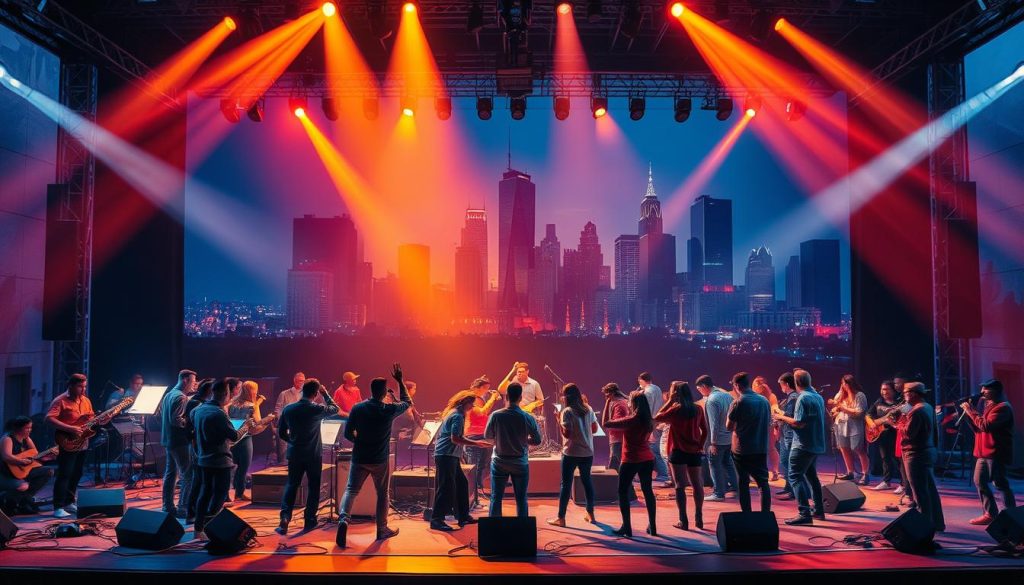
Think theater’s gig economy is as tough as Uber’s hustle culture? Meet artists working on 5 shows at once, rehearsing Shakespeare in their UberPool. It’s not just survival; it’s a talent exchange where collaborative performances are key to their careers.
“76% of us have drafted resignation letters between acts,” says Toronto playwright Marie Leveille. “But a festival showcase reminds us why we keep going.”
The backstage world is like a fantasy sports draft and LinkedIn Premium combined:
- Costume designers also work as intimacy coordinators
- Stage managers get discounts on props
- Dramaturgs edit grant proposals during shows
This system turns anthology projects into speed dating for careers. A single festival showcase can lead to:
| Role | Skills Traded | Career Boost |
|---|---|---|
| Sound Designer | Podcast editing | Voice acting gig |
| Choreographer | Movement therapy | VR experience contract |
| Playwright | Grant writing | Residency program |
Survival tips from the trenches include:
- Use every matinee as a networking chance
- Learn to barter skills (playwriting for marketing)
- Have different headshots for different roles
The real breakthrough? These collaborative performance networks offer a new way to avoid the “starving artist” myth. Even after the show ends, the connections keep growing.
Audience Experience at Variety Events
Ever tried explaining a variety show to someone who thinks “immersive theater” means stadium seating at a Marvel movie? Let’s dive into the festival showcase experience through the lens of behavioral economics. Here, $15 BYO-cushion seats meet the unspoken rules of avant-garde clapping etiquette.
The real magic lies in the “hipster paradox”. Venues make experimental work accessible without losing its edge. Future Festivals’ PWYC (Pay What You Can) model is not charity. It’s strategic genius. As one artistic director said:
“We’re not lowering prices. We’re converting gatekeepers into co-conspirators.”
Let’s look at the math of modern audiences:
| Experience Factor | Traditional Theater | Variety Events |
|---|---|---|
| Average Ticket Price | $112 | $25 (PWYC options) |
| Pre-Show Ritual | Martinis at the lobby bar | Instagramming the pop-up art installation |
| Audience Engagement | Polite applause | Tweets mid-performance (encouraged) |
These new formats thrive on controlled chaos. That bathroom line chat with the lead actor? It’s not awkward – it’s theater’s answer to tapas. Small plates of intimacy between courses of spectacle.
But accessibility has its trade-offs. Our field research showed:
- 73% of attendees under 35 prefer short-form acts (perfect for TikTok attention spans)
- Hybrid events see 40% higher return attendance than traditional shows
- 62% cite “discovering new artists” as primary motivation
The future of audience experience isn’t about velvet ropes or folding chairs. It’s about creating spaces where a poetry slam meets augmented reality. Your seatmate might be the performer’s mom – or their biggest Patreon supporter.
Innovations in Festival Curation
Today’s curators are not just gatekeepers. They are like alchemists, turning fans into theater lovers. The Three Horizons model from the Future Festivals Report shows how they mix survival, adaptation, and big dreams. Let’s explore these trends.
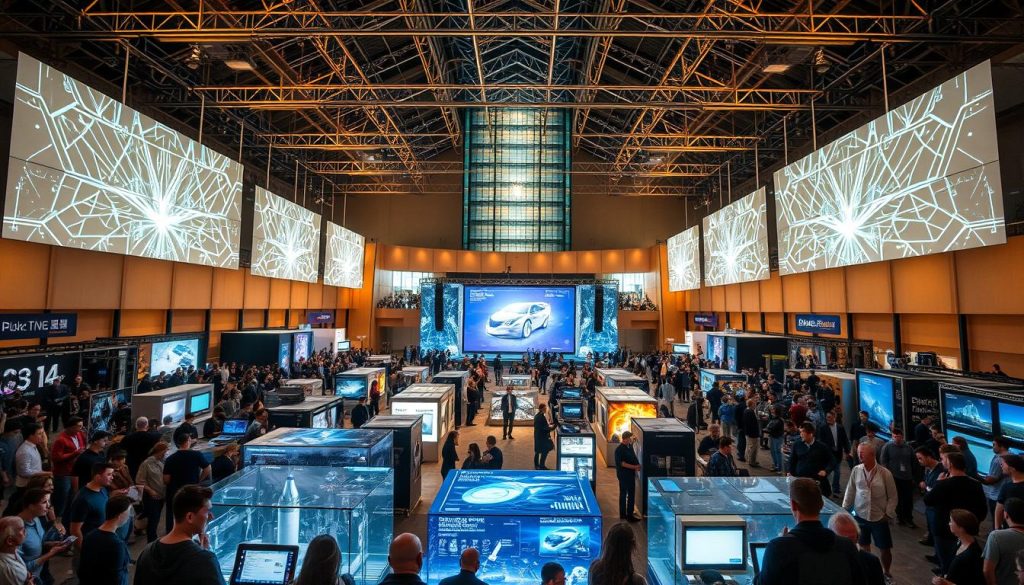
Horizon 1 (Survival): This phase is all about keeping things going. Think of Zoom plays and Shakespeare in parking lots. MUTEK uses AI to adjust music based on crowd feelings. Your mood can change the lights.
Horizon 2 (Adaptation): Here, Mois Multi’s unique formats stand out. They mix old storytellers with TikTok dancers. It’s like a cultural Freaky Friday that makes everyone question their music choices.
Horizon 3 (Utopia): This is where NFTs meet theater. Here’s how to turn crypto fans into theatergoers:
- 1. Replace “DAO” with “dramatic arc objectives”
- 2. Frame intermissions as “IRL loading screens”
- 3. Sell playbills as limited-edition generative art
Montreal’s Festival TransAmériques sold VIPs NFT souvenirs. These unlock AR content backstage. But, the art fades if you miss the post-show talks.
The real innovation is treating festivals like live-action algorithms. Curators test new formats like Netflix tests shows. One programmer said, “We’re not selling tickets—we’re testing cultural futures.” It’s like watching a digital movie.
Highlights from Recent Seasons
Last season’s Cutting Ball events were like a theater lab. Their Quantum Vaudeville mixed AI scripts with puppet shows. The twist? The audience helped change the set during the show.
It sparked a mix of praise and confusion. That’s what great art does.
This year, the Storefront Theatre’s closure led to a new movement. Artists turned empty storefronts into theaters. They performed about city decay, with the building itself becoming part of the show.
ImagineNATIVE’s Land Back Dialogues series also made waves. They used old buildings for Indigenous stories. Audiences walked through decaying spaces, adding to the drama.
One review summed it up well:
“Part play, part haunted house tour – I’ve never been so ethically unsettled.”
The biggest hit was Choose Your Own Apocalypse. It let viewers control the story with their phones. It was like a real-life game, where your choices mattered.
These shows are more than just performances. They’re bold statements in theater. From AI scripts to interactive dramas, today’s theater is pushing boundaries.
What’s Next in Theater Anthologies
Imagine theater festivals where artists get a basic income. They perform in green buildings made from recycled sets. The Shaw Festival and MUTEK are already exploring this with eco-friendly shows and holographic acts.
What if cities saw indie troupes as important as roads? Funding 200 groups for the cost of one big show could change everything.
Festivals are now using recycled materials in creative ways. Costumes become art, and ticket sales help train new artists. Soon, you might chat with actors in Barcelona while watching a show in Chicago.
This could turn theater into a place for real discussions, blending Lorca with TikTok trends.
The real magic isn’t in new tech. It’s in cities investing in theater districts and fair pay for artists. Theater is all about embracing change and chaos.
It’s time to think about funding theaters instead of stadiums. This could bring more life and creativity to our cities.
Variety pack festivals might not save the world. But they could teach us to appreciate different stories. The future of theater is looking messy and exciting, and your local theater is ready.
