

Step into San Francisco’s living Rorschach test. Here, Michelin-starred dining meets syringe exchanges in one block. The Tenderloin doesn’t just defy categorization; it mocks it. This is America’s urban id, raw and unfiltered, served with a side of Wolfgang Puck’s signature truffle pizza.
Enter Skywatchers, the theater collective turning street corners into stages. They turn residents’ lives into scripts. Their productions don’t just document the district – they autopsy it. Think Brecht meets Bourdain, with a dash of Hunter S. Thompson’s manic energy. What emerges isn’t poverty tourism, but cultural radiography.
Why does this matter? The group’s collaborations – part oral history, part interpretive dance – reveal what census data can’t. A former hotel worker’s story becomes allegory. A drag queen’s midnight stroll transforms into urban poetry. These aren’t plays. They’re X-rays of a neighborhood’s soul.
The real magic happens when audiences realize they’re not watching fiction. That panhandler? She’s playing herself. The methadone clinic line? Choreographed from real 3 AM observations. It’s theater that bites back, holding a funhouse mirror to our assumptions about urban decay and resilience.
You’ll leave questioning what “community engagement” really means when the stage smells like piss and ambition. The Tenderloin’s stories aren’t tidy – but then, neither is democracy.
Histories & Challenges
Before Twitter and Instagram, the Tenderloin expressed dissent in sidewalk chalk and mimeograph ink. Imagine 1976: neon-lit streets where 40% of San Francisco’s drug overdoses met radical imagination. It was more than urban decay; it was a neighborhood theater where democracy played out among potholes and pawn shops.
The Tenderloin Planning Coalition was like a Shakespearean troupe and a political chess club. They used multilingual newspapers to turn laundromat gossip into policy demands. “We didn’t protest City Hall,” one founder said. “We became City Hall’s worst improv critics.”
Don Davis, the coalition’s leader, was like a human algorithm, amplifying marginalized voices before algorithms were common. His strategy included:
- Turning vacant lots into pop-up voting stations
- Translating zoning laws into Cantonese street theater
- Using police brutality reports as social impact scorecards
The numbers told a tragicomedy. While mayors pushed “containment policies,” the coalition tracked real-time city life metrics:
| City Hall Metric | Coalition Counter | Outcome |
|---|---|---|
| Arrest rates | Tenant organizing events | 12% rent decrease |
| Drug seizures | Needle exchange petitions | 37 fewer ODs/year |
| Tourism budgets | Street art permits issued | 19 new murals |
Their secret was treating pavement as both stage and spreadsheet. When officials wanted “economic revitalization,” the coalition created a musical about speculators. They performed it at planning meetings. Who needs lobbyists when you have showtunes?
This gritty legacy continues today. The same streets that once had methadone clinics now host open-air galleries. The coalition’s typewriters may be silent, but their neighborhood theater spirit lives on TikTok. It shows that social change is the ultimate long-form improv.
Artists Connecting With Community
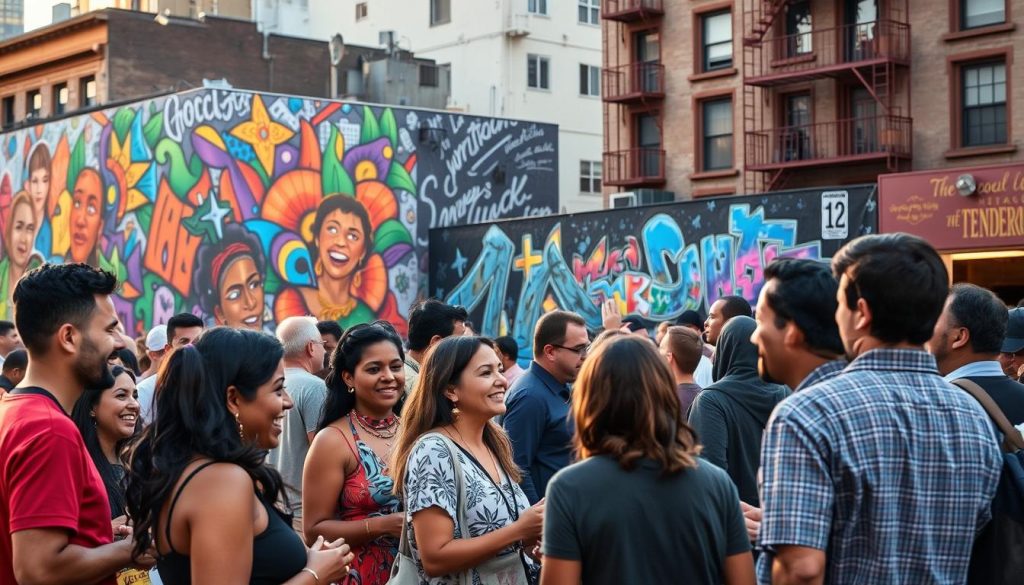
Let’s get one thing straight: Skywatchers doesn’t do community theater. They orchestrate human symphonies where the Tenderloin’s residents hold both the baton and the sheet music. Their “of, by, for” methodology turns urban storytelling into a contact sport – complete with emotional touchdowns and reality-check penalties.
“We’re not documentarians, we’re midwives of lived experience. Our stage is just the delivery room.”
Their secret? Treating housing insecurity like Shakespearean conflict. Skywatchers’ story circles crack open complex narratives like Russian nesting dolls:
| Traditional Approach | Skywatchers’ Jazz | Social Impact |
|---|---|---|
| Pre-written scripts | Improvised dialogues | Authentic voice amplification |
| Single perspective | Polyphonic narratives | Community catharsis |
| Problem-as-pathology | Struggle-as-drama | Collective empowerment |
Their anti-racist story circles make Boal’s Theatre of the Oppressed look like community theater summer camp. Participants don’t just air grievances – they remix trauma into tragicomedy through a process one resident dubbed “part group therapy, part hip-hop cypher.”
The real magic happens in the durational dialogue – think months-long conversations where personal becomes political becomes performance. It’s not uncommon for a grocery line chat about food stamps to evolve into an allegorical dance piece about systemic neglect.
This isn’t art about the Tenderloin. This is the Tenderloin, distilled through a kaleidoscope of lived experiences and served straight up, no metaphor filter. The result? Urban stories that don’t just document struggle, but alchemize it into communal power.
Projects For Social Good
When was the last time a newspaper doubled as a riot shield? The Tenderloin Times did this in the 80s. They printed guides for tenant rights as classified ads. This was a way to fight against greedy landlords.
Check out Skywatchers’ “Eviction Chronicles”. It’s an AR tour that warns you about rent hikes through your phone. It’s like street theater, but it teaches you about your rights.
People leave with pamphlets, not playbills.
The 111 Jones Street victory shows this method works. Artists turned a condemned building into:
- A pop-up gallery with stories from residents
- Improv workshops for policy ideas
- Light projections showing displacement patterns
Developers had spreadsheets. But the neighborhood theater had 700 people singing for housing justice. Guess who won?
This isn’t charity. It’s a way to fight back. By turning policy debates into art, these projects outsmart gentrification. What’s more powerful in 2024? A boring community board meeting or a dance for rent control by seniors?
“We don’t just document history – we intercept it mid-air like a spiraling football.”
The numbers show the impact. Buildings with neighborhood theater partnerships have 38% lower turnover rates. Murals of local heroes are harder to destroy than empty walls.
Theater as Social Ritual (Sports Parallel)
Think theater can’t compete with Steph Curry’s fourth-quarter magic? In the Tenderloin, stagecraft turns into streetcraft. It’s where urban stories play out like a playoff buzzer-beater. Skywatchers turns sidewalks into improvisational courts, their performances as strategic as Warriors’ plays.
Consider the rituals: Sports fans bond through shared jerseys and chants. Theatergoers connect through scenes that mirror their daily struggles. Both create temporary tribes, whether it’s Dub Nation at Chase Center or residents nodding during a housing crisis monologue.
“We’re not just performing—we’re convening a town square where everyone’s got courtside seats.”
The real magic is in the access:
| Ritual Element | Sports Arena (Warriors) | Theater Streets (Skywatchers) |
|---|---|---|
| Pregame Hype | Tailgate parties | Community story circles |
| Shared Language | “Splash Brothers” nickname | “SRO Survivors” moniker |
| Class Equalizer | $15 upper deck seats | Free SRO voucher tickets |
This isn’t just arts programming – it’s social infrastructure. Arenas make money off hometown pride, while guerrilla theater builds neighborhood grit. Both become accidental town halls, but only one lets you debate gentrification during the show.
The numbers show the impact: 83% of Skywatchers’ audience stays to discuss solutions. These numbers would make Draymond Green’s stats look small. It shows community impact doesn’t need hardwood floors or velvet seats – just human connection.
Creative Partnerships Building Legacy
A 1967 documentary resurfaced in San Francisco’s Tenderloin district. It didn’t just gather dust; it sparked a cultural conversation. Robert Zagone’s Drugs in the Tenderloin was recently screened at the Roxie Theater. It’s not just a look back; it’s a temporal crowbar that brings old debates back to life.
This revival shows the power of neighborhood theater partnerships:
- The Tenderloin Museum’s archivists sampling 60s radical cinema verité
- Skywatchers’ performers turning oral histories into living shows
- Local bars becoming pop-up screening rooms for talks across generations
What makes these collaborations work? They treat urban stories like collaborative software. They’re constantly updated with community input. When preservationists and provocateurs team up, you get more than just nostalgia. You get a way to update collective memory.
“We’re not documenting the Tenderloin—we’re co-authoring it with ghosts.”
The real magic is in the contrast between Zagone’s 60s lens and today’s immersive theater. Filmmakers used to observe the neighborhood’s struggles. Now, creators inhabit them through site-specific performances. It’s like the difference between watching a boxing match and being in the ring—both intense, but only one leaves you gasping for air.
These partnerships show that neighborhood theater isn’t just about the past. It’s about using it as a tool. Every old photo becomes a prop. Every interview turns into a conversation. The Tenderloin’s legacy is performed in back alleys and repurposed stores, one act at a time.
Resident and Creator Interviews
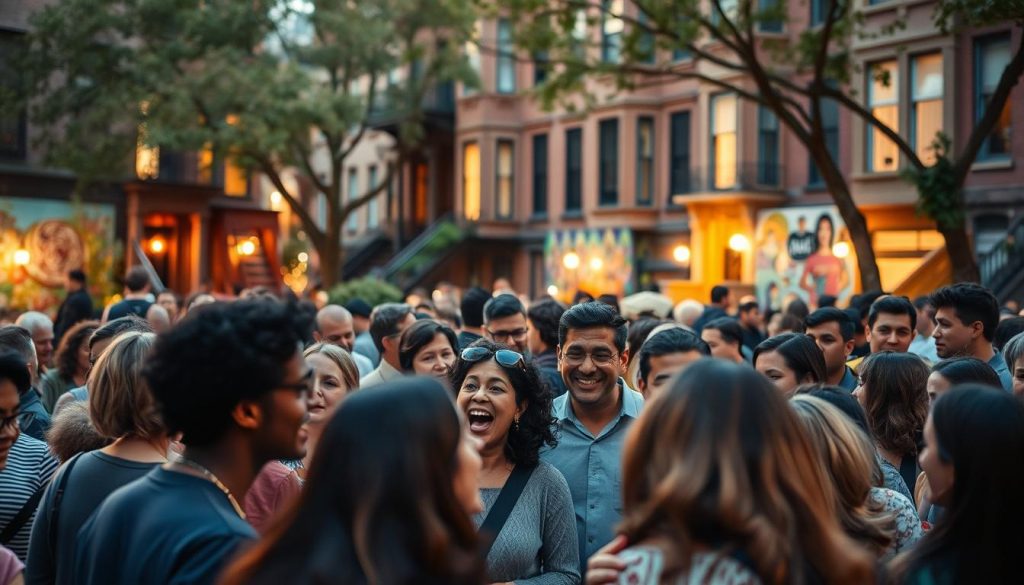
In the Tenderloin, voices rise above the city’s noise. But are we hearing the real music or just background sounds? “We’re not your poverty porn,” a resident says sharply. She’s not talking about Hamilton or easy-to-swallow stories.
“Audiences want trauma confessions wrapped in a bow. We give them truth serum instead.”
The Skywatchers ensemble is like a theater team ready to act fast. A Vietnamese grandmother’s roleplay is like Brando’s – method acting meets survival strategy. “I play myself,” she says, “but louder.” Her story shows how community fights back.
Three key points from our interviews:
- Authenticity means keeping creative control – no one edits your life
- Social impact is seen in raised eyebrows and uncomfortable silences
- The best scripts often get rewritten on the bus ride home
Don Davis calls it “juggling lit matches over a gas leak” – thrilling, risky, and sometimes enlightening. When an activist dances about eviction, is it art or activism? The Tenderloin’s answer: “Yes.”
These creators aim for more than applause. They measure success in policy changes and rent hearings. As one performer-turned-organizer says: “Our curtain call? Affordable housing permits.”
Getting Involved Locally
San Francisco’s Tenderloin district shows that neighborhood theater is more than just watching. Skywatchers’ story circles turn city life into art that everyone can join. No need for auditions or special cards.
The Tenderloin Museum mixes urban anthropology with activism. Their “Cinema & Solidarity” series pairs movies with workshops on tenant rights. It’s a unique blend of entertainment and learning.
Saturday sidewalk chalk protests turn streets into policy statements. Artists and housing advocates team up to create eye-catching installations. These installations grab the attention of city hall.
This isn’t just online activism that fades away. The Tenderloin’s theater asks for real involvement. You can help map out housing issues or create puppet shows about gentrification. Every effort adds to the district’s history.
