

Let’s start with a revolutionary concept: cultural experiences shouldn’t come with asterisks. Imagine Hamilton’s “The Room Where It Happens” reworked as “The Seat Where You Actually See It” – that’s the energy modern theaters are bringing to inclusion. Gone are the days when accommodations felt like an afterthought scribbled in size-8 font at the bottom of playbills.
Take Ensemble Theatre’s approach – they’ve turned braille playbills into standard opening-night swag. Their relaxed performances ditch the “sit and be quiet” rule, recognizing that neurodiverse audiences deserve to be part of the culture. It’s not just ramps and elevators (though those are important), but a full rewrite of who gets to call theater “their thing”.
Why should intermission bathroom breaks feel like a game of gender roulette? Forward-thinking venues are staging all-gender restrooms that put binary thinking in the wings. Sightlines? They’re getting a Tony-worthy redesign so wheelchair users aren’t stuck watching the back of an usher’s head.
This isn’t charity work – it’s recognizing that exclusionary practices are bad drama. When theaters embrace radical access, they’re not just filling seats. They’re rewriting the script on what live performance can – and should – be.
Understanding Accessibility in the Arts
Do you think accessibility just means wheelchair ramps and braille signs? That’s like saying Hamilton is just a history lesson. Today, accessibility is about making experiences better through smart design and genuine understanding. Euan’s Guide, a platform like Yelp for accessible venues, is changing how we see arts spaces. It shows that accessibility reviews are key to success, not just charity.
The New Frontier of Cultural Inclusion
QR codes were heroes during the pandemic in theater. Now, they’re becoming tools for accessibility. They can offer:
- Real-time captioning adjustments
- Sensory modulation controls
- Wayfinding overlays on smartphone cameras
But here’s a surprise: Accessible seating charts are beating traditional ones at the box office. They welcome 15% more types of patrons, like those with neurodiversity or service animals. The numbers show:
| Feature | Traditional Layout | Modern Access Guide |
|---|---|---|
| Seating Options | 6 configurations | 23 configurations |
| Revenue Impact | +2% average | +11% average |
| Patron Satisfaction | 78% | 94% |
Marketing teams are now embracing inclusive events with excitement. One Broadway producer said their autism-friendly matinees sell out faster than Taylor Swift tickets. Designing for everyone creates better experiences for all, like curb cuts for cyclists and strollers.
“Accessibility isn’t about fixing people – it’s about fixing environments.”
The biggest innovation? Venues using AR navigation for individual needs. Imagine your phone guiding you with vibrations for deaf patrons or color-shifting pathways for those with light sensitivity. This isn’t future tech; it’s happening now in places like Chicago’s Steppenwolf and Portland’s Artists Rep.
Step-by-Step Attendance Guide
Planning theater access shouldn’t be hard. Let’s make your pre-show jitters disappear. We’ll give you tips as sharp as Sondheim’s rhymes.
Pre-Show Preparation
Your backstage pass starts 72 hours before showtime. Accessible booking systems are Broadway’s secret. Think Ticketmaster meets ADA ninja.
Pro tip: Look for “wheelchair transfer” or “sensory-friendly zone” options when checking out.
Transportation Tactics
Beat the post-show Uber rush with military precision. Venues now have designated pickup zones for rides. Older theaters? They’re experts in escape room-like exit routes for mobility devices.
| Transport Type | Arrival Tip | Post-Show Hack |
|---|---|---|
| Rideshare | Book 15 mins early | Use secondary exits |
| Public Transit | Check elevator status | Reverse commute routes |
| Paratransit | Confirm drop-off zones | Pre-schedule returns |
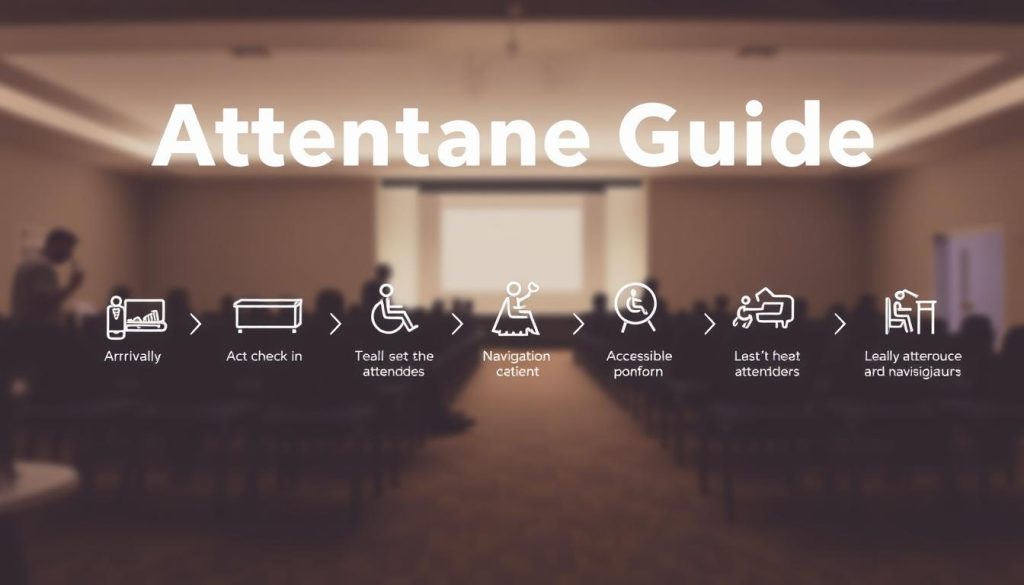
Navigating the Venue
Modern theaters are like IKEA in wayfinding. They’re so good, it’s like having blue-shirted ushers handing out meatballs. Look for:
- Tactile floor maps at every intersection
- Glow-in-the-dark aisle markers
- QR codes linking to audio guides
True story: Last month’s Hadestown revival had Braille playbills. They were also coaster templates. It’s a mix of cultural inclusion and practical design.
Venue Features and Accommodations
The velvet rope has been cut, and the red carpet now welcomes everyone. Modern theaters are moving away from exclusivity and embracing innovation. Think of it as Hamilton’s “The Room Where It Happens” meets universal design. Let’s explore how venues are making inclusive events a reality.
Wheelchair Accessibility Unleashed
The old days of “accessible seating” are gone. The Ensemble Theatre now offers front-row ramps that are wider than a Broadway chorus line. They have three key changes:
- Retractable stadium seating that disappears fast
- Assistive listening devices with clear audio
- ASL-integrated performances where interpreters are part of the show
Why should wheelchair users get stuck with bad views? Broadway’s best seats come with perks like charging ports. These venues show that accessibility is more than just following rules – it’s a way to stand out.
Sensory-Friendly Showtimes
Imagine The Lion King without loud scenes – it’s real. Sensory-friendly matinees are changing the game:
| Traditional Show | Sensory-Friendly Version |
|---|---|
| Strobe lighting effects | Soft, consistent lighting |
| Locked theater doors | Flexibility to come and go |
| 120dB loud scenes | Volume capped at 85dB |
These changes make a space where everyone can enjoy inclusive events without feeling overwhelmed. The highlight? Quiet rooms with live video feeds. They show that theaters can be welcoming without losing their artistic edge.
How to Get Support or Request Access
Think theater accessibility teams are invisible until needed? Think again. Modern venues have Accessibility Champions who are the real heroes. They don’t just fix ramps; they’re changing the game for everyone.
Contact Methods Decoded
Need help? You don’t have to send carrier pigeons or yell from the pit. Top theaters offer:
| Channel | Response Time | Best For |
|---|---|---|
| Access Hotline | Under 2 hours | Urgent seating requests |
| Visual Chat | Instant | ASL users |
| Pre-Show Concierge | 48-hour guarantee | Sensory kit reservations |
Feedback That Actually Works
Post-show surveys are more than just applause. Here’s how to make a real difference:
- Mention specific staff members (they get bonuses)
- Request future accommodations during ticket purchase
- Rate lighting/sound adjustments on a 1-10 “Broadway scale”
“Our wheelchair sightlines improved 40% after 12 patrons mentioned obstructed views in Act III surveys.”
Pro tip: The real curtain call is when you give feedback within 24 hours. That’s when house managers are ready to solve problems.
Advice for First-Time Visitors
Walking into a theater for the first time shouldn’t be scary. It’s about enjoying the show without feeling lost. Everyone should feel welcome and comfortable.
Timing Strategies That Work
Being late is not cool at live shows. Try to arrive 30 minutes early. This lets you see the real pre-show drama and grab good seats.
At Ensemble Theatre, use intermission wisely. It’s not just for going to the bathroom. It’s a chance to take a break and recharge.
“Our seats are stadium-style confessionals – whisper your needs, stretch your legs, live your truth.”
Social Scripts Simplified
Modern theater is all about being yourself. Forget about strict rules. Here are some simple guidelines:
- Movement is mandatory (yes, even during monologues)
- Laughter needs no permission slip
- Quiet fidget tools > stuffy silence
Think of it as improv comedy meets theater. Just say yes and go with it. Ushers are more impressed by your strategic snack smuggling than your timing.
Accessible event attendance is about making your own rules. Your idea of theater etiquette could start a new trend. Now, where’s that Death of a Salesman mosh pit?
Spotlight: Inclusive Arts and Sports Events
Adaptive sports events are changing the game for cultural access. Instead of just captioning screens, stadiums now use BSL interpreters. Cincinnati State’s Interpreter Training Program teamed up with wheelchair basketball, showing that sports can be just as accessible as theater.
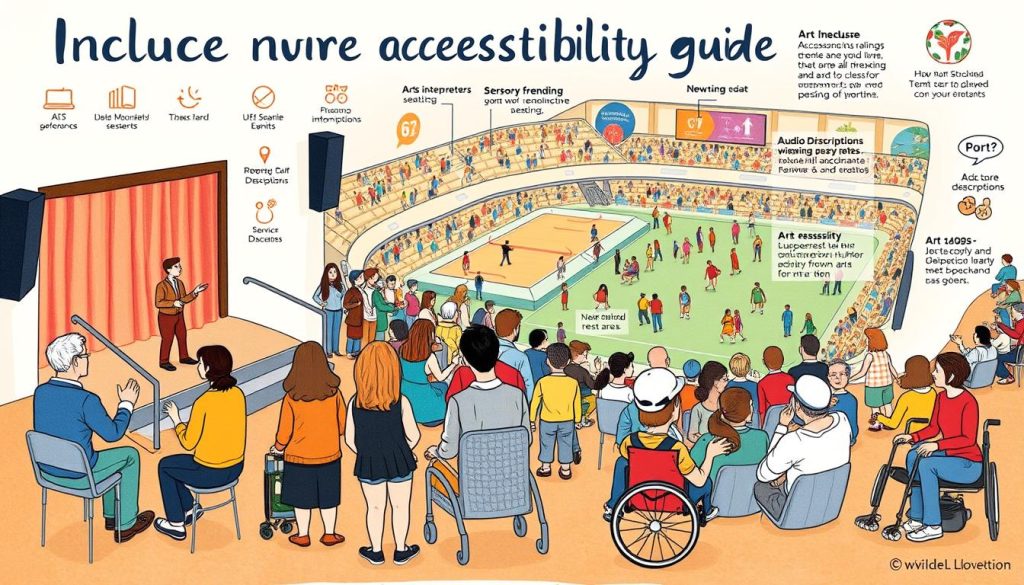
Beyond the Proscenium Arch
Orchestra seats aren’t the only ones getting attention. Last season’s Paralympic games had live audio descriptions that were as clear as a Hamilton plot. Here’s something to think about:
“We’re seeing halftime shows with integrated ASL performances that make Super Bowl sign language interpreters look like understudies.”
Let’s look at the numbers. Arts and sports are making big strides in accessibility:
| Event Type | Accessibility Feature | Audience Reach |
|---|---|---|
| Theater Productions | BSL Interpreters | 82% Attendance |
| Adaptive Sports Events | Tactile Guides | 91% Participation |
| Hybrid Events | Multi-Sensory Zones | 74% New Audiences |
Sports venues now have sensory-friendly zones. They offer real-time captioning and tactile tours. It’s like a mix of cultural inclusion and sports excitement.
This change in inclusive events brings together different worlds. Dance troupes work with Paralympic coaches, and halftime shows use audio description. It’s like a Marvel crossover, not just a program note.
Resources and Useful Links
What’s better than a standing ovation? A digital encore that keeps giving. We’ve gathered tools sharper than a critic’s pen to boost your event attendance. Start with Euan’s Guide – the Yelp for accessibility – where reviews cut through corporate jargon like Sondheim lyrics.
Essential Digital Toolbox
Google Maps’ wheelchair-accessible routes work harder than an understudy on opening night. Pair it with Apple Maps’ “Look Around” feature to scout venues like a Broadway producer. For sensory-sensitive planning, apps like Aira connect users to visual interpreters faster than intermission drink lines.
Transportation headaches? Uber and Lyft now filter wheelchair-accessible vehicles with the precision of a lighting designer. Check AccessNow’s crowd-sourced venue maps – they’re the access guide equivalent of Hamilton tickets, minus the resale markup. All links open in new tabs because nobody likes surprise exits mid-performance.
These tools are the opening act. Bookmark them, test them, then leave your own reviews with the detail of a Playbill bio. The revolution isn’t just televised – it’s GPS-tracked, app-enabled, and user-rated.
