

Last summer, Russian literature TikTok made Anton Chekhov’s 125-year-old play go viral. It talked about “people who eat, drink, and carry their broken hearts to the grave”. This caught the attention of 17 million Gen Z viewers, who saw themselves in the characters.
The 2020 film adaptation, starring Toby Jones, made Chekhov’s work even more relatable. Directors worldwide saw the crumbling country estates as mirrors to our current lives. Steve Carell’s Broadway Vanya and Australia’s Ensemble Theatre production showed how the play’s themes are timeless.
Why does Uncle Vanya resonate today? It might be because we’ve all learned to hide our quiet desperation. The play’s mentions of “the heat’s making the trees grow twice as fast” feel more real after the Black Summer fires. And who hasn’t had a pandemic hobby graveyard?
Chekhov’s work is a mirror that reflects any culture. Whether it’s Moscow artists or Brooklyn hipsters, the cross-cultural adaptation magic is clear. We’re all trying to find our place in the world, even while filming TikToks.
Introduction to Chekhov’s World
Imagine a man who wrote by day and explored human flaws by night. Anton Chekhov didn’t just write Russian drama; he analyzed it. Before becoming a master of drama, he faced many rejections.
His early plays were tough to watch. Audiences would have preferred a cold Siberian winter to another show.
Chekhov’s work as a doctor gave him a unique perspective. He saw the hidden issues in everyday life. He noticed how simple things, like a samovar’s whistle, could reveal deep problems.
Virginia Woolf once said:
“I’d swap three stream-of-consciousness novels for one page of Chekhovian subtext.”
Enter Konstantin Stanislavski, a theater director who transformed Chekhov’s plays. Together, they created a new kind of theater. Stanislavski’s Moscow Art Theatre brought “The Seagull” to life in 1898.
Audiences soon realized that the “awkward silences” were actually deep moments. It was like a medical school meets improv class.
Chekhov’s genius is in what he doesn’t say. His characters don’t talk about big issues. Instead, they argue over small things while their lives fall apart.
It’s like a Twitter thread unfolding live, without the blue checkmarks. Who needs big drama when a retired professor mooching off his in-laws is enough?
Modern showrunners can learn from Chekhov’s way of telling stories. He packed more meaning into a single sigh than many shows do in eight seasons. Next time you watch a show about sad millennials, think: Is this just Uncle Vanya with better Wi-Fi?
Uncle Vanya: Plot and Themes
What do HBO’s Succession and a 19th-century Russian play have in common? Chekhov’s tragicomedy invents the blueprint for modern family dysfunction. It swaps media conglomerates for cherry orchards and shareholder meetings for vodka-soaked existential crises.
The story centers on a rural estate run by Vanya and his niece Sonya. When her aging professor father returns with his glamorous new wife, their quiet world implodes. The twist? everyone’s mad about the wrong things.
Vanya rages against wasted years, the doctor obsesses over dying forests, and Sonya pines for a man eyeing her stepmother.
Chekhov’s genius is making property disputes feel apocalyptic. The estate becomes a battleground for:
- Midlife regret (Vanya’s spreadsheet meltdown)
- Climate anxiety (Astrov’s tree-planting crusade)
- Romantic delusions (that cringe-worthy love triangle)
Astrov’s deforestation speech hits differently in 2024. His warning – “Man must work, or else go to the devil in this world!” – isn’t just about ecology. It’s a proto-climate strike manifesto wrapped in vodka breath:
“When I plant a young birch tree and see it budding… I feel I’m contributing to eternity.”
| Theme | Uncle Vanya | Modern Parallel |
|---|---|---|
| Power Struggles | Estate management wars | Corporate boardroom coups |
| Environmental Crisis | Deforestation monologues | Climate change protests |
| Existential Burnout | Vanya’s “I’m 47!” breakdown | Quiet quitting trends |
Chekhov sneaks philosophy into samovar chats like a literary drug dealer. The real drama isn’t who gets the estate – it’s watching characters confront life’s brutal math:
- Time spent ≠ value created
- Love expressed ≠ love received
- Trees planted ≠ forests saved
This is why productions keep transplanting Vanya to tech startups or Hollywood. The core question remains: How do we keep living when our life’s work feels meaningless? Pass the vodka.
Major Character Studies
Chekhov’s characters are more than just roles. They are mirrors for every generation. Let’s explore two of literature’s most debated figures through today’s eyes.
Vanya’s Midlife Meltdown: More Relatable Than Ever?
Imagine a 47-year-old man checking his life’s to-do list. He’s comparing his “skills acquired vs. dreams abandoned” while scrolling through LinkedIn. This sounds all too familiar, right? Toby Jones’ 2020 West End performance made Vanya’s crisis a hit song for our age of constant work.
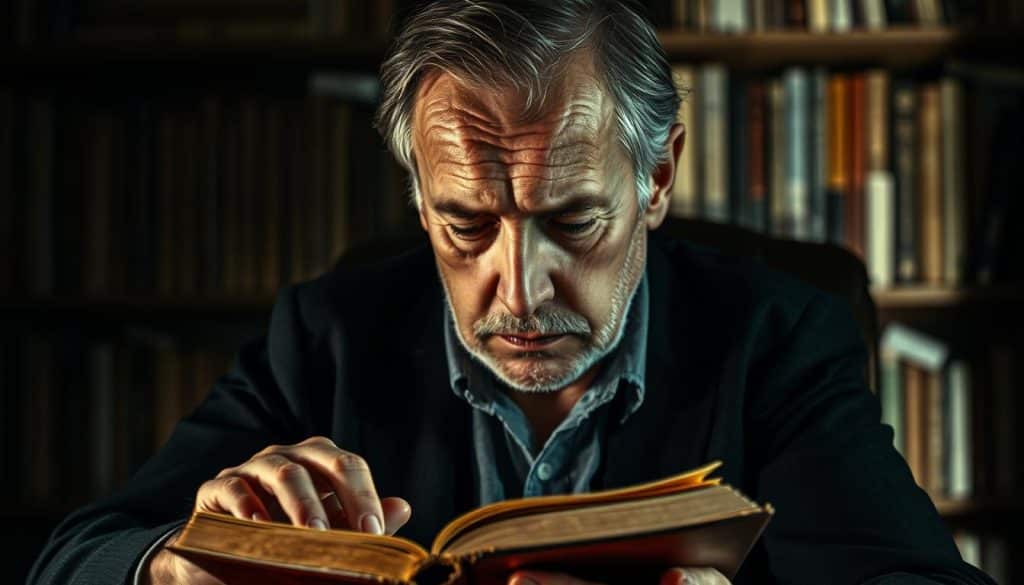
Modern directors show the quiet violence of wasted dreams through small choices:
- Smartphones light up instead of candles in late-night talks
- Corporate clothes replace old-fashioned outfits
- Spreadsheets become digital versions of “I should have been a Dostoevsky” dreams
Yelena – Trophy Wife or Tragic Heroine?
Anika Noni Rose’s 2022 Broadway show asked a question: What if Helena Bonham Carter’s character had a Notes app? Her Yelena traded in her fragile look for sharp words, saying things like:
“I’m not just a decoration – I’m preserved. Like fruit they forgot to eat.”
Her modern update shows three big changes:
- She rolls her eyes instead of fainting
- Her silence is more powerful than any outburst
- She writes poetry on Google Docs, hiding it from her husband-professor
Today’s versions of Yelena are no longer just plot devices. They are masterclasses in quiet defiance. Her act of seeming weak is now seen as a clever survival tactic in today’s world.
Historical Performances and Adaptations
Soviet censors, British sitcom writers, and filmmakers during the pandemic all used Chekhov’s play as a cross-cultural adaptation tool. The play’s journey from a 1889 flop to a global hit is like a Russian drama. It’s filled with tragic mistakes and unexpected successes.
The play’s early version, The Wood Demon, was a huge failure in 1889. But by the 1957 Moscow Art Theatre revival, it was a must-see for Soviet officials. They were unsure if they should applaud or admit their bourgeois thoughts.
Directors have used Vanya’s themes for their own causes:
- The 1994 Peter Hall production inspired The Office’s awkward moments
- A 2020 Zoom adaptation used digital-age soliloquies
- And that infamous 1988 synth-pop version (we can’t help but mention it)
“Vanya isn’t about Russia – it’s about everyone’s inner bureaucrat waiting for retirement.”
Modern versions show our current worries. The pandemic film turned Vanya’s estate into a quarantine story. A 2006 Kabuki version made Sonya’s speech about wa (harmony) in salaryman culture. Even the failed 80s electro-Vanya found a place at ironic parties.
Chekhov’s Russian drama has been used for propaganda and as a critique of capitalism. It’s a Rorschach test for every generation, giving them the Vanya they need and some they don’t.
US vs. Russian Interpretations
When Uncle Vanya changes from samovars to single-serve pods, some people get upset. But is this change wrong or necessary? The debate over Chekhov’s play shows more about what audiences want than what the author meant. A British critic once said: “Where’s the soul? You’ve made a Russian tragedy feel like a Portlandia sketch.”
Samovars vs. Starbucks: Cultural Translation Challenges
American directors face a tough choice. How can they make 19th-century Russian feelings connect with today’s TikTok and iced lattes fans? The Moscow Art Theatre used samovars and woolen babushkas in 2022. But a Chicago group used a co-working space with Keurig pods. Which way is more true to Chekhov? It depends on whether you value staying true to history or making it relatable today.
The Great Accent Debate is another challenge. Should Vanya sound like a Muscovite or a Michigander? Some say using Midwestern accents changes the play’s feel. Others believe it makes the story more real. A director once said: “Nobody cries over tea ceremonies—they cry over burnt coffee.”
| Cultural Element | US Approach | Russian Approach |
|---|---|---|
| Props | Keurigs, standing desks | Samovars, antique furniture |
| Dialogue Style | Naturalistic, overlapping speech | Measured, poetic delivery |
| Emotional Tone | Raw, immediate despair | Layered tragicomedy |
| Historical Context | Modernized settings | Strict period adherence |
Why do Russian audiences laugh where Americans cry? It’s not because they’re insensitive. It’s because they understand the play’s cultural background. The play’s themes of rural life and class differences mean more in Russia than in Silicon Valley. A Moscow-born friend once said during Act II: “Vanya isn’t sad—he’s just waking up.”
This debate about adapting Chekhov raises big questions. Does making his play universal water down its meaning? Or does sticking to tradition make theater feel like a museum? Maybe the answer is a mix of old and new, where Chekhov’s sadness meets today’s practicality.
Bringing Chekhov to New Audiences
Classic Russian ennui meets iPhone-induced attention spans. Theater companies are trying to make Chekhov appeal to Gen Z. This cultural mix is quite a sight, even for Stanislavski.
The real question is not if Uncle Vanya can be modernized. It’s if audiences can handle existential dread through TikTok.
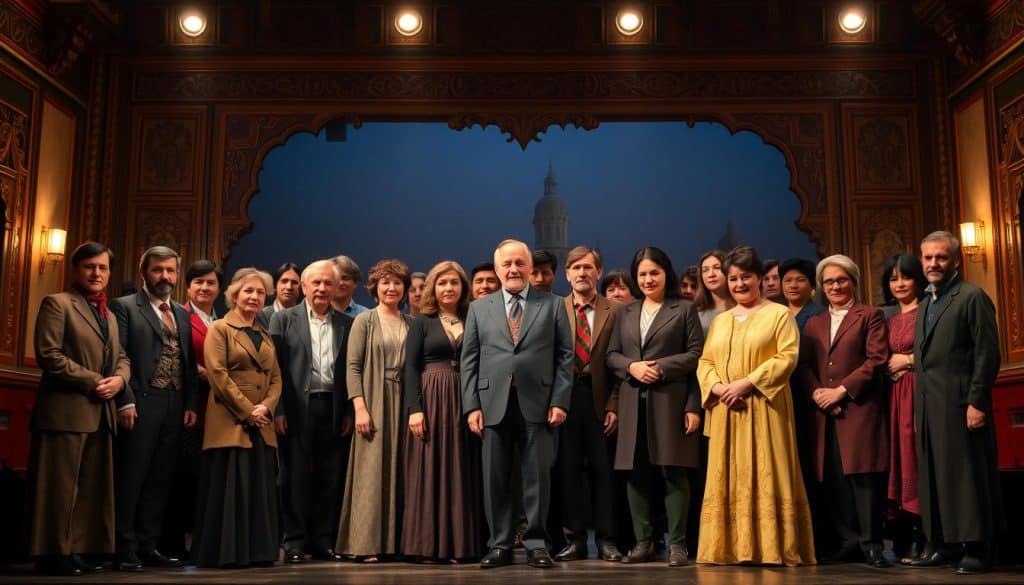
TikTok Dramaturgy: #VanyaCore Explained
PBS’s 2022 broadcast of Uncle Vanya got 1.2 million #VanyaCore TikTok stitches. It showed Gen Z’s love for floral waistcoats. Directors now use TikTok’s logic:
- Soliloquies delivered like Instagram Live rants
- Climate change replacing 19th-century crop failures
- Astrov’s environmental speeches becoming ASMR tracks
“We’re not dumbing down Chekhov – we’re hacking his code for the dopamine economy.”
The National Theatre Live saw a 78% increase in under-35 viewership. The real change happened off-screen. The Vanya VR Experience let audiences explore a crumbling estate through Oculus headsets:
| Feature | Traditional | VR Adaptation |
|---|---|---|
| Setting immersion | Wooden stage props | 360° decaying manor simulation |
| Audience participation | Polite applause | Motion sickness bags provided |
| Character study depth | Text analysis | Interactive diary exploration |
This isn’t your professor’s Uncle Vanya. When Sonya’s final speech gets remixed with lo-fi beats, are we preserving Chekhov’s vision or creating cultural frankenstein? The answer might lie in cross-cultural adaptation metrics: 63% of VR users reported newfound sympathy for Vanya’s inertia after virtually living his Groundhog Day existence.
As theaters blend Ibsen with Instagram filters and Chekhov with ChatGPT, one truth emerges. Great drama survives not through purity, but through the messy, glorious collision of what was and what’s trending. Now if you’ll excuse me, I need to check if my Vanya x Travis Bickle fan edit has hit 10k views.
Chekhov in Contemporary Performance
While Tolstoy gets biopics and Dostoevsky inspires video games, Anton Chekhov’s Uncle Vanya has quietly become Hollywood’s favorite Russian drama remix. The play’s mix of existential dread and dark humor is perfect for today’s world. It tackles climate anxiety and algorithm-induced paralysis in a unique way.
The Uncle Vanya Cinematic Universe
The 2020 film adaptation put characters in Zoom boxes, adding a twist to Chekhov’s pauses. Director Michael Almereyda turned Vanya’s famous monologue into a TikTok-ready montage. It shows Amazon deliveries and doomscrolling, blending Russian drama with Black Mirror.
Auteurs are lining up to reboot Vanya for the Marvel generation:
| Director | Style | Chekhov Element | Modern Twist |
|---|---|---|---|
| Ari Aster | Psychological Horror | Vanya’s despair | Forest demon haunting the estate |
| Wes Anderson | Stop-Motion | Social satire | Fox puppets debating NFTs |
| 2020 Broadway Revival | Immersive Sound | Silent tensions | Binaural ASMR whispering |
What makes these adaptations work? Chekhov’s rhythm matches our daily scroll through climate disaster tweets. The current Broadway production uses sound design to enhance this, with crickets chirping louder during awkward silences.
“We’re not doing Chekhov – we’re doing CPR on his characters until they start breathing our air.”
Anderson’s stop-motion version will replace the estate’s cherry orchard with a cryptocurrency farm. This might seem sacrilegious, but Chekhov wrote about people struggling with outdated systems. The real question is how many times Vanya would check the Bitcoin price during one monologue.
Study and Teaching Resources
Teaching Chekhov to Gen Z can be tough. But, when Minnesota’s Maple Grove High turned Vanya’s estate into a cannabis farm, students got it. They even debated if Astrov should have used solar panels instead of planting trees.
From Classroom to Community Theater
Adapting 1890s Russian dialogue is a real challenge. Teachers face modern issues:
- Should we keep the original’s curses, or let Sonya use an F-bomb for impact?
- How many Minecraft references can we add to Vanya’s monologue before it gets too much?
- Should we use samovars or Yeti tumblers to show cultural differences in theater?
Seattle’s Green Lake Players made it work by calling it “Succession meets The Last of Us”. They used PowerPoint instead of soliloquies. Their Yelena was like an Instagram influencer, showing the estate’s decline with VSCO filters.
“When students see Vanya’s spreadsheet of hard work as similar to their unpaid internships, the play hits home fast.”
Here are three ways to teach modern students:
- Replace old crop failures with climate change worries
- Discuss character motives through Twitter-style debates
- Hold read-throughs in places like coffee shops or Discord servers
The biggest challenge is making students care about Serebryakov’s pension worries as much as their social media. Chicago’s Second City added improv last fall. It helped audiences see the comedy in the tragedy. But, opinions are split on whether Vanya should have thrown that pistol into Lake Michigan.
Conclusion
Anton Chekhov’s advice on facing existential dread is timeless. It’s filled with dark humor. The 2020 film adaptation of “Uncle Vanya” showed how his words can inspire us today.
In the film, Vanya says “We must go on living” while wearing a KN95 mask. This line is not just about giving up. It’s a call to keep going, even in tough times. During the pandemic, people found new ways to be creative, showing Chekhov’s ideas are as relevant as ever.
The beauty of Chekhov’s work is how it can change and stay true to itself. It moves from Russian samovars to American energy drinks, keeping its sharp edge. Even with changes, like swapping hunting rifles for antidepressants, the impact remains strong.
Essayists and TikTok creators are exploring Chekhov’s work in new ways. They’re not just studying his plays. They’re making them their own, for a world that consumes stories differently today.
Chekhov might find our efforts to update his work amusing. He might even be writing a story about AI chatbots leading a revolution. But in every essay and production, we’re making his work come alive again. We’re not just preserving it; we’re using it to spark new conversations.
The curtain falls, but the real show is just starting. The comments section lights up, and the real drama begins. It’s a reminder that Chekhov’s plays are meant to be shared, not just seen.
