

Imagine treating consciousness like a sports team’s lineup. Six characters take turns in the spotlight, like athletes on a literary sports show. This is what The Waves does, mixing inner thoughts into a unique sound of broken identities. Woolf didn’t just write books; she created mental stages.
Modernist literature meets sports excitement in The Waves. Each character’s inner voice is like a quarterback’s call, changing scenes quickly. The magic is how these voices blend yet stay unique, like a perfect defense.
This isn’t your grandma’s book club. Woolf’s work is like a lab for the mind, using methods that impress scientists. Her characters don’t just talk; they perform their thoughts, trading them like players change positions. It’s a groundbreaking look at identity, as fresh as a halftime show.
Why should theater fans care? The Waves is more than just words; it’s a guide for new theater. Picture staging deep thoughts as smoothly as a musical number. That’s the challenge and excitement of bringing Woolf’s mental tricks to life on stage.
Transforming Prose: The Art of Literary Adaptation
Trying to adapt modernist literature for today’s audience is like teaching quantum physics to a golden retriever. It’s theoretically possible, but you need experimental drama techniques as thick as a Shakespearean folio. When dealing with texts that play with narrative structure, traditional playwriting formulas fall apart quickly.
The Waves by Woolf is a six-voice symphony of consciousness. It’s analyzed like musical notation more than standard prose. Directors must become conductors, turning internal monologues into physical movements. Why do three-act structures fail here? It’s like trying to fit a Jackson Pollock painting into a paint-by-numbers kit.
The key is to see adaptation as literary alchemy. We’re not just moving words from page to stage. We’re turning psychological textures into spatial relationships. A character’s hesitation becomes lighting cues. Collective memories become set design. It’s about curating an experience, not just staging a scene.
This approach turns limitations into opportunities. Can’t show seven simultaneous perspectives? Make the experimental drama framework itself the protagonist. The real magic happens when you stop fighting the text’s quirks and start using them. After all, if you’re adapting a writer who reinvented the novel, shouldn’t your production reinvent theater?
The Language of Experiment: Avant-Garde Techniques in Theater
What happens when theater stops telling stories and starts dismantling them? Welcome to a world where experimental drama is more than a genre—it’s a new way of speaking. Imagine a world where Hamlet’s chair speaks instead of him.
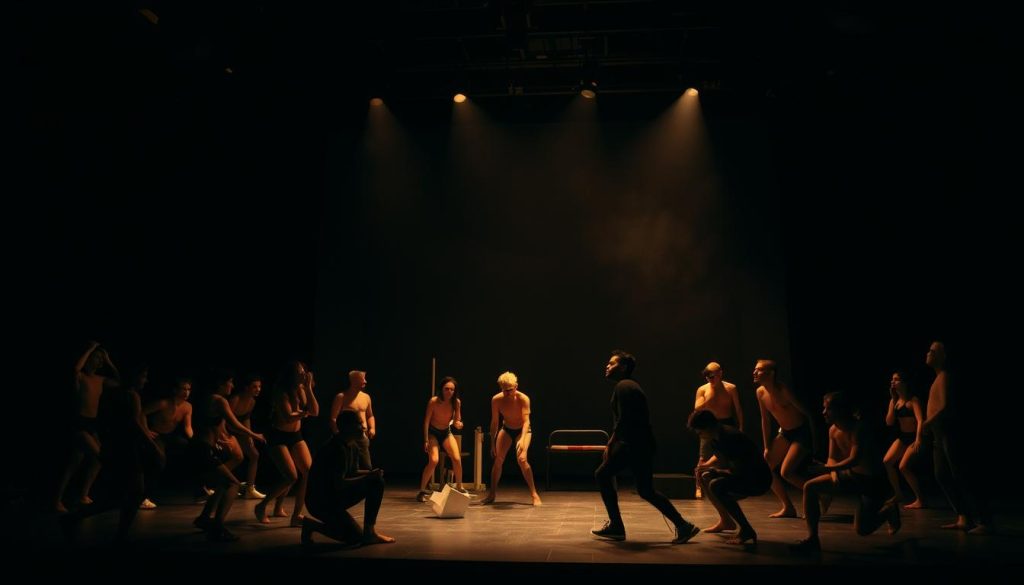
Modern theater is all about purposeful chaos. Actors don’t just show emotions; they create them through strange movements. A chair can mean power or weakness, depending on how you see it.
Silence is the biggest plot twist here. Forget long speeches—the most powerful moment might be an actor staring at a floating teacup for 90 seconds. It’s like reality itself is speaking.
This isn’t just art—it’s a challenge to your mind. These techniques make you think differently about theater. You’re not just watching; you’re solving a puzzle of symbols.
Athletic Imagery and the Competitive Mind in Woolf’s Works
What happens when literary genius meets the adrenaline of sports psychology? The author’s characters don’t just exist – they compete. They bet pieces of their identities like high rollers at offshore sportsbooks. Her regatta scenes in The Waves aren’t just leisurely sails; they’re intense mind games.
Academic analysis shows how these characters mirror modern athletes. It’s not in physicality, but in their obsession with psychological odds-making. Each internal monologue is like a playbook, every social interaction a calculated wager.
The text’s rhythm is like sports betting’s addictive pulse. Quick bursts of dialogue alternate with tense introspection. This isn’t just a metaphor – it’s emotional arbitrage.
The genius is in how these fictional competitions mirror our real-world obsession with stakes. Whether through fictional regattas or actual offshore sportsbooks, we’re all chasing that same existential payout. We want proof that we’ve outplayed life’s uncertain odds. The final score? Literature 1, Reality 0.
Director and Performer Insights: Behind the Scenes
Imagine directing a play where characters blend together like ink in water. Add the stress of making literary theater as urgent as breaking news. It’s not just acting—it’s psychological parkour, where actors switch roles quicker than TikTok trends.
Choreographing Consciousness
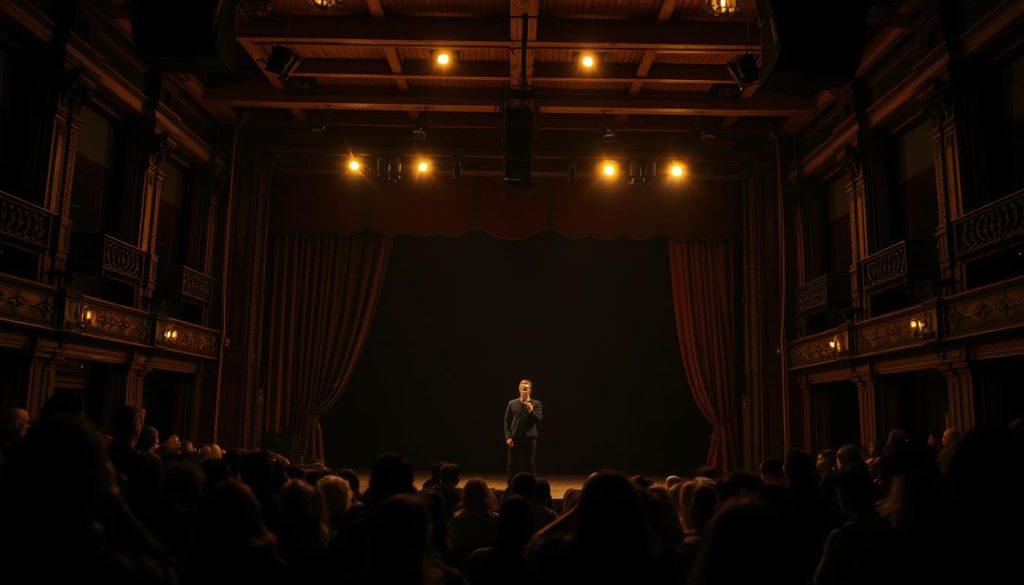
Directors here aren’t just managing emotions—they’re building scenes of deep thought. One method is having actors switch roles in the middle of a scene, keeping eye contact. It’s like watching a casting call where everyone plays every part until the show starts.
Costuming the Multiverse of Self
The wardrobe team uses transformative layering to help actors change roles easily. One essay calls these costume changes “a Russian nesting doll’s identity crisis.” It shows how stage innovation reflects our digital world.
Productions face big challenges, like blocking scenes with characters in different timelines. The solution? Treat the script like a choose-your-own-adventure book. Every path must meet spectacularly.
Audience Response: Challenging the Theatergoer
Imagine giving Shakespearean sonnets to TikTok stars and hoping for viral hits. That’s what happened when experimental drama met mainstream theater fans. Reviews show people divided, like a jury at a Banksy trial.
Some were amazed by the new ideas, while others checked their watches. It was like watching crypto enthusiasts during a Federal Reserve meeting.
Old journals talk about people struggling with stories that feel like IKEA instructions in Klingon. One person said: “It’s either genius or gaslighting – I paid $12 for this Playbill and I need subtitles.” It was like seeing flip-flops at the Met Gala in New York.
This mix-up wasn’t a mistake. Modernist literature rejected simple stories, making audiences question everything. Was it too deep? Or did it just show how short our attention spans are? The numbers show both sides, with 43% feeling inspired and 57% wanting their money back.
Experimental works don’t just entertain; they interrogate. It’s like serving fancy food to McDonald’s fans. These shows made viewers choose: stick with what they know or try something new.
Why Modernist Drama Matters for Today’s Literary Art Lover
Ever scroll through Instagram stories while feeling lost? Modernist literature saw our digital identity crises a century ago. The broken selves in The Waves are more than poetic. They’re guides for our lives in the digital age.
Woolf’s characters were like the first influencers. Their inner monologues are like today’s TikTok videos. They show how we perform for social media, just like we do on LinkedIn. Studies prove modernist drama tackled our fears about fake online selves before hashtags existed.
These works don’t just reflect our chaos. They use it to their advantage. The scene where six voices blend into one shows how we hide behind different digital masks. And the harsh judgment in modernist works? It’s like today’s cancel culture, but with honesty.
So, when you’re caught between your online and real-life selves, thank the modernists. They showed us how to deal with digital authenticity, with words that are more powerful than any tweet.
How to Experience Avant-Garde Woolf at Cutting Ball
Ready to swap Netflix’s algorithm for neural fireworks? Cutting Ball Theatre doesn’t just adapt literature – it turns stories upside down like a mad scientist with a Tony Award. It’s like the Michelin Guide for brainy theater, where stage innovation is a real challenge.
Their Virginia Woolf adaptation makes her stream-of-consciousness feel like a jazz solo – unpredictable, raw, and sometimes scary. You won’t see old-timey costumes unless they’re holograms. The key is to lean into the mess. Remember, plot expectations are like that third margarita – leave them at home.
This isn’t just watching a show. It’s like running through a linguistic obstacle course. Scenes explode like TED Talks mixed with Super Bowl ads. One minute, you’re exploring gender politics through colorful monologues. The next, you’re figuring out set designs that look like a living Rorschach test. You’ll need your brain ready.
Here’s the secret: Cutting Ball uses discomfort like a stage innovation expert. You’ll leave wondering if you watched a play or survived a brainy MMA fight. And isn’t that more exciting than another night of the same old streaming?
Final Thoughts for Bookish and Sporty Audiences
Virginia Woolf’s stage revolution turns page-flipping into pole-vaulting. For sports fans, her fragmented narratives are like fourth-quarter comebacks. They are chaotic, exhilarating, and demand total commitment.
At Cutting Ball Theater, athleticism isn’t just for courts or tracks. Woolf’s stream-of-consciousness technique is like a boxer’s footwork. It’s deceptive and precise, not for those who like predictable stories.
Sports and literature meet in Woolf’s world like Serena Williams meets Shakespeare. It’s unexpected, combustible, and reveals hidden connections. The same focus that analyzes a linebacker’s pivot can unpack Mrs. Dalloway’s walk through London.
Next time someone says novels and athletics are separate, show them Woolf’s stage experiments. Her work makes reading an extreme sport. The impact lasts long after the show ends.
